

Paper
James M. Acton, Ankit Panda
{
  "authors": [
    "James M. Acton"
  ],
  "type": "legacyinthemedia",
  "centerAffiliationAll": "dc",
  "centers": [
    "Carnegie Endowment for International Peace"
  ],
  "collections": [
    "U.S. Nuclear Policy",
    "Korean Peninsula"
  ],
  "englishNewsletterAll": "ctw",
  "nonEnglishNewsletterAll": "",
  "primaryCenter": "Carnegie Endowment for International Peace",
  "programAffiliation": "NPP",
  "programs": [
    "Nuclear Policy"
  ],
  "projects": [],
  "regions": [
    "North America",
    "United States",
    "East Asia",
    "South Korea",
    "North Korea"
  ],
  "topics": [
    "Security",
    "Nuclear Policy"
  ]
}
Source: Getty
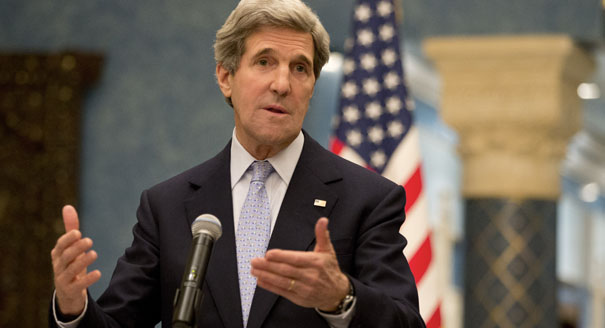
U.S. Secretary of State John Kerry has used strong words against North Korea after the country threatened to attack the United States.
Source: Al Jazeera
U.S. Secretary of State John Kerry has used strong words against North Korea after the country threatened to attack the United States. Carnegie's James Acton talks to Al Jazeera about the latest tensions between North Korea and the United States.
"We've heard yet another provocative announcement from North Korea. The irony is that this is not even the most provocative announcement to have come out of North Korea in the past few days," said Acton, adding, "threatening to build more nuclear weapons is actually not as provocative as threatening to use them against the United States, South Korea, or anyone else."
"But make no mistake," said Acton, "this is a dangerous and volatile situation on the Korean Peninsula; the South Korean government is worried, the United States government is worried, and they have good reasons to be." Acton said that he does not think that North Korea will use a nuclear weapon out of the blue, but rather that Pyongyang will commit another provocation.
"I don't think that North Korea wants a war," said Acton, "the question is whether it miscalculates, the question is whether it thinks it can get away with provoking South Korea via military force and assume that it will not be hit back.

Jessica T. Mathews Chair, Co-director, Nuclear Policy Program
Acton holds the Jessica T. Mathews Chair and is co-director of the Nuclear Policy Program at the Carnegie Endowment for International Peace.
Recent Work

James M. Acton, Ankit Panda
James M. Acton
Carnegie does not take institutional positions on public policy issues; the views represented herein are those of the author(s) and do not necessarily reflect the views of Carnegie, its staff, or its trustees.

As the U.S. stumbles in its war with Iran, we are likely to see an acceleration of its disengagement from the region.

Michael Young

Huawei pushed hard to enter the Egyptian data centers market, until the Americans made a better offer.

Angie Omar

Middle Eastern states should welcome an accelerated U.S. disengagement from their region.
Michael Young

In an interview, former ambassador Charles Freeman assesses the Trump administration’s war against Iran.
Michael Young

By failing to address Palestinian representation, the current process is bound to lead to just another temporary arrangement.

Nathan J. Brown