

In The Media
David Rothkopf
{
  "authors": [
    "David Rothkopf"
  ],
  "type": "legacyinthemedia",
  "centerAffiliationAll": "",
  "centers": [
    "Carnegie Endowment for International Peace"
  ],
  "collections": [],
  "englishNewsletterAll": "",
  "nonEnglishNewsletterAll": "",
  "primaryCenter": "Carnegie Endowment for International Peace",
  "programAffiliation": "",
  "programs": [],
  "projects": [],
  "regions": [
    "United States",
    "Libya"
  ],
  "topics": [
    "Political Reform"
  ]
}
Source: Getty
The recent Congressional hearings on Benghazi seem to have been orchestrated to damage the reputation of the next likely Democratic presidential candidate in 2016.
Source: CNN
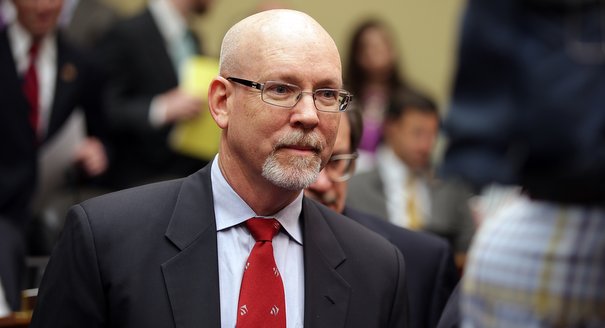
Rep. Darrell Issa must be ruing his bad luck. The hearing he carefully orchestrated to pick at the scab of Benghazi was stepped on by the verdict in the Jodi Arias murder trial and by the story of three women held captive and brutalized for a decade in Cleveland. He was out-sensationalized and out-tawdried this week despite his own best efforts and those of his committee colleagues and staff members.
That is not to say that the tragic events that unfolded last year in Benghazi are not worthy of serious investigation. They just didn't get them from Issa's committee. As Secretary of State Hillary Clinton said in her passionate testimony in December, we need to know what went wrong to prevent future tragedies. That's why she began an investigation immediately after the attacks. But Issa and his co-inquisitors were more interested in the arithmetic of 2016 presidential politics than with the events of last September 11 in Libya.The testimony of Gregory Hicks, the former Libya deputy chief of mission, was striking and at times moving, and offered useful additional perspectives. He said he had suffered negative repercussions because he challenged the State Department line on what happened in Benghazi. But even while some of what he said was new and resonant, the Republicans on the committee weren't listening. They focused less on learning what could have been done differently than on trying to establish that Clinton and her closest associates had tried to cover up the tragedy.
On this point, very little was revealed that was either material or new. Hicks said a Clinton aide had been angry at him over how he conducted himself with investigators after the incident. He disputed the way the attack and its origins were depicted by senior officials on television. He deplored the losses that took place. But to say that any of this points at a cover-up "has all the elements of Pulitzer Prize-class fiction attached to it," as former Ambassador Thomas Pickering, co-chairman of the committee that first investigated the attacks suggested.
That Clinton's team might want to have a clear sense of how what was clearly a politically motivated congressional investigation was being conducted seems only logical and responsible. That the origins of the attack were framed as related to an inflammatory amateur video that appeared on the Internet has long ago been established as wrong and misguided.
That the losses were terrible and that U.S. diplomatic outposts in dangerous places need more security is absolutely true, and if they really cared about such things, Issa and his team would devote more of their attention to reaching consensus on how to find the funding needed to ensure that security is available
Nothing spoken of in the hearing suggested a cover-up by a Cabinet secretary, who instantly took personal responsibility for the attacks and swiftly appointed an independent commission led by two of the most distinguished, nonpartisan career civil servants in recent American history to investigate them. To say otherwise is more than a reach. It's an effort by the Republican Party to damage the person most likely to be the next Democratic presidential candidate.
In the calculus of Washington today, Clinton is a bigger and more valuable target even than her former boss, the president. Having said that, it is almost certainly the case that the reason the initial focus in these hearings was not on the White House or elsewhere in the executive branch was that there was no evidence of a cover-up or of a politically spinning of the post-Benghazi message there either. Indeed, even Republican Sen. Bob Corker said that having reviewed all the evidence he felt there was nothing new to be revealed by these latest hearings.
No, this is just the latest example of the fine Washington art of promoting an enduring scandal out of not very much, demonstrating the ability of microphones in congressional hearings to turn scattered inconclusive facts and emotion into innuendo and blips in opinion polls. That the process also debases and, perversely, distracts from the very serious issues associated with protecting our diplomats and our interests overseas is hardly important, it seems, to the political attack dogs whose appetites are so insatiable that any nutrition-free scrap of half-truth looks like a meal.
Former Visiting Scholar
David Rothkopf was a visiting scholar at the Carnegie Endowment as well as the former CEO and editor in chief of the FP Group.
Recent Work
David Rothkopf
David Rothkopf
Carnegie does not take institutional positions on public policy issues; the views represented herein are those of the author(s) and do not necessarily reflect the views of Carnegie, its staff, or its trustees.

Huawei pushed hard to enter the Egyptian data centers market, until the Americans made a better offer.

Angie Omar

Middle Eastern states should welcome an accelerated U.S. disengagement from their region.

Michael Young

In an interview, former ambassador Charles Freeman assesses the Trump administration’s war against Iran.
Michael Young

By failing to address Palestinian representation, the current process is bound to lead to just another temporary arrangement.

Nathan J. Brown

Morocco and Algeria, each in its own way, are having to navigate the global economic fallout of the U.S.-Israeli military campaign against Iran.

Yasmine Zarhloule