

{
  "authors": [
    "Nicholas D. Wright"
  ],
  "type": "other",
  "centerAffiliationAll": "",
  "centers": [
    "Carnegie Endowment for International Peace"
  ],
  "collections": [],
  "englishNewsletterAll": "",
  "nonEnglishNewsletterAll": "",
  "primaryCenter": "Carnegie Endowment for International Peace",
  "programAffiliation": "",
  "programs": [],
  "projects": [],
  "regions": [],
  "topics": []
}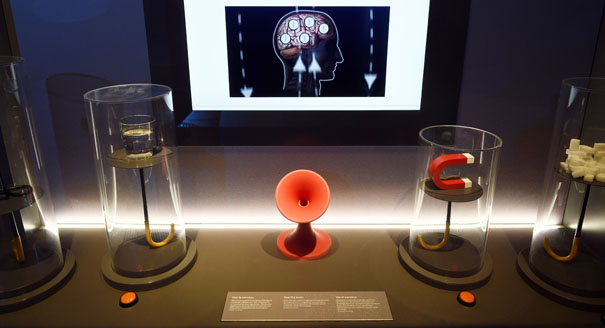
Source: Getty
Disruption of Dorsolateral Prefrontal Cortex Decreases Model-Based in Favor of Model-free Control in Humans
Human choice behavior often reflects a competition between inflexible computationally efficient control on the one hand and a slower more flexible system of control on the other. This distinction is well captured by model-free and model-based reinforcement learning algorithms.
Source: Neuron
Human choice behavior often reflects a competition between inflexible computationally efficient control on the one hand and a slower more flexible system of control on the other. This distinction is well captured by model-free and model-based reinforcement learning algorithms. Here, studying human subjects, we show it is possible to shift the balance of control between these systems by disruption of right dorsolateral prefrontal cortex, such that participants manifest a dominance of the less optimal model-free control. In contrast, disruption of left dorsolateral prefrontal cortex impaired model-based performance only in those participants with low working memory capacity.
This full article was published in Neuron, volume 80, pp. 1-6.
About the Author
Former Nonresident Associate, Nuclear Policy Program
Wright was a nonresident associate in the Nuclear Policy Program at the Carnegie Endowment. His research draws on his background in neuroscience to explore political decisionmaking in economics and nuclear security.
Carnegie does not take institutional positions on public policy issues; the views represented herein are those of the author(s) and do not necessarily reflect the views of Carnegie, its staff, or its trustees.