

Commentary
As the U.S. stumbles in its war with Iran, we are likely to see an acceleration of its disengagement from the region.
Michael Young
{
  "authors": [],
  "type": "pressRelease",
  "centerAffiliationAll": "dc",
  "centers": [
    "Carnegie Endowment for International Peace",
    "Carnegie Europe"
  ],
  "collections": [
    "EU Integration and Enlargement",
    "Brexit and UK Politics"
  ],
  "englishNewsletterAll": "ctw",
  "nonEnglishNewsletterAll": "",
  "primaryCenter": "Carnegie Europe",
  "programAffiliation": "EP",
  "programs": [
    "Europe"
  ],
  "projects": [],
  "regions": [
    "Europe",
    "Western Europe",
    "United Kingdom",
    "Iran"
  ],
  "topics": [
    "EU",
    "Global Governance"
  ]
}
REQUIRED IMAGE
Britain’s historic referendum on its EU membership has resulted in victory for the Leave campaign. Carnegie Europe experts discuss the outcome of the landmark vote and its implications.
After weeks of intense debate, Britain’s historic referendum on its EU membership has resulted in victory for the Leave campaign. Carnegie Europe experts are available to discuss the outcome of the landmark vote and its implications.
To request an interview, please contact Eleonora Moschini at emoschini@ceip.org or +32 2 739 00 55.
“Germans are shocked by the Brexit decision. The mass-circulation Bild newspaper had pulled out all the stops when the polls opened in Britain by begging the Brits to stay. The paper even promised it would get rid of the foam on beer (!) and that German holidaymakers would stop being the first to reserve towels and seats by the swimming pools. But seriously, this is a huge blow. For Germans, they see this as the beginning of the unstoppable unraveling of the EU—unless Chancellor Angela Merkel has any real plan B to rescue Europe’s decline.”
—Judy Dempsey, nonresident senior associate and editor in chief of Strategic Europe, Carnegie Europe
“This is the first day of a Britain that is smaller in the world, more detached, more isolationist, more English. The immediate political repercussion is that British Prime Minister David Cameron will have to go. We can soon expect calls for another Scottish independence referendum. Beyond that, the effects of Brexit will burn more slowly. It may be five years before the UK agrees a new trading arrangement with the EU. Ironically, that means more negotiations with EU member states than ever before.”
—Thomas de Waal, senior associate, Carnegie Europe
“This is a devastating day for Europe’s role in the world. The EU’s reputation will suffer across the globe. The symbolism of an important country leaving the club—and the actual policy fallout following that decision—will be very costly. The UK is one of the very few outward-looking, globally-minded countries in the EU and its absence from decisionmaking in Brussels will be felt. Overall, Britain has more to lose from this than the EU but both leave this unnecessary battle badly wounded.”
—Jan Techau, director, Carnegie Europe
“As much as it may herald a period of turbulence for the EU, Brexit may at the same time create a window of opportunity for the EU’s relationship with its close neighborhood. Brexit will require the UK and the EU to foster a new type of deep association. Even most Brexit backers want Britain to retain its access to the single market—but without an ex ante commitment to the adoption of EU law. This objective may prove unattainable. As a result, a new framework will need to be designed to balance these conflicting aims. Such a framework of virtual membership can then provide a blueprint for the EU, allowing it to enrich its options of engagement with its close neighborhood, which today is constrained by the enlargement policy dichotomy.”
—Sinan Ülgen, visiting scholar, Carnegie Europe
Carnegie does not take institutional positions on public policy issues; the views represented herein are those of the author(s) and do not necessarily reflect the views of Carnegie, its staff, or its trustees.

As the U.S. stumbles in its war with Iran, we are likely to see an acceleration of its disengagement from the region.

Michael Young

Middle Eastern states should welcome an accelerated U.S. disengagement from their region.
Michael Young

In an interview, former ambassador Charles Freeman assesses the Trump administration’s war against Iran.
Michael Young

Morocco and Algeria, each in its own way, are having to navigate the global economic fallout of the U.S.-Israeli military campaign against Iran.

Yasmine Zarhloule
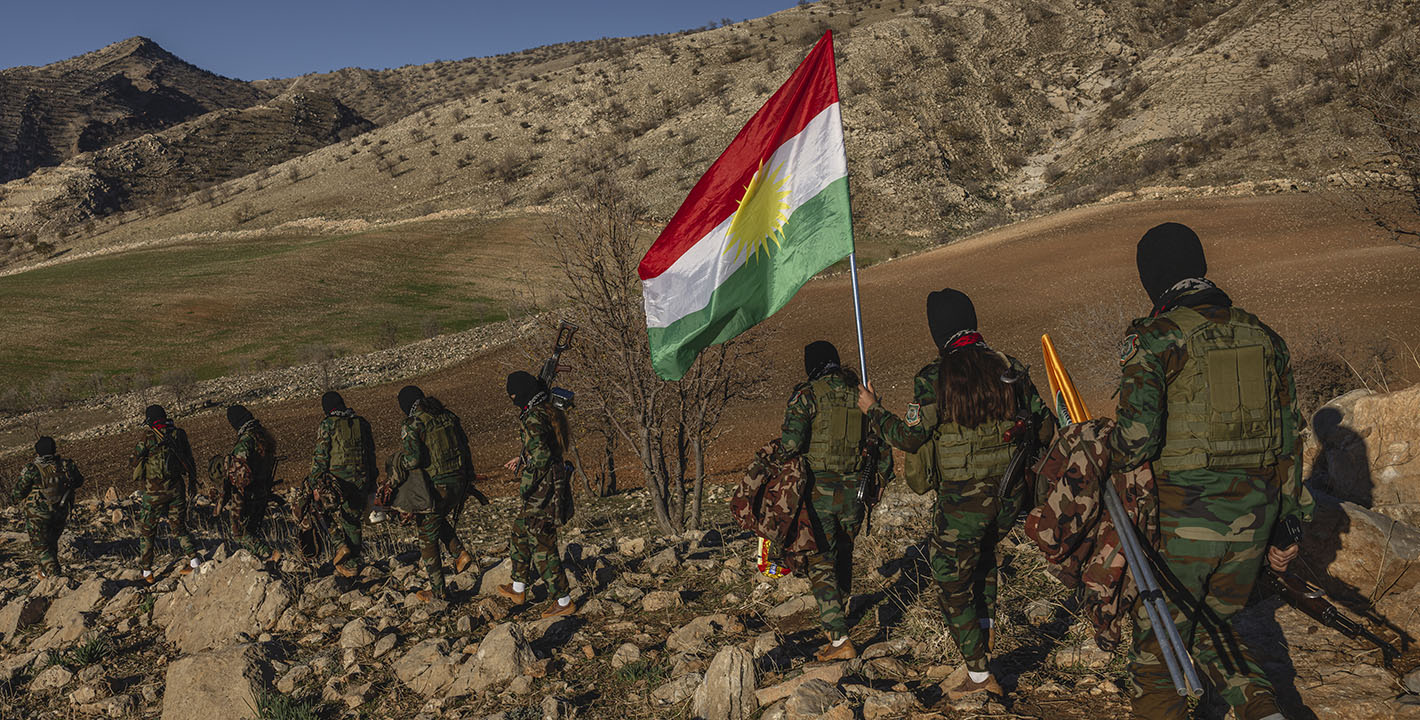
Following its deal with the United States, Iran may act against Iraq-based dissidents.
Wladimir van Wilgenburg