

Commentary
Thomas de Waal
{
  "authors": [
    "Thomas de Waal"
  ],
  "type": "commentary",
  "centerAffiliationAll": "",
  "centers": [
    "Carnegie Endowment for International Peace",
    "Carnegie Europe",
    "Carnegie Russia Eurasia Center"
  ],
  "collections": [
    "EU Integration and Enlargement",
    "Brexit and UK Politics"
  ],
  "englishNewsletterAll": "",
  "nonEnglishNewsletterAll": "",
  "primaryCenter": "Carnegie Europe",
  "programAffiliation": "",
  "programs": [],
  "projects": [],
  "regions": [
    "Europe"
  ],
  "topics": [
    "EU"
  ]
}
Source: Getty
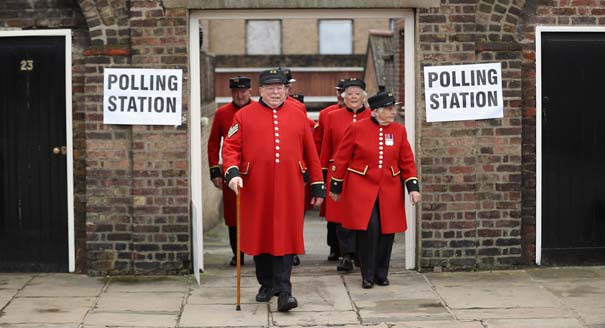
The vote to Leave was mainly a protest vote. It was the vote of people who hated “Brussels” and the European Union, but hated London and the international financial system just as much. The black irony of this is that it is precisely the social category of working-class protest voters who are likely to suffer when Britain loses the privileged access it currently has to the EU’s single market.
It feels as though we woke up in a different country. All the opinion polls on the evening before were predicting a victory for the option of Britain remaining in the European Union, a victory for famous old-fashioned British common sense. The results drew back the curtain on a very different Britain, which prioritized anger and risk-taking over the status quo.
As a journalist, I have covered many elections in Russia and the former Soviet Union and experienced days that feel as though they are momentous turning points for a nation, such as the 1996 election in Russia. Yesterday felt to me like one of those days here in Britain. Casting a ballot felt like an important civic act. But I felt confident that the Remain argument was winning. Walking through London, I saw only posters and stickers and campaigners from the pro-European side. And indeed London voted overwhelmingly to stay inside the EU.
Scotland also voted strongly for the EU—and the governing Scottish National Party will now demand a new referendum on independence.
David Cameron has already announced his resignation, but there will be many recriminations against him for calling a vote in the first place, chiefly to try to suppress an anti-European rebellion in his own party by winning the referendum and reasserting his authority. Well, that tactic has now rebounded on him.
Few voters understand the complex constitutional arrangements that bind the UK within the European Union. Few notice the positive effects of being inside the EU’s single market. Few understand how difficult it will be to trigger Article 50 of the Lisbon Treaty and how long it will take to separate Britain from the EU (it could be from two to ten years before the UK succeeds in renegotiating a new economic deal with the other nations of the European Union).
The vote to Leave was mainly a protest vote. It was the vote of people who hated “Brussels” and the European Union, but hated London and the international financial system just as much. The difference was that by being handed this chance to vote in a referendum, they were given a chance to reject one of those villains—Brussels—and they did so with enthusiasm. The black irony of this is that it is precisely the social category of working-class protest voters who are likely to suffer when Britain loses the privileged access it currently has to the EU’s single market. For example, the first big news of referendum night was the announcement that the northeastern Sunderland had voted by a margin of 61 to 39 percent. And yet one of the biggest employers in that region is the Nissan car factory, which is located there because of its access to EU markets.
So the typical “Leave voter” was English, of an older generation, angry with the London elite, and economically disadvantaged. He or she did not belong to one particular political party and rejected the advice of all the leaders of the main parties. The revolt is not over. British politics and civic life is in new unknown territory and it will take a long time before we understand all the consequences of what happened here on the night of June 23.

Senior Fellow, Carnegie Europe
Thomas de Waal is a senior fellow at Carnegie Europe, specializing in Eastern Europe and the Caucasus.
Recent Work
Thomas de Waal
Thomas de Waal

But growing hostility to Israeli actions is too late to save the West from the lasting damage of Gaza.

Michael Young
For the EU, the new leaders in Damascus’ stated aims provide a basis for cooperation.

Marc Pierini

Antony Blinken took his guitar to Kyiv to lift the spirits of Ukrainians, but Arabs are apparently denied his tunes.
Michael Young
What happens in the Middle East will not be contained there, so the European Union should prepare for this by reaffirming its values.

H. A. Hellyer
In an interview, Geneive Abdo discusses how the Gaza war has been tearing Western societies apart.
Michael Young