

Paper
Christopher S. Chivvis, Rohan Mukherjee, Milan Vaishnav
{
  "authors": [
    "Milan Vaishnav"
  ],
  "type": "legacyinthemedia",
  "centerAffiliationAll": "dc",
  "centers": [
    "Carnegie Endowment for International Peace"
  ],
  "collections": [],
  "englishNewsletterAll": "ctw",
  "nonEnglishNewsletterAll": "",
  "primaryCenter": "Carnegie Endowment for International Peace",
  "programAffiliation": "SAP",
  "programs": [
    "South Asia"
  ],
  "projects": [],
  "regions": [
    "South Asia",
    "India"
  ],
  "topics": [
    "Political Reform",
    "Economy"
  ]
}
Source: Getty
Modi has generally been good for business but not always good for a level playing field. His government is pro-business, but it also has a strongly nationalist outlook, and those two things are mutually reinforcing.
Source: Cipher Brief
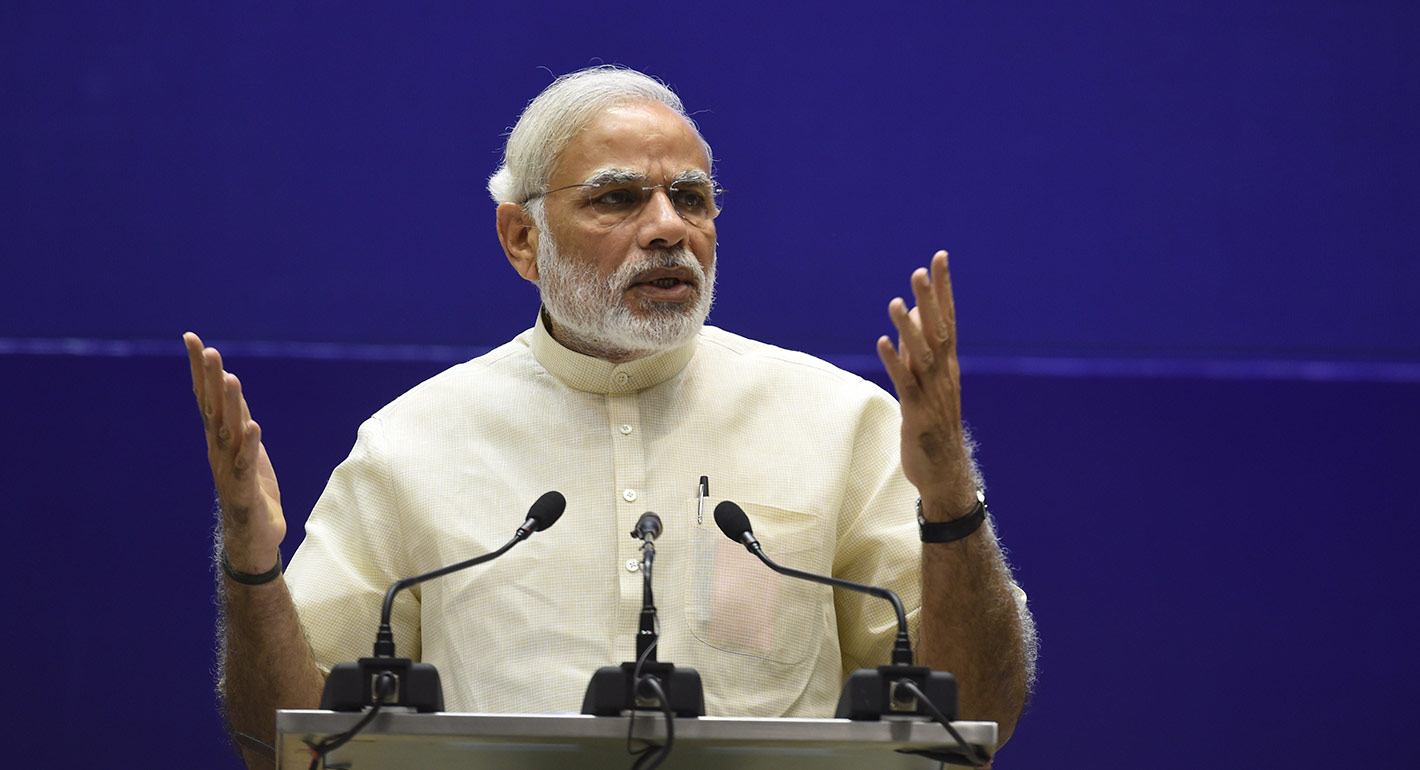
Last November, Indian Prime Minister Narendra Modi implemented a demonetization of the country’s two most popular bank notes, sparking chaos across the country as people tried to deposit their cash before it became worthless. However, one year later, the Indian economy is growing at a healthy seven percent annually, and Modi remains an extremely popular leader. The Cipher Brief’s Fritz Lodge spoke with Director of the South Asia Program at the Carnegie Endowment, Milan Vaishnav, about Prime Minister Modi’s economic plan to transform India into an economic superpower, and the critical role that defense spending and military modernization plays in “Modinomics.”
Milan Vaishnav: There are three major goals. The first – and probably most successful – is to bring about a degree of macroeconomic stability. One of the realities that Modi inherited from his predecessor was a deteriorating macroeconomic picture, which saw slowing growth, persistently high inflation, large fiscal deficits, and a pretty large current account deficit.
With dogged determination, Modi’s economic team has managed to turn around the macro picture on each of these fronts. Growth has rebounded to a steady level, inflation has come down considerably, we’ve seen a concerted effort to narrow the fiscal deficit, and we’ve seen the current account deficit decrease. These factors are due partially to policy changes but also partially to good luck – low oil prices have been a major contributor to deficit reduction, for instance.
Objective number two has been to try to revive the India investment story. This has a domestic piece and an international piece. The domestic piece is to try to rejuvenate the animal spirits of the economy, and the external piece is to attract new foreign capital. The first goal has not been a success. Domestic investment is still pretty subdued and a lot of investment projects are stalled. But we have seen pretty healthy foreign inflows, in terms of both foreign direct investment and portfolio investment. Associated with this has been some modest progress towards cleaning up the investment climate. Modi has made it a goal of his administration to get India into the top 50 of the World Bank’s ease of doing business indicator, and they’ve got a long way to go – they’re only at 130 – but they have moved up from 142 when he started his term in office. So there has been some modest progress there.
The last objective has been a war on corruption and the black economy. The most obvious evidence of this is the November 8th gambit to demonetize the economy, but Modi has also followed this up with a number of ancillary moves, trying to clean up the real estate sector, attempts to reform political finance, various amnesty schemes to get people to deposit black money into legitimate bank accounts, et cetera.
This interview was originally published in the Cipher Brief.

Director and Senior Fellow, South Asia Program
Milan Vaishnav is a senior fellow and director of the South Asia Program and the host of the Grand Tamasha podcast at the Carnegie Endowment for International Peace. His primary research focus is the political economy of India, and he examines issues such as corruption and governance, state capacity, federalism, and electoral behavior. He also conducts research on the Indian diaspora.
Recent Work
Christopher S. Chivvis, Rohan Mukherjee, Milan Vaishnav

Sophia Besch, Eric Ciaramella, Steve Feldstein, …
Carnegie does not take institutional positions on public policy issues; the views represented herein are those of the author(s) and do not necessarily reflect the views of Carnegie, its staff, or its trustees.

The armed forces champion a form of capitalism that is generating revenue, but its reliance on rent faces diminishing returns, leaving the country with massive sunk costs and deferred returns, deepening dependency on external borrowing.

Yezid Sayigh
In an interview, Ishac Diwan looks at the merits and flaws in the draft legislation distributing losses from the financial collapse.

Michael Young
Mustaqbal Misr has expanded its portfolio with remarkable speed, but a lack of transparency remains.
Yezid Sayigh

Arab diaspora business communities in Egypt often mirror the same systemic challenges facing Egyptian businesses.

Nur Arafeh, Yezid Sayigh, Qaboul al-Absi, …
Largely characterized thus far by a single-minded focus on extractivism, Riyadh must commit to greater equitability in its approach to investment and development deals with Sudan, Ethiopia, and Eritrea.

Hesham Alghannam