

Article
Deborah Gordon, Stephen D. Ziman
{
  "authors": [
    "Deborah Gordon"
  ],
  "type": "legacyinthemedia",
  "centerAffiliationAll": "dc",
  "centers": [
    "Carnegie Endowment for International Peace"
  ],
  "collections": [],
  "englishNewsletterAll": "ctw",
  "nonEnglishNewsletterAll": "",
  "primaryCenter": "Carnegie Endowment for International Peace",
  "programAffiliation": "SCP",
  "programs": [
    "Sustainability, Climate, and Geopolitics"
  ],
  "projects": [
    "Carnegie Oil Initiative"
  ],
  "regions": [
    "North America",
    "United States"
  ],
  "topics": [
    "Climate Change"
  ]
}
Source: Getty
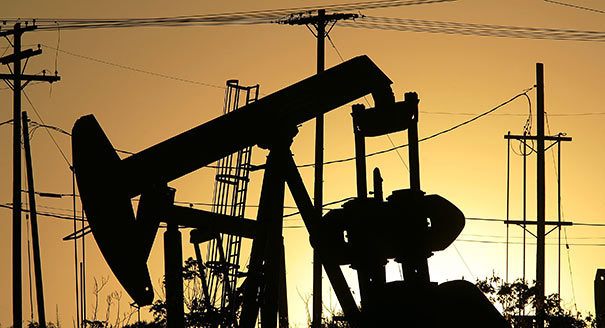
Policymakers have been focusing on long-term goals to wean California from oil, but here are three smart strategies to seriously shrink the petroleum sector’s climate impacts.
Source: Sacramento Bee
With the Trump administration’s withdrawal from the Paris climate agreement, Gov. Jerry Brown is trying to make meaningful progress at the climate conference in Bonn, Germany, as special adviser for states and regions.
Back home, California – the state with the second highest greenhouse gas emissions – has a real opportunity to reduce hefty emissions from oil production. While policymakers have been focusing on long-term goals to wean the state from oil, they have mostly missed smart strategies to seriously shrink the petroleum sector’s climate impacts.
Strategy 1: Use solar energy to generate steam.
California has the heaviest oil in the United States, which means it contains a lot of carbon and is so thick it does not readily flow to the surface. So companies inject significant volumes of steam underground to melt and lift it out. Natural gas is typically used to heat water into steam. This is where concentrated solar steam comes in. It has been tested in California, is being installed in Oman and appears ready for prime time. Solar can provide up to 80 percent of an oil field’s steam needs.
Strategy 2: Create a state library of chemical analysis of oil.
The composition of oil is changing. California imports two-thirds of the oil it refines. In-state oil is some of the oldest in production nationwide. And studies show that as oil ages, its greenhouse gas emissions increase. The state Division of Oil, Gas & Thermal Resources keeps electronic records of California oil fields, but there is no library of the chemical analysis of oil produced.
Strategy 3: Rethink refining.
There are 19 refineries in the state, and the largest are located along the coast. These refineries are equipped to handle California’s heavy oils, but they have a dirty little secret. To turn heavy oils into gasoline and diesel, refineries leave behind a solid residue known as petroleum coke. Petcoke, especially when it’s high in sulfur and heavy metals, is much too dirty to burn in California and elsewhere in the U.S. Instead, this highly-polluting coal substitute is generally exported to Asia.
California is well-positioned to stop producing petcoke altogether or to find a safe use that doesn’t involve burning. One promising option is greater use of refining techniques that add hydrogen, which dovetails well with California’s hydrogen transportation initiative.
It has been 130 years since California first tapped its highly complex oil. While technology has evolved to keep these depleted fields producing, it is taking more energy and generating more emissions to do so. As the state reduces oil demand with electric vehicles, automation and other strategies, it will be equally important to make oil production cleaner to keep California leading the charge against climate change.
This article was originally published in the Sacramento Bee.

Former Director and Senior Fellow, Energy and Climate Program
Gordon was director of Carnegie’s Energy and Climate Program, where her research focuses on oil and climate change issues in North America and globally.
Recent Work
Deborah Gordon, Stephen D. Ziman
Deborah Gordon, Smriti Kumble, David Livingston
Carnegie does not take institutional positions on public policy issues; the views represented herein are those of the author(s) and do not necessarily reflect the views of Carnegie, its staff, or its trustees.

In an interview, Ian Lustick and Eli Clifton discuss their new book on why a prominent ally has so much influence in America.

Michael Young

As the U.S. stumbles in its war with Iran, we are likely to see an acceleration of its disengagement from the region.
Michael Young

Middle Eastern states should welcome an accelerated U.S. disengagement from their region.
Michael Young

In an interview, former ambassador Charles Freeman assesses the Trump administration’s war against Iran.
Michael Young

By failing to address Palestinian representation, the current process is bound to lead to just another temporary arrangement.

Nathan J. Brown