

Article
Tristan Volpe
{
  "authors": [
    "Tristan Volpe"
  ],
  "type": "other",
  "centerAffiliationAll": "dc",
  "centers": [
    "Carnegie Endowment for International Peace"
  ],
  "collections": [],
  "englishNewsletterAll": "ctw",
  "nonEnglishNewsletterAll": "",
  "primaryCenter": "Carnegie Endowment for International Peace",
  "programAffiliation": "NPP",
  "programs": [
    "Nuclear Policy"
  ],
  "projects": [],
  "regions": [],
  "topics": [
    "Nuclear Policy"
  ]
}
Source: Getty
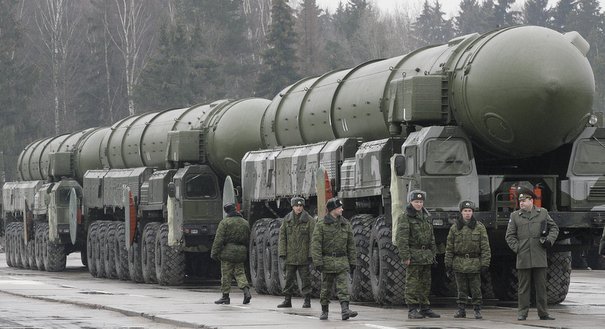
This chapter explains how a challenger can leverage its latent capacity to produce nuclear weapons to extract coercive benefits from a stronger target such as the United States.
Source: Oxford University Press
In 1975 the U.S. intelligence community observed that a handful of allies had attempted to compel concessions from Washington by dialing up the threat of nuclear proliferation.1 At various times, Australia, West Germany, Italy, and South Korea demanded enhanced military assistance and defense commitments from U.S. officials, while Japan bargained for the territorial reversion of Okinawa. Each ally tried to convince the United States that compliance would be rewarded with a pledge of nuclear restraint, while noncompliance might increase the risk of proliferation. In an assessment of these episodes, the Central Intelligence Agency determined that “future nuclear politics will almost certainly include states which will exploit their threshold positions, as much or more than their actual capabilities . . . . Such cases are likely to become more common.” The 1975 estimate proved prescient. Over the next four decades, Pakistan, North Korea, Egypt, Libya, Iran, and Saudi Arabia threatened to proliferate if the United States failed to comply with a range of demands.
This chapter explains how a challenger can leverage its latent capacity to produce nuclear weapons to extract coercive benefits from a stronger target such as the United States. Unlike the traditional forms of economic or military punishment assessed throughout this volume, nuclear latency gives a nation the capacity to move, or threaten to move, closer to the bomb if the target does not modify its behavior. Since nuclear weapons are the great strategic equalizers among nations, a proliferation threat puts pressure on other countries to forestall an adverse shift in the balance of power before it is too late. Adversaries fear a loss in relative military power. With only a few nuclear weapons, a weak state can undercut the conventional capabilities of a superior rival by creating an entirely new strategic calculus. Within an alliance, protégé proliferation increases the risk of entrapping a patron in a local conflict and restricts freedom of action.6 Rather than endure these costs and risks, the target may decide to concede to the challenger’s demands, provided the proliferation threat is backed with an assurance to foreswear nuclear weapons.
Countries bargain with nuclear latency in this way for two reasons. The most obvious is when external pressure or technical problems force a determined proliferator to cut a nuclear deal with the international community. Diplomacy is a tactical response in the evolution of a nuclear weapons program designed to ward off conflict, alleviate economic sanctions, or protect the underlying nuclear infrastructure. Even when the proliferator is targeted with the threat of punishment, compellence provides the strategic logic to transform a besieged nuclear program from a liability into a means of leverage. For instance, a former spokesman for Iran’s nuclear negotiation team claimed that the revelation of covert nuclear activities led them to pursue a strategy in 2003 of “turning threats unto opportunities,” by seeking to “obtain maximum concessions from their foreign counterparts in return for cooperation.” The related second motive for coming to the bargaining table is that nuclear latency is an alluring means to extract political and material benefits. To be sure, countries do not invest in expensive nuclear projects “simply to accumulate negotiating chips,” and some are undoubtedly driven to acquire nuclear weapons. But governments pursue multiple objectives over the life span of a nuclear program. Japan and North Korea developed plutonium production capabilities to achieve different objectives, but each government nonetheless integrated nuclear latency into a coercive campaign designed to get the United States to change its behavior.
When will a country be in the strongest position with its nuclear program to extract concessions from the United States? The central argument developed in this chapter is that allies and adversaries alike must surmount a dilemma to use nuclear technology as an effective bargaining chip. The more a challenger threatens to proliferate, the harder it becomes to reassure others that compliance will be rewarded with nuclear restraint. Since each technical step toward the bomb raises the costs of making a convincing nonproliferation promise, a state enters what this chapter refers to as a “Goldilocks zone” when it first acquires the ability to produce fissile material with enrichment and/ or reprocessing (ENR) technology. Subsequent increases in the latent capacity to produce nuclear weapons generate diminishing returns at the bargaining table because the state must go to greater lengths to signal its benign intentions, and nuclear programs exhibit considerable path dependency as they mature over time. Contrary to the conventional wisdom about power in world politics, more nuclear technology does not automatically translate into an effective tool of coercive diplomacy.
This argument about the coercive benefits of nuclear latency connects with two general themes in this volume. First, coercive diplomacy is believed to be quite hard, and strong actors often struggle to translate overwhelming power projection capabilities into successful compellence campaigns. This chapter suggests that latent forms of power may provide weaker nations with a unique yet effective tool of compellence because they can threaten to undercut the capabilities of a stronger target while offering an opportunity to prevent this power transition with a credible commitment of restraint. Second, once a challenger has enough latency to generate a credible threat, reassurances become essential for successful compellence. As Robert Art and Kelly M. Greenhill note in their chapter, however, little empirical work has been done on these types of promises, especially in the nonproliferation context. In line with the chapters by Todd Sechser and Philip Haun to explain the ability and willingness of powerful challengers to assure targets, this chapter explores the conditions under which a weaker nation will be in an optimal position to bind itself to a believable nonproliferation promise after threatening the United States. The chapter also contributes to a vibrant research agenda in the nuclear literature that challenges standard interpretations about the spread and impact of nuclear weapons. Scholars of proliferation have long focused on explaining the factors that drive nations to acquire or forgo nuclear weapons. But the possession of nuclear weapons “is not a binary variable with states either having a fully- fledged arsenal or nothing at all. It spans a continuum” from countries at various stages of nuclear latency (analyzed in this chapter), to new nuclear weapons states with limited resources attempting to deter conventionally superior adversaries (analyzed by Castillo in this volume). In an extension of recent work by Mark Bell, Vipin Narang, and Jasen Castillo about the distinct nuclear choices that regional powers make, this chapter starts to answer Scott Sagan’s call to explore “how reaching various thresholds in nuclear power technology” can be leveraged by latent nuclear nations to achieve foreign policy objectives.

Former Nonresident Fellow, Nuclear Policy Program
Tristan Volpe was a nonresident fellow at the Carnegie Endowment for International Peace and assistant professor of defense analysis at the Naval Postgraduate School.
Recent Work


Joseph Bahout, Perry Cammack, David Livingston, …
Carnegie does not take institutional positions on public policy issues; the views represented herein are those of the author(s) and do not necessarily reflect the views of Carnegie, its staff, or its trustees.

In an interview, Marc Lynch discusses his new book decrying the post-1990 U.S.-dominated order in the Middle East.

Michael Young

Both events also could force Washington to rethink or revive its Middle East partnerships.

Karim Sadjadpour
Disagreement between the United States and Iran over a revived nuclear accord may anchor volatile competition.

George Perkovich
A regular survey of experts on matters relating to Middle Eastern and North African politics and security.
Michael Young

The British, French, and German foreign ministers have formally accused Iran of breaking the terms of the 2015 Iran nuclear deal, a step that could lead to sanctions. Are the Europeans preparing to pull the plug?

Jarrett Blanc