

Other
François Godement, Ashley J. Tellis
{
  "authors": [
    "François Godement"
  ],
  "type": "other",
  "centerAffiliationAll": "dc",
  "centers": [
    "Carnegie Endowment for International Peace"
  ],
  "collections": [],
  "englishNewsletterAll": "asia",
  "nonEnglishNewsletterAll": "",
  "primaryCenter": "Carnegie Endowment for International Peace",
  "programAffiliation": "AP",
  "programs": [
    "Asia"
  ],
  "projects": [],
  "regions": [],
  "topics": []
}
Source: Getty
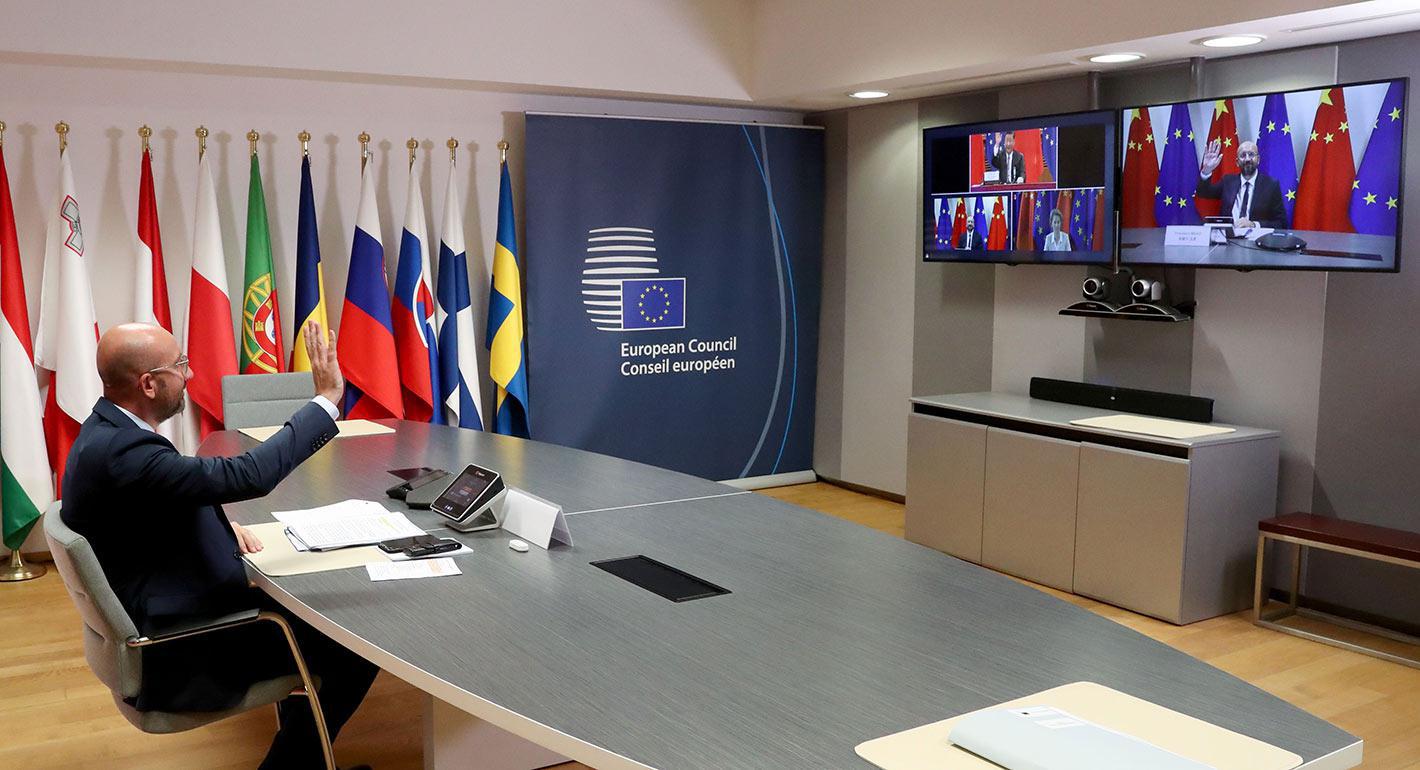
So far, talks aiming at policy changes from China have failed. Having had enough of waiting, the European Union used the occasion of a direct virtual meeting to point out their many divergences.
Source: Institut Montaigne
So far, talks aiming at policy changes from China have failed. Having had enough of waiting, the European Union just used the occasion of a direct virtual meeting, on June 22, 2020, with Xi Jinping and Prime Minister Li Keqiang, to point out their many divergences. This "frank and intense" talk by Europeans is a new and welcome start.
China has risen to become strong and self reliant, while Europe wants to foster multilateralism and global integration. Does that make Europe vulnerable? How did we get here, and where do we go?
2020 has been designated as the official EU-China year. Chancellor Angela Merkel had organized a second EU-China Summit in Leipzig with all 27 Member States during Germany’s semester presidency. The hope was to come to concrete agreements on a number of stalled policy issues with China. Given the deep economic involvement in China, and its EU presidency starting from July 2020, Germany holds a significant role in the advancement of the EU-China agenda.
However, China has just hit the pause button for the September "leaders’ meeting" in Leipzig, once more freezing talks with Europe. All things considered, it seems like China is in no urgent need for a deal with the EU, at least until the US November elections.
The Covid-19 outbreak however pushed the two parties to organize a short, last-minute virtual summit on June 22 to discuss cooperation and bilateral relations. This is occurring in a context where Europe is addressing its economic vulnerabilities. In addition to the EU’s new investment screening regulation, the EU and some Member States are creating new guidelines and temporary rules on financial take-over by non-EU actors. For instance, in March, the European Commission published a Guidance to the Member States Concerning Foreign Direct Investment. In June, it published a White Book on Foreign Subsidies, which is to be reviewed by member states by September.
This policy paper was originally published by Institut Montaigne.

Former Nonresident Senior Fellow, Asia Program
Godement, an expert on Chinese and East Asian strategic and international affairs, was a nonresident senior fellow in the Asia Program at the Carnegie Endowment for International Peace.
Recent Work
François Godement, Ashley J. Tellis

François Godement, Abigaël Vasselier
Carnegie does not take institutional positions on public policy issues; the views represented herein are those of the author(s) and do not necessarily reflect the views of Carnegie, its staff, or its trustees.