

Research
- +16
Stewart Patrick, Erica Hogan, Oliver Stuenkel, …
{
  "authors": [
    "Trinh Nguyen"
  ],
  "type": "commentary",
  "centerAffiliationAll": "dc",
  "centers": [
    "Carnegie Endowment for International Peace"
  ],
  "collections": [
    "Southeast Asia’s Diverse Futures",
    "Economic Risk in Asia"
  ],
  "englishNewsletterAll": "asia",
  "nonEnglishNewsletterAll": "",
  "primaryCenter": "Carnegie Endowment for International Peace",
  "programAffiliation": "AP",
  "programs": [
    "Asia"
  ],
  "projects": [],
  "regions": [
    "South Asia",
    "India",
    "Southeast Asia",
    "Indonesia"
  ],
  "topics": [
    "Economy",
    "Trade"
  ]
}
Source: Getty
It threatens to upend domestic and global markets already struggling with the fallout from the pandemic and the Russian invasion of Ukraine.
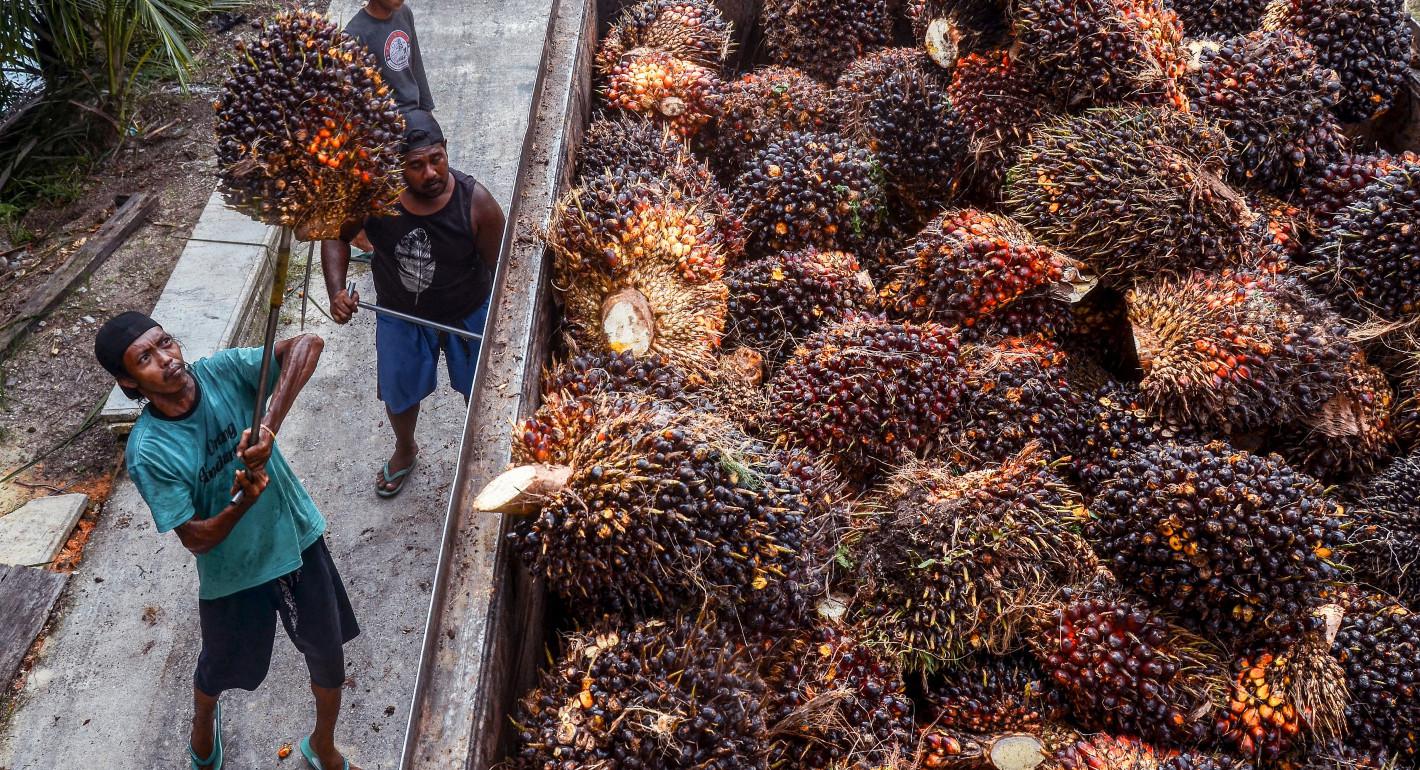
A stunning move from Indonesia has further upended global food markets already shaken by Russia’s invasion of Ukraine. On Friday, Indonesian President Joko Widodo announced a ban on the export of palm oil, the most widely used vegetable oil in the world. The ban covered both crude and refined palm oil exports, which are crucial for goods ranging from shampoos to Nutella to fried foods. Soon after, Indonesia clarified that it would not ban exports of crude palm oil, only the refined versions. Then, on Wednesday, it reversed itself and stated that the ban would in fact include the export of crude palm oil. The government implemented the export ban to mitigate rising food prices and to quell local unrest, but the fallout may upend the country’s economy anyway, while forcing global prices even higher.
Rising prices of vegetable oils were exacerbated by Russia’s invasion of Ukraine, as the two countries combined account for about 80 percent of the global sunflower oil market. But with more than a third of total global export share, Indonesia dominates the world’s production of vegetable fats and oil. It’s the country’s top export earner, reaping in $20 billion in 2020 from customers such as China, India, and Pakistan. Palm oil, which has few substitutes, is the biggest earner in that category, with Indonesia accounting for roughly 60 percent of global production. Second-ranking Malaysia, with 25 percent of global market share, won’t likely be able to fill Indonesia’s gap, as it is still normalizing production as borders are reopening and laborers returning after pandemic restrictions.
But by banning exports of a top-earning product, Indonesia will see its trade position deteriorate. It will bring in fewer export dollars while still importing more goods that are getting more expensive. After the ban was announced, the Indonesian rupiah dropped to an eight-month low, as markets expect export earnings to decline. By trying to protect its most vulnerable citizens, Indonesia inadvertently increased the costs of imports through the depreciation of its currency and likely created higher price spikes.
For the global economy, the ban will likely further push up food prices, which are at already at an all-time high. These goods’ cost rose 12.6 percent from February to March and 33.6 percent from March 2021 to last month, according to the Food and Agriculture Organization of the United Nations. Moreover, it will also likely spill over into other industries, since 50 percent of packaged goods contain palm oil, leading to higher prices for items like toothpaste or detergent. Year to date, crude palm oil prices have increased by 42 percent in U.S. dollars from an already staggering 28.2 percent hike in 2021, due to labor shortages in Malaysia that depressed production. Moreover, food production is highly energy-intensive—from fertilizers to transportation—and energy prices have increased sharply.
This means that everyone will feel the pinch from Indonesia’s palm oil export ban. But the poor are most vulnerable, as food costs account for a higher share of their expenses and they spend a larger share of their income on food. In Asia, India will likely feel the worst effects, as it is the biggest importer of palm oil and has a high share of food spending to total household expenditure. Import bills are becoming more expensive as fuel and agriculture prices increase. Food inflation is rising sharply, forcing India’s central bank to raise interest rates to fight inflation. And India isn’t alone. The Philippines, too, is vulnerable, as it is a net food importer and as higher vegetable oil will only add to inflationary pressures. Its central bank will likely hike interest rates in June. And Africa is particularly vulnerable due to its net import of food and high food share of total expenditure.
And it isn’t just developing economies—developed economies are also affected, as palm oil is adding fuel to inflationary fire. The U.S. Federal Reserve has turned hawkish on inflation, which rose to 8.5 percent year-over-year in March, and the Fed will act in the coming months to tighten monetary conditions and tame price pressures. Inflation in Australia hit a twenty-year-high of 5.1 percent year-over-year in the first quarter of 2022, and its central bank will also likely increase interest rates soon.
Much of the ban’s impact depends on whether Indonesia reverses course or how long it keeps the ban in place. Regardless, the impact of higher palm oil prices will reverberate across the globe. The trend is worst for food inflation, and that means worse purchasing power for everyone. A red-hot summer of discontent over rising food prices is looking increasingly likely, with economic, political, and social consequences spreading across the globe.

Former Nonresident Scholar, Asia Program
Trinh Nguyen was a nonresident scholar in the Asia Program at the Carnegie Endowment for International Peace.
Recent Work


Stewart Patrick, Erica Hogan, Oliver Stuenkel, …
Trinh Nguyen
Carnegie does not take institutional positions on public policy issues; the views represented herein are those of the author(s) and do not necessarily reflect the views of Carnegie, its staff, or its trustees.

The armed forces champion a form of capitalism that is generating revenue, but its reliance on rent faces diminishing returns, leaving the country with massive sunk costs and deferred returns, deepening dependency on external borrowing.

Yezid Sayigh

Morocco and Algeria, each in its own way, are having to navigate the global economic fallout of the U.S.-Israeli military campaign against Iran.

Yasmine Zarhloule
In an interview, Ishac Diwan looks at the merits and flaws in the draft legislation distributing losses from the financial collapse.

Michael Young

Mustaqbal Misr has expanded its portfolio with remarkable speed, but a lack of transparency remains.
Yezid Sayigh

Arab diaspora business communities in Egypt often mirror the same systemic challenges facing Egyptian businesses.

Nur Arafeh, Yezid Sayigh, Qaboul al-Absi, …