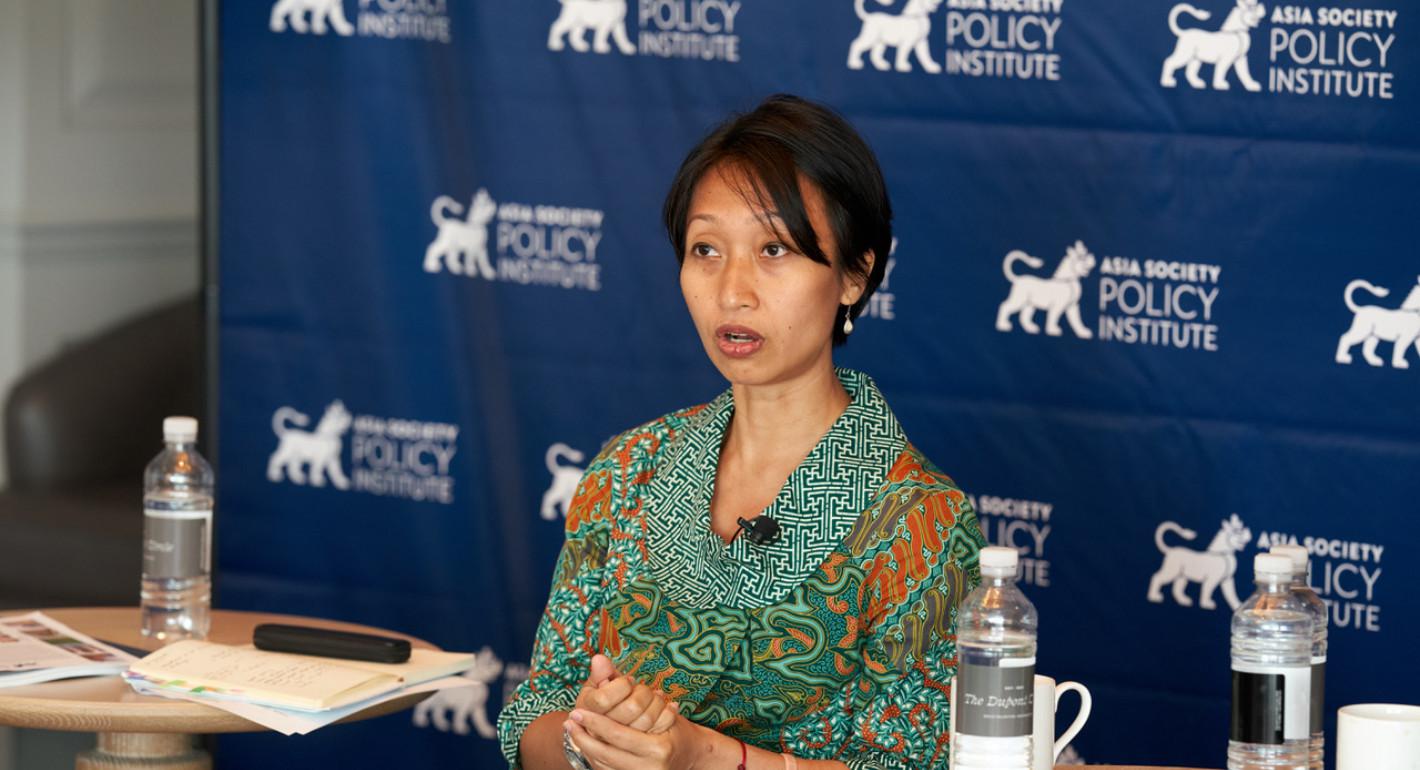
As a three-time Malaysian transplant to Washington, DC, I have had occasion to reflect on how Southeast Asia has been viewed through the filter of great power at different inflection points over the past two decades: before the terrorist attacks of September 11, 2001; after those attacks; and now, in the throes of Sino-American rivalry.
Those junctures have both coincided with and influenced my own research trajectory. My work on terrorism began in Kuala Lumpur just as the specter of the Jemaah Islamiyah group loomed in Southeast Asia. However, after the attacks in the United States, I spent the next twenty years interrogating the topic and its related contours as the so-called global war on terror not only abruptly reshaped security priorities but also divided the world into “with” and “against,” “us” and “them.”
Along the way, as debates on governance of the global commons converged with superpower rivalry, my focus grew to analyzing their implications for Southeast Asia through different lenses: the South China Sea dispute, the then Trans-Pacific Partnership, the Belt and Road Initiative, and norms and laws framing expected conduct in cyberspace. These are disparate issues, but the common thread tying them all together is the exercise, projection, and contestation of power.
Nowhere is this more evident now than in technology, which cuts across and fuses the political, economic, security, and military spheres. For Southeast Asia, the threat of another geopolitical bifurcation means navigating the risks of technological fragmentation while leveraging economic and global supply chain reconfigurations. But the narrative of the region’s autonomy is about much more than skirting great power competition. Buried under the headlines of major power decoupling is the reality that in Southeast Asia—a region both enriched and riven by mind-boggling ethnic, religious, linguistic, and political diversity—data-driven technologies can lead to a real difference between nation-building and nation-splitting, and between community-building and community-cleaving within the Association of Southeast Asian Nations.
Crucially, the promise of connectivity is about the place, position, and potential of some 700 million people, who make up the fifth-largest economy in a world in which existing structures, rules, and norms are being disrupted. The allure of digitalization for Southeast Asia should not lie just in economic development but also in the opportunity to question the adequacy of the international order, redress systemic inequities, and proactively contribute to the (re)setting of standards. Ultimately, it is about who determines the parameters of the region’s future, which worldviews are represented, and how they are shaped.
I join Carnegie excited at the prospect of working on these intersecting areas of security, tech, and governance involving Southeast Asia, along with all the accompanying interstices of people and power in between.