

Commentary
In an interview, Marc Lynch discusses his new book decrying the post-1990 U.S.-dominated order in the Middle East.
Michael Young

REQUIRED IMAGE
China warned the U.S. on April 25 that planned arms sales to Taiwan could damage relations, specifically in the area of cooperative nonproliferation efforts. Once considered the primary source of missile and WMD proliferation, in recent years China has scaled back these activites.
China made notable strides to join formal arms control regimes in the 1990s—beginning with its accession to the NPT in 1992, its signature in 1993 and ratification in 1997 of the Chemical Weapons Convention (CWC), and its cessation of nuclear weapon explosive testing and signature of the Comprehensive Test Ban Treaty (CTBT) in September, 1996. China has supported the multilateral negotiations on a fissile-material production cutoff convention. China also acceded to the Biological Weapons Convention (BWC) in 1984. Moreover, China has gradually clarified and upgraded the commitments it makes through export controls to nuclear and missile non-proliferation objectives. These nuclear export control clarifications and practical improvements are worthy of note, as are the areas of continued divergence.
China is still on a learning curve, and endemic problems of a political, cultural, and organizational nature exist in China’s decision-making and export control apparatus. There may be, as the old adage goes, "more than a slip between the cup and the lip." Thus, continued vigilance and diplomatic interchange with China will certainly be necessary on nuclear matters. China is not a member of the Nuclear Suppliers Group, which requires a recipient country to have full-scope IAEA safeguards before receiving nuclear assistance from a member country. China is, however, a member of the Zangger Committee, which only requires site-specific safeguards of the nuclear complex assisted. This has enabled China to help Pakistan with the Chasma nuclear power plant, that was recently commissioned.
The missile, chemical and biological areas will also require diligent attention. Up to 1994, China made progress on MTCR requirements. But it is still not clear that its professed restraint applies, as the MTCR requires, to missile components and technology—nor, indeed, that the restraint applies to more than complete "ground-to-ground" missiles. Compliance in this area, which is not defined by a treaty, is harder to nail down with standards that China can accept politically—and also entails more scope for ambiguities. In February 2001 the CIA reported to Congress that China continued to provide substantial support to Pakistan’s missile programs. The chemical area is defined by treaty, provides for declarations, and lists restricted items, but it covers a very large industrial domain.
1983 - China secretly agrees to provide Algeria with a research reactor.
1984 - China joins the IAEA.
1988 - China supplies Saudi Arabia with medium-range ballistic missiles.
1990 - China and Iran sign military technology transfer agreement.
1991 - Discovery of Algerian reactor; U.S. applies MTCR Category II sanctions on China and Pakistan for missile technology transfers.
1992 - Algeria agrees to place reactor under IAEA safeguards; China joins NPT; to end sanctions, China agrees to follow MTCR "guidelines."
1993 - U.S. again applies MTCR Category II sanctions on China and Pakistan.
1994 - To end sanctions, China agrees not to transfer any missiles inherently capable of delivering 500kg payload to at least 300km.
1995 - China suspends sale of two 300 Mwe reactors to Iran.
1996 - U.S. stops accepting Export-Import Bank loan applications from China after disclosure of ring magnet sale to Pakistan; U.S. drops sanctions after China agrees to improve export controls and limit assistance to safeguarded nuclear facilities; China signs CTBT.
1997 - China upgrades its nuclear export control procedures; China secretly agrees to halt all aid to Iranian nuclear programs.
1998 - China agrees to halt aid to Pakistan's nuclear weapons program; allegations of nuclear espionage.
2000 - Technology transfers continue but at relatively restrained pace.
Carnegie does not take institutional positions on public policy issues; the views represented herein are those of the author(s) and do not necessarily reflect the views of Carnegie, its staff, or its trustees.
In an interview, Marc Lynch discusses his new book decrying the post-1990 U.S.-dominated order in the Middle East.

Michael Young
Both events also could force Washington to rethink or revive its Middle East partnerships.

Karim Sadjadpour
Disagreement between the United States and Iran over a revived nuclear accord may anchor volatile competition.

George Perkovich
A regular survey of experts on matters relating to Middle Eastern and North African politics and security.
Michael Young
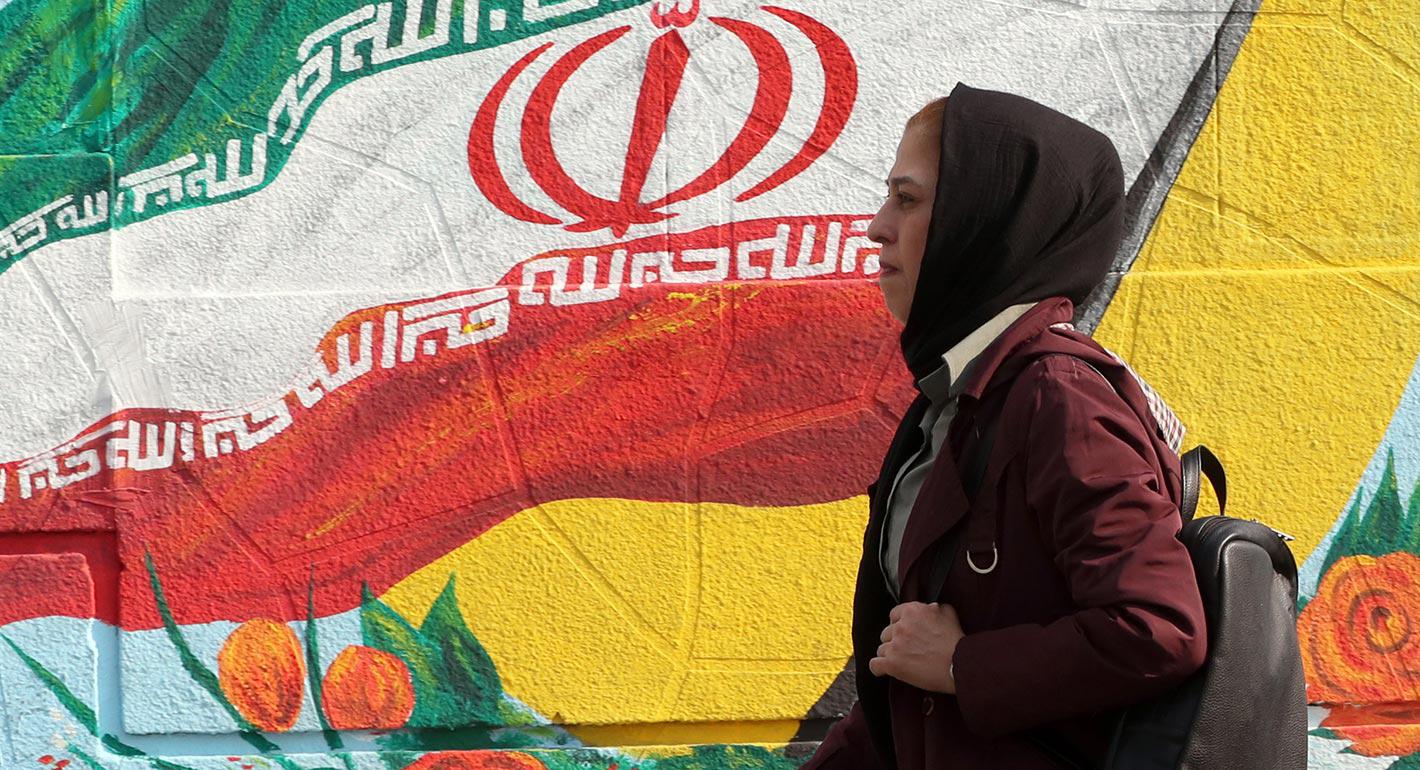
The British, French, and German foreign ministers have formally accused Iran of breaking the terms of the 2015 Iran nuclear deal, a step that could lead to sanctions. Are the Europeans preparing to pull the plug?

Jarrett Blanc