

Commentary
As the U.S.-led Coalition withdraws, the Kurds’ reliance on Baghdad, and on themselves, will only increase.
Wladimir van Wilgenburg
Source: Getty
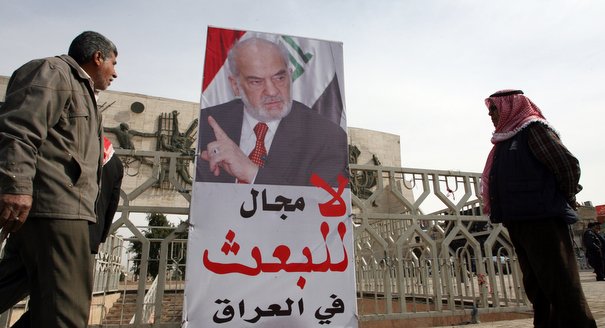
The Iraqi ad-hoc appeals panel, established to examine the Justice and Accountability Commission’s decision to ban over 500 candidates from the upcoming parliamentary elections, has concluded its work and has reinstated only 26 candidates.
The Iraqi ad-hoc appeals panel set up to examine the banning of over 500 candidates by the Justice and Accountability Commission has concluded its work, reinstating only 26 candidates. Initially, the appeal panel unbanned all candidates provisionally, reserving the right to re-examine the cases of those who won seats in the election. Responding to outrage by Iraq’s major Shi’i political parties as well as to political pressure, including from Prime Minister Nouri al-Maliki, the panel announced that it had gone beyond its legal responsibilities when it thought it should examine all bans and that it only needed to consider the 177 cases where candidates had appealed. Those cases could be examined and resolved before the March 7 elections. A few days later, most of the 177 banned candidates were excluded from the investigation process on the grounds that they had not filed their appeals properly; only 37 cases would be investigated. On February 11, Ali al-Lami, the head of the Justice and Accountability Commission, announced that 26 candidates (out of over 500) had been “unbanned” and could run.
Carnegie does not take institutional positions on public policy issues; the views represented herein are those of the author(s) and do not necessarily reflect the views of Carnegie, its staff, or its trustees.
As the U.S.-led Coalition withdraws, the Kurds’ reliance on Baghdad, and on themselves, will only increase.
Wladimir van Wilgenburg

As the U.S. stumbles in its war with Iran, we are likely to see an acceleration of its disengagement from the region.

Michael Young
The Zaidi government’s objective to collect weapons is constrained by regional conflict, but it can take certain measures at home.
Ali Al-Mawlawi

The accord represents a pivotal moment in the region to avert a security vacuum in the Gulf.


Azeema Cheema, Mohanad Hage Ali

In an interview, Jason Burke discusses his sweeping account of the “revolutionists” who so shaped the 1970s and early 1980s.
Michael Young