

In The Media
Michele Dunne, Robert Kagan
{
  "authors": [
    "Robert Kagan"
  ],
  "type": "legacyinthemedia",
  "centerAffiliationAll": "",
  "centers": [
    "Carnegie Endowment for International Peace"
  ],
  "collections": [],
  "englishNewsletterAll": "",
  "nonEnglishNewsletterAll": "",
  "primaryCenter": "Carnegie Endowment for International Peace",
  "programAffiliation": "",
  "programs": [],
  "projects": [],
  "regions": [
    "North America",
    "United States",
    "East Asia",
    "China",
    "Taiwan"
  ],
  "topics": [
    "Security",
    "Military",
    "Foreign Policy"
  ]
}
REQUIRED IMAGE
China's White Paper on Taiwan and Jiang Zemin’s desire to make reunification his legacy indicate that Taiwan will be attacked soon. A massive, coordinated air strike using short-range ballistic missiles could cripple Taiwan's air defenses and early warning systems, neutralizing its air force as well as naval ports. The U.S. military has no capabilities for defending Taiwan in such a scenario.
Source: Carnegie
Reprinted from the Washington Post, March 12, 2000
The Clinton administration and a bevy of China experts want to portray China's recent threats against Taiwan as empty bluster. Top intelligence and military officials say the Chinese don't have the wherewithal to launch an invasion of Taiwan, and won't for some time. President Clinton, ever the politician, says that Beijing is just playing hardball to try to influence this week's Taiwanese presidential elections. According to CIA director George Tenet, "our hope is that after the election this all settles down and that the normal pattern of peaceful dialogue between the two countries resumes." Who knew the CIA was in the hoping business?
In fact, a major conflict is looming. China's White Paper on Taiwan signaled a new phase of impatience in Beijing, and it wasn't the only sign. President Jiang Zemin has declared in recent months that he intends to make reunification of the motherland his legacy. According to veteran China-watcher Willy Wo-lap Lam, that means a resolution of the Taiwan issue must be achieved, at the latest, by the 17th Communist Party Congress in 2007, when Jiang will be 81 and on his way out of power. Senior Chinese military officials now speak openly about a "fixed timetable" for reunification.
Meanwhile, one of the Pentagon's top experts on the Chinese military believes Beijing has figured out a way to force Taiwan's capitulation without an invasion. According to Mark A. Stokes, a massive, coordinated air strike employing hundreds of short-range ballistic missiles could cripple Taiwan's air defenses and early warning systems, destroy its command, control and communications centers and demolish Taiwan's eight primary airfields, thereby neutralizing the Taiwanese air force as well as its naval ports. Beijing's own military analysts write that China could achieve air superiority over a paralyzed Taiwan within 45 minutes, suffering few casualties. It could then force the Taiwanese to sue for peace on Beijing's terms.
This strategic plan explains China's massive buildup of short-range ballistic missiles across the strait from Taiwan. In 1995 China deployed only 40 of the M-9 missiles. By the end of last year, it had 200 and was increasing its stockpile at a rate of 50 missiles per year. The Pentagon estimates that China could have 800 missiles by 2005, all aimed at Taiwan. And thanks to China's acquisition of U.S. technology--both by theft and by purchase from American corporations--those missiles will be highly accurate.
Ask a Pentagon official how the United States would respond to a Chinese missile attack on Taiwan, and you get a blank stare. The U.S. military has no capability and no plans for defending Taiwan in such a scenario, even though it is more likely than a full-scale invasion. An invasion would require a massive and therefore easily detectable mobilization of Chinese forces, giving the United States some time to move forces to the region and try to interdict the assault. But a massive missile strike comes with little or no warning, and by the time U.S. forces arrived on the scene Taiwan's military would be rubble. What would U.S. aircraft carrier battle groups do? Launch retaliatory attacks against missile bases on the mainland of China? Chinese military officials may gamble that an American president would not want to escalate a war with China with so little prospect of undoing the fait accompli on Taiwan.
The Clinton administration's conviction that the Chinese would launch a Normandy-style invasion to seize and hold Taiwan is both convenient and reflects American-style thinking about war. A recent RAND study notes that the Chinese historically have taken a different view of the use of force. Their 1950 intervention in Korea, their 1962 attack on India and their 1979 incursion into Vietnam did not aim to take and hold territory but to "achieve a political effect," to force the adversary to "make a radical reevaluation of its goals and to acquiesce in a new status quo."
Nor are the Chinese daunted by American military superiority. As former Pentagon official Michael Pillsbury notes, Chinese strategists are developing tactics of "asymmetrical" warfare that allow an inferior power to prevail against a stronger enemy in a "local war under high-tech conditions." Surprise is a critical factor in Chinese strategic thinking.
If the Chinese are contemplating a missile attack on Taiwan sometime in the next few years, what can the United States do to prevent it? Clinton officials pray that the March 18 elections will produce a government in Taiwan willing to accommodate Beijing's demands. That is unlikely. Polls show a majority of Taiwanese oppose reunification: A growing percentage no longer even consider themselves Chinese. The next Taiwanese president will probably maintain the status quo that Beijing considers unacceptable.
What then? In the absence of diplomatic or political solutions, the only way to avert a future Chinese attack on Taiwan is to deter it right now, and that may require some tough decisions. The Taiwanese are begging the Clinton administration to sell them four guided missile destroyers equipped with the Aegis radar system, which would give Taiwan early warning of an attack and significantly improve its ability to knock out incoming missiles. So far the administration has opposed the sale on the grounds that it would offend Beijing.
The United States also needs to convince Chinese leaders that Washington will not just twiddle its thumbs when an attack begins. Right now, the U.S. military conducts no exercises with Taiwan, engages in no joint planning and cannot even communicate with the Taiwanese military in a crisis. This preposterous legacy of America's normalization of relations with China more than two decades ago has become a positive invitation to war. But the Clinton administration opposes remedying the problem, because that too would offend Beijing.
In its classic form, the psychology of appeasement convinces peace-loving peoples that any effort to deter a future conflict is too provocative and therefore too dangerous. The appeasing nation comes to believe that defenselessness and lack of preparation for a conflict is not only safer but a sign of maturity. And then the war starts.

Former Senior Associate
Kagan, author of the recent book, The Return of History and the End of Dreams (Knopf 2008), writes a monthly column on world affairs for the Washington Post and is a contributing editor at both the Weekly Standard and the New Republic.
Recent Work

Michele Dunne, Robert Kagan
Robert Kagan, Michele Dunne
Carnegie does not take institutional positions on public policy issues; the views represented herein are those of the author(s) and do not necessarily reflect the views of Carnegie, its staff, or its trustees.

The Plaza Accord was not an externally imposed punishment of Japan but part of a broader restructuring that Japanese economists and policymakers themselves recognized was necessary. Its effects were undermined, however, when Tokyo responded to the resulting slowdown with policies that exacerbated investment, credit expansion, and the very imbalances the adjustment was intended to resolve.

Michael Pettis

The nuclear relationship between China and the United States is increasingly shaped by widening perception gaps rather than deliberate strategic design.

Tong Zhao
China’s banking crisis in the 2000s was resolved by transferring the costs to households through financial repression—a decision that recapitalized the banks while exacerbating the structural imbalances that continue to shape the Chinese economy today.
Michael Pettis

Chinese biotech companies have been on the receiving end of U.S. economic coercion. Yet their responses have differed significantly because firm and state interests are not uniformly aligned. For Washington, treating all Chinese tech firms the same, irrespective of their actual interests, risks pushing them farther into Beijing’s corner.

Xue Gong
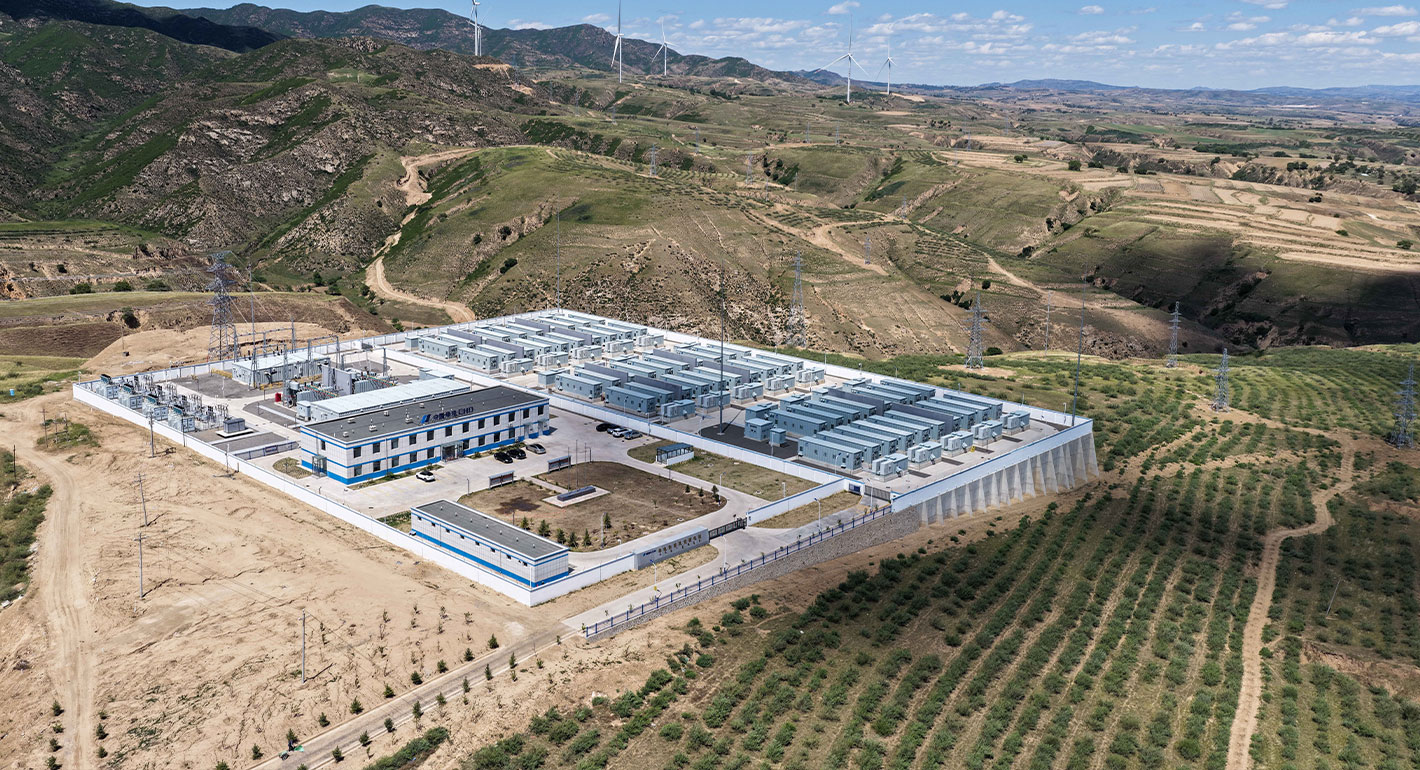
China’s latest energy plan explicitly calls for integrating data centers into the electricity system, particularly connecting them to green energy. It appears Beijing wants to use compute as a source of domestic demand to absorb renewables excess capacity.

Damien Ma