

In The Media
Josh Kurlantzick
{
  "authors": [
    "Josh Kurlantzick"
  ],
  "type": "legacyinthemedia",
  "centerAffiliationAll": "dc",
  "centers": [
    "Carnegie Endowment for International Peace"
  ],
  "collections": [],
  "englishNewsletterAll": "asia",
  "nonEnglishNewsletterAll": "",
  "primaryCenter": "Carnegie Endowment for International Peace",
  "programAffiliation": "AP",
  "programs": [
    "Asia"
  ],
  "projects": [],
  "regions": [
    "South Asia"
  ],
  "topics": []
}
Source: Getty
Bhutan's supposed uniqueness has attracted upscale Western travelers, who have brought on the very change Bhutan supposedly resisted.
Source: The New Republic

But King Jigme and Bhutan are nothing if not unusual. For years, the kingdom, home to only 800,000 people wedged between giants China and India, has been the subject of scrutiny by social scientists, journalists, and generally anyone unhappy with industrialization and economic globalization. You see, Jigme has kept Bhutan largely off-limits to the world--the country banned television until 1999 and did not permit travelers until the early 1970s--one of the last nations to do so. When it does accept tourists, it keeps them to strict itineraries handled by local guides. Bhutan has no law protecting freedom of speech, its citizens are required to wear traditional dress during the day, and the government sets limits on industrial development. And, instead of promoting Western notions like gross national product, Jigme created a concept called "gross national happiness" influenced by Buddhism.
According to the Independent, Jigme has explained that gross national happiness means the "acquisition of contentment rather than capital"--a feeling of well-being derived from social and economic development, preservation of culture, and environmental conservation, among other things. Western academics picked up on the idea, introducing an annual conference on gross national happiness that features papers like "Planning for Sustainable Happiness: Harmonizing our Internal and External Landscapes."
When I visited Bhutan two years ago, I found that Jigme's leadership had delivered a kingdom with impressive levels of conservation and confidence in itself, and a people with a strong sense of identity. In rural areas, Bhutan remained almost unaffected by the passage of time. Dzongs--massive, fortress-like monasteries consisting of white stone citadels with imposing pagoda-roofs--towered over the landscape, pristine marvels compared to the ruined regions of Nepal, Tibet, and northern India, much of which are scarred by logging and industry. Inside the dzongs' prayer halls, red-robed novice monks chanted sutras and burnt smoky butter lamps in front of imposing statues of local deities. In the plains around the dzongs, men threshed rice by hand and cut new fields with small trowels, while local women shooed cows, boars, and wooly yaks along the footpaths.
But in Thimphu, the capital, I found that gross national happiness did not always live up to its advertising. Frustrated by the lack of economic opportunity, seeing the relative modernity of India on Indian TV broadcast into Bhutan, and chafing at restrictions on dress and speech, young Bhutanese have begun to lash out. In recent years, once-sleepy Thimphu has witnessed a crime wave, and one study showed that a significant minority of young Bhutanese was watching TV twelve hours per day. In downtown Thimphu, young men shucked their traditional gho--checked, bathrobe-like outfits cut off at the knees--for jeans, T-shirts, and mobile-phone holsters at night. They prowled in bunches and mock-brawled in city squares, mimicking the American professional wrestling shown on TV. Adolescents have also developed major drinking problems--I saw young Thimphu residents spending evenings sucking down beers and cough syrup and then fighting in the streets for real. One night, I walked out of my hotel to find two young men bloodying each other on the icy main drag. Like NHL referees waiting for combatants to fall on the ice, a small crowd let them fight until they hit the ground, then separated the boys.
Bhutan's supposed uniqueness has also attracted upscale Western travelers, who have brought on the very change Bhutan supposedly resisted. High-end hoteliers have set up shop in Bhutan, building luxury resorts complete with yoga classes, masseuses imported from Thailand, and pan-Asian cuisine that could have come straight from Bali. Celebrities have been decamping onto tiny Thimphu. One day, I went hiking with a local Bhutanese guide, Ugyen. He hurried me up a mountain, and when I reached the top, he told me, "We're making pretty good time. ... Maybe if we get to Space 34 [a local nightclub] early we'll see Cameron Diaz." "Cameron Diaz?" I asked, befuddled. The idea of seeing a Charlie's Angel in a place where some of the country still lacked electricity seemed, at the least, far-fetched. "Yeah, she was here recently," Ugyen said. "She was on the dance floor all night at Space 34, dancing real sexy with a group of people. ... I think she had some rapper with her, too. You know that guy--Redman?" (I later found out she was shooting an MTV show on the environment in Bhutan.)
A depressing tale, perhaps--just another traditional culture that could not stand up to modernity. Indeed, when I was in Bhutan, I met many Westerners who'd come to see gross national happiness and left disappointed by Bhutan's nightclubs, parties, and cell phones. Except that, in recent years, the king himself apparently decided that his subjects could embrace elements of the modern world without losing their unique identity. He has promoted Internet use and pushed Bhutan to move toward a constitutional monarchy and, eventually, to a democracy.
The king might be right. When I finally made it to Space 34, I could see why Cameron Diaz would feel comfortable there. An imported Indian DJ was spinning pounding techno and U.S. gangsta rap. Hordes of young Bhutanese in spaghetti straps and high boots, leather jackets and silk shirts were sitting on couches or grinding close together on the dance floor. Though Bhutan recently became the first nation in the world to ban the sale of tobacco, which the government sees as a corrupting influence, revelers were lighting up black-market smokes with abandon.
But tradition was not disappearing. As the evening approached midnight, the dance floor overflowed with revelers, and the crowd pushed Ugyen and me towards a small group of dancers dressed in gho. As I walked to the bar to grab another glass of champagne, I could hear their voices ringing in my ears, calling out: "Even when I'm with my boo, Boy you know I'm crazy over you. Even when I'm with my boo, Boy you know I'm crazy over you."
This article was originally published in The New Republic (online).

Former Visiting Scholar, China Program
A special correspondent for The New Republic, a columnist for Time, and a senior correspondent for The American Prospect, Kurlantzick assesses China’s relationship with the developing world, including Southeast Asia, Africa, and Latin America.
Recent Work
Josh Kurlantzick
Carnegie does not take institutional positions on public policy issues; the views represented herein are those of the author(s) and do not necessarily reflect the views of Carnegie, its staff, or its trustees.
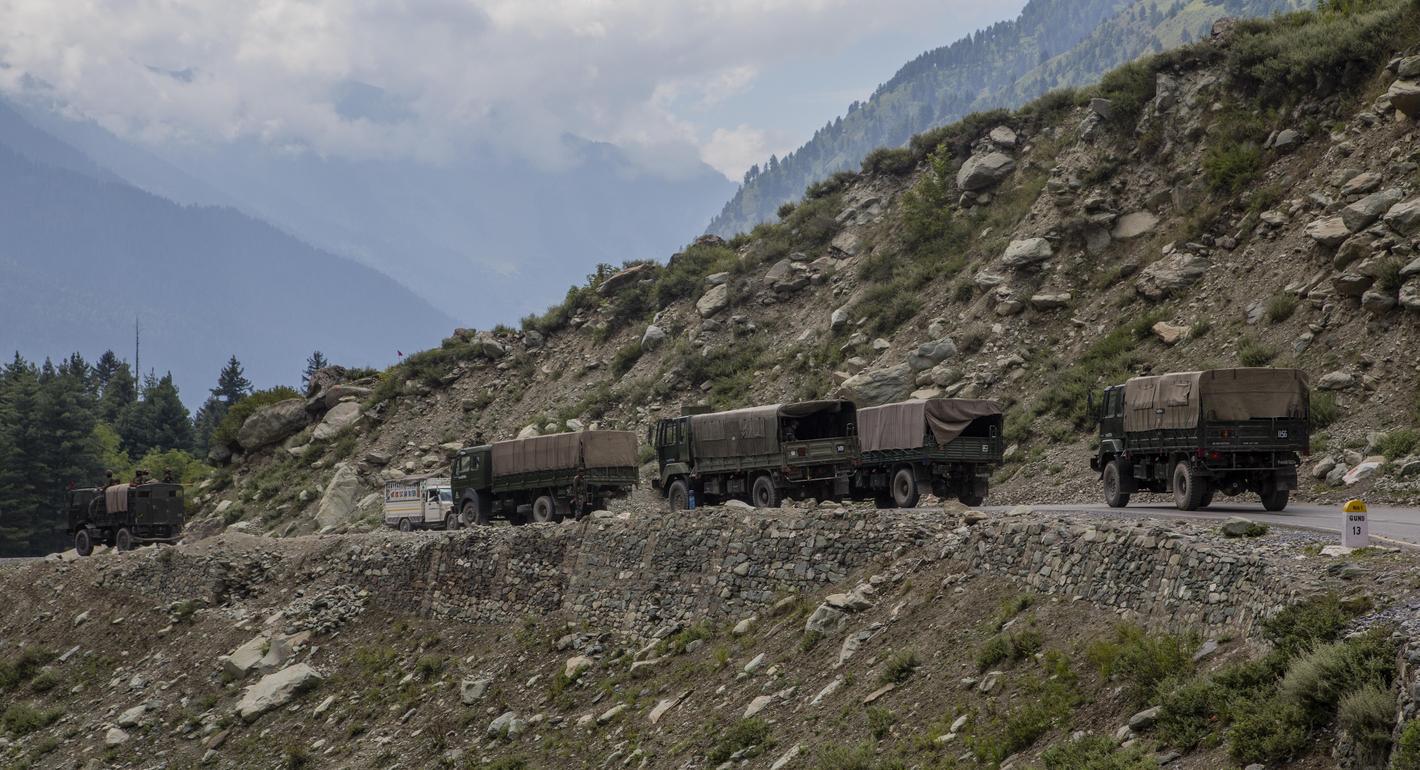
Can China and India disengage from contested territories along the border?

Paul Haenle, Ashley J. Tellis, Han Hua, …
The government extends the uncertainty with its two new taxes and digital rupee.


Anirudh Burman, Priyadarshini D.
China and Pakistan should strive to build a RMB closed-chain cycle based on capital exports and trade returns.

Lu Yang
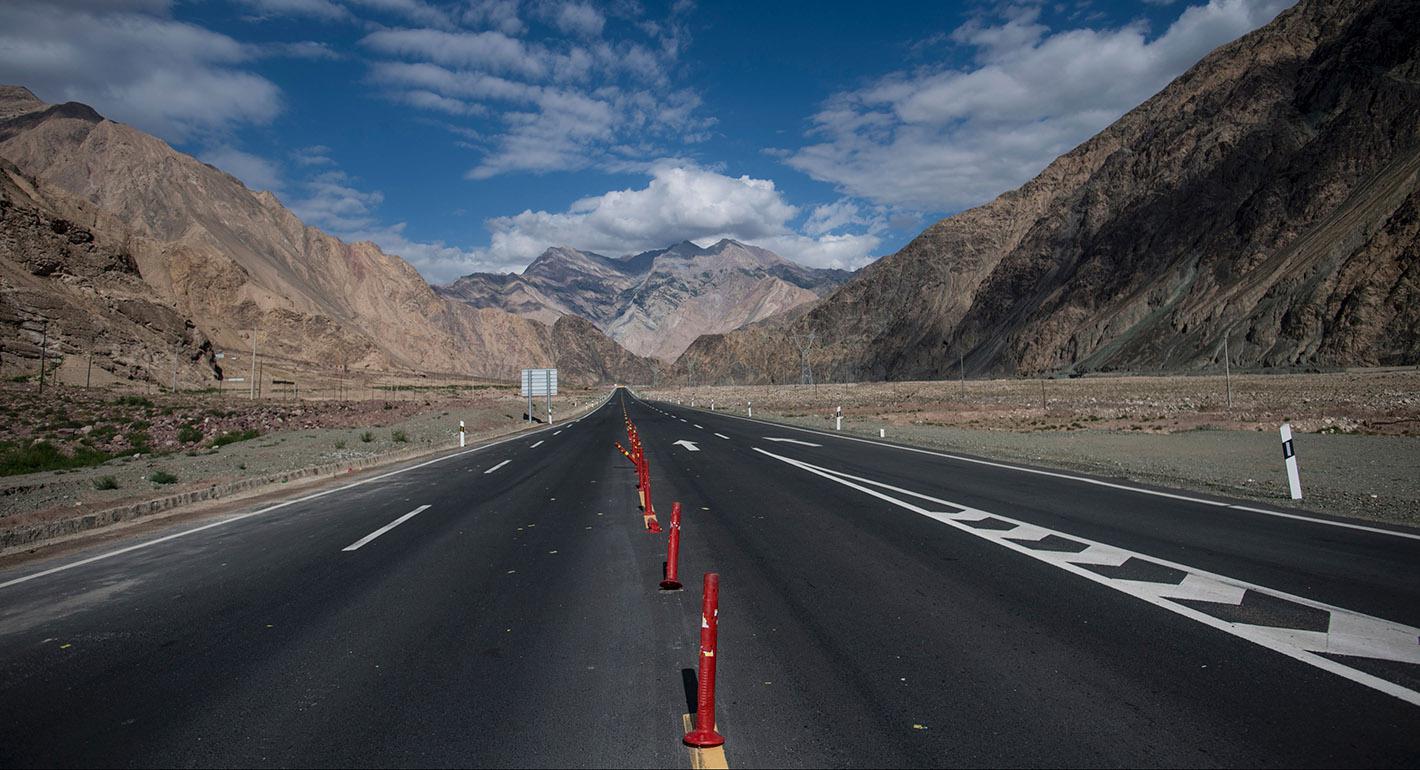
The Trump administration holds a decidedly critical view of China’s infrastructure initiatives in Pakistan. Although there is much to criticize in the China-Pakistan Economic Corridor, the administration’s fixation on commercial and economic issues threatens to distract U.S. policymakers from deeper concerns.
Daniel Markey
India manages a delicate balancing act between the United States and China, but in several key areas, the three giants could advance shared interests.
Lu Yang