

Article
Pierre Goldschmidt
{
  "authors": [
    "Pierre Goldschmidt"
  ],
  "type": "other",
  "centerAffiliationAll": "dc",
  "centers": [
    "Carnegie Endowment for International Peace"
  ],
  "collections": [],
  "englishNewsletterAll": "ctw",
  "nonEnglishNewsletterAll": "",
  "primaryCenter": "Carnegie Endowment for International Peace",
  "programAffiliation": "NPP",
  "programs": [
    "Nuclear Policy"
  ],
  "projects": [],
  "regions": [
    "Middle East"
  ],
  "topics": [
    "Nuclear Policy",
    "Nuclear Energy"
  ]
}
REQUIRED IMAGE
The international community must reject the passive notion that more countries are unavoidably destined to acquire nuclear weapons, and instead must implement further measures to dissuade and deter non-nuclear weapon states from seeking such weapons.
The international community must reject the passive notion that more countries are unavoidably destined to acquire nuclear weapons, and instead must implement further measures to dissuade and deter non-nuclear weapon states from seeking such weapons, argues Visiting Scholar Pierre Goldschmidt in Priority Steps to Strengthen the Nonproliferation Regime, a new Carnegie Endowment for International Peace Policy Outlook.
Goldschmidt advocates that current Non-proliferation Treaty (NPT) obligations already exist to deter nuclear weapons development, yet the international community must become more demanding in their enforcement. “The incapacity … over thirteen years to take any dissuasive measure against North Korea’s nuclear weapons program until it was too late has considerably undermined the nuclear nonproliferation regime,” he writes. “This weakness is the result of some nuclear weapon states choosing to delay or oppose reasonable enforcement measures.”
In addition to expanding and implementing the recommendations recently made by the Secretariat of the International Atomic Energy Agency (IAEA) to its Board of Governors, Goldschmidt recommends the adoption of additional measures to better address circumstances of non-compliance with IAEA safeguards agreements. “The most effective, unbiased, and feasible way to establish a legal basis for the necessary verification measures in circumstances of non-compliance is for the United Nations Security Council to adopt a ‘generic’ (i.e., not state specific) and legally biding resolution stating that if a state is reported by the IAEA to be in non-compliance, a standard set of actions would result.”
This is a web-only publication.
Click on the link above for the full text of this Carnegie publication.
About the Author
Pierre Goldschmidt who is based in Brussels, is a visiting scholar in the Carnegie Endowment’s Nonproliferation Program. He is also a member of the Board of Directors for the Association Vinçotte Nuclear (AVN) – a NGO charged with verifying compliance of nuclear facilities with Belgian safety regulations. He previously served as the Deputy Director General, Head of the Department of Safeguards, at the International Atomic Energy Agency (IAEA) from 1999 to June 2005.

Former Nonresident Senior Associate, Nuclear Policy Program
Goldschmidt was a nonresident senior associate at the Carnegie Endowment.
Recent Work
Pierre Goldschmidt
Pierre Goldschmidt
Carnegie does not take institutional positions on public policy issues; the views represented herein are those of the author(s) and do not necessarily reflect the views of Carnegie, its staff, or its trustees.
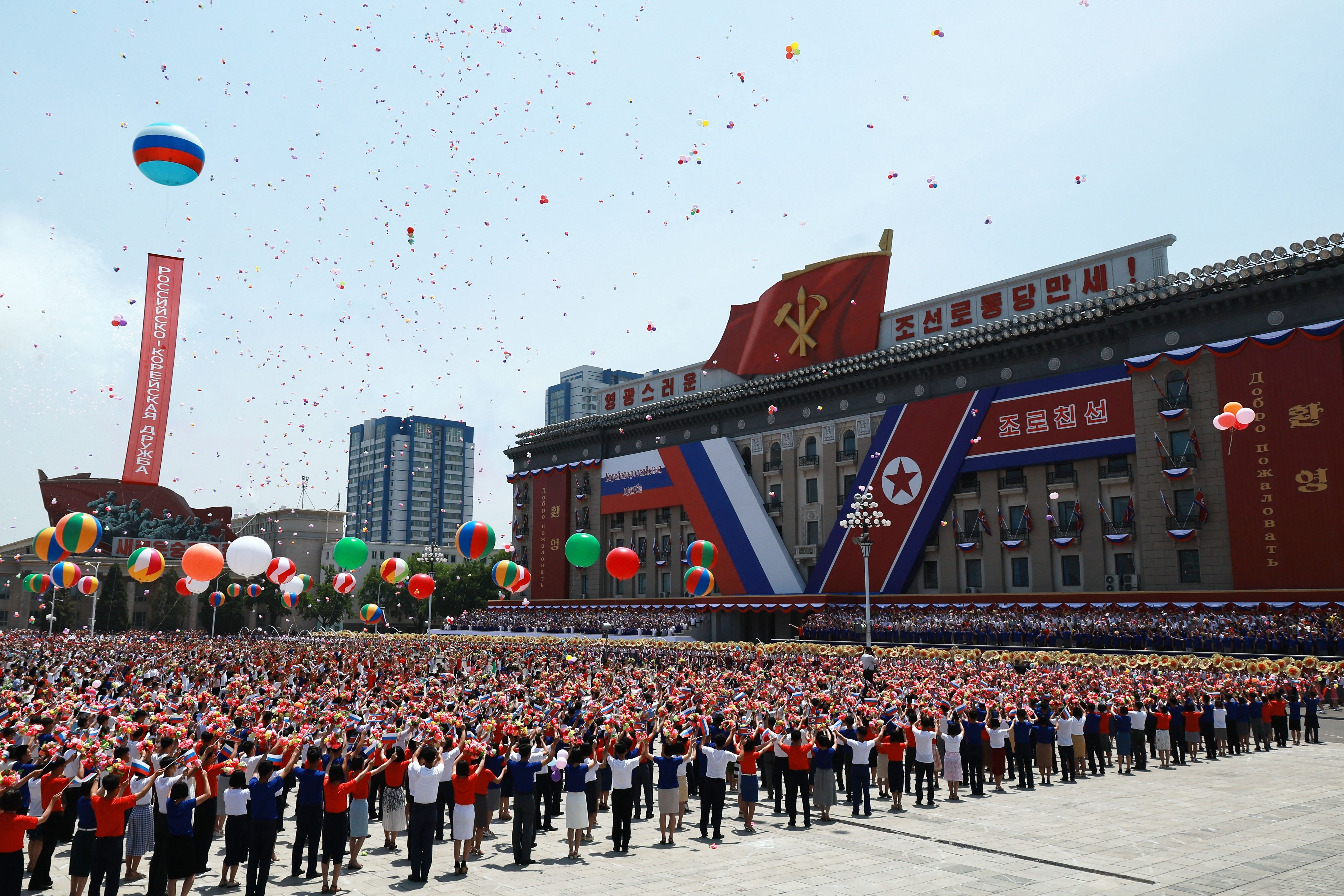
Faced with an increase in strategic maneuvering by Moscow and Pyongyang, Beijing will not sit idly by and allow Putin and Kim to shape the security environment on its behalf.

Tong Zhao
The advantage that China has over other global powers, especially America, is that its foreign policy is closely aligned with those of many of the Middle Eastern countries.


Jin Liangxiang, Maha Yahya, Hesham Alghannam
China views U.S. missile defense as posing a greater potential threat to China’s nuclear deterrent than other U.S. military capabilities.
Tong Zhao, Dmitry Stefanovich

It’s about managing oil prices, bread prices, and strategic partnerships.



Amr Hamzawy, Karim Sadjadpour, Aaron David Miller, …
There are certainly other issues among other P5 countries, but the U.S.-China competition is so by far the most consequential great power rivalry in the international system, and it has very far-reaching geopolitical implications at and beyond the Pacific region.
Tong Zhao