• Commentary
  • Research
  • Experts
  • Events
Carnegie China logoCarnegie lettermark logo
{
  "authors": [
    "Josh Kurlantzick"
  ],
  "type": "legacyinthemedia",
  "centerAffiliationAll": "dc",
  "centers": [
    "Carnegie Endowment for International Peace"
  ],
  "collections": [],
  "englishNewsletterAll": "asia",
  "nonEnglishNewsletterAll": "",
  "primaryCenter": "Carnegie Endowment for International Peace",
  "programAffiliation": "AP",
  "programs": [
    "Asia"
  ],
  "projects": [],
  "regions": [
    "China"
  ],
  "topics": [
    "Military"
  ]
}

Source: Getty

In The Media

Beijing's Big Push

Link Copied
By Josh Kurlantzick
Published on Apr 9, 2007

Source: Newsweek International

Last week Chinese president Hu Jintao arrived in Russia for a three-day visit. Remarkable as the trip itself—not long ago, Chinese leaders rarely left home—was the way Hu was feted by this former enemy. Russia has declared 2007 the "Year of China," and plans to hold hundreds of China-related business, educational and sports events in the upcoming months. Hu and Russian President Vladimir Putin presided over the opening of a massive new Chinese-culture exhibit in Moscow and pledged to build a series of cooperative energy projects. They also agreed to work toward aligning their stances at the United Nations.

This article was originally published in the April 7, 2007 issue of Newsweek International. For the full text of the article, click here.

About the Author

Josh Kurlantzick

Former Visiting Scholar, China Program

A special correspondent for The New Republic, a columnist for Time, and a senior correspondent for The American Prospect, Kurlantzick assesses China’s relationship with the developing world, including Southeast Asia, Africa, and Latin America.

    Recent Work

  • In The Media
    Fighting Terrorism With Terrorists

      Josh Kurlantzick

  • Other
    Beijing’s Safari: China’s Move into Africa and Its Implications for Aid, Development, and Governance

      Josh Kurlantzick

Josh Kurlantzick
Former Visiting Scholar, China Program
Josh Kurlantzick
MilitaryChina

Carnegie does not take institutional positions on public policy issues; the views represented herein are those of the author(s) and do not necessarily reflect the views of Carnegie, its staff, or its trustees.

More Work from Carnegie China

  • Commentary
    China Financial Markets
    Who Paid for China’s Last Debt Cleanup, and Who Will Pay for the Next?

    China’s banking crisis in the 2000s was resolved by transferring the costs to households through financial repression—a decision that recapitalized the banks while exacerbating the structural imbalances that continue to shape the Chinese economy today.

      Michael Pettis

  • Robot arm with disposable test tube virus sampling in laboratory
    Commentary
    Caught in the Middle: Chinese Biotech Firms’ Divergent Responses to U.S. Sanctions

    Chinese biotech companies have been on the receiving end of U.S. economic coercion. Yet their responses have differed significantly because firm and state interests are not uniformly aligned. For Washington, treating all Chinese tech firms the same, irrespective of their actual interests, risks pushing them farther into Beijing’s corner.

      Xue Gong
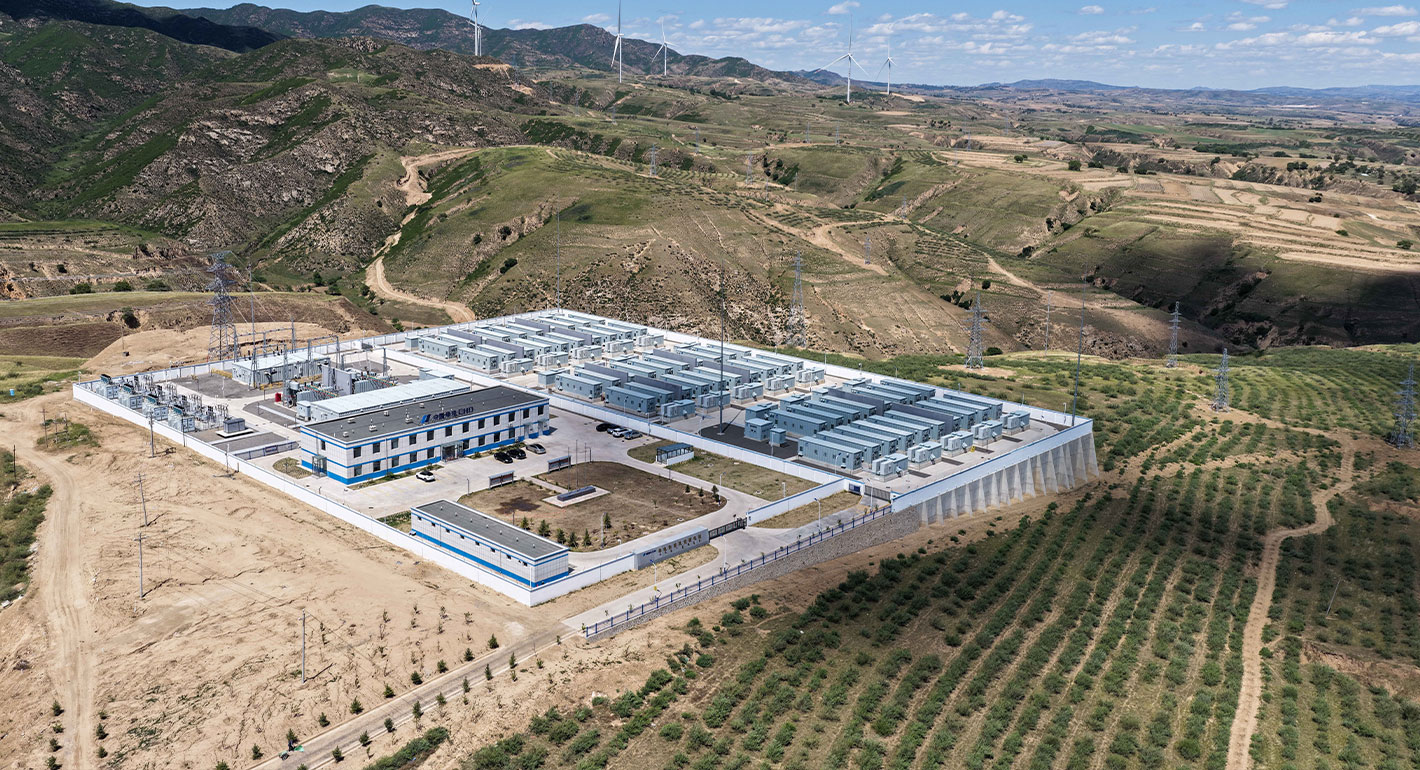
  • An aerial drone photo taken on June 4, 2026 shows a wind-photovoltaic power storage station of Huadian Inner Mongolia New Energy Co., Ltd. as part of the Horinger data center cluster green energy supply demonstration project, in Hohhot, north China's Inner Mongolia Autonomous Region.
    Commentary
    Are Data Centers the Solution to China’s Renewables Excess Capacity?

    China’s latest energy plan explicitly calls for integrating data centers into the electricity system, particularly connecting them to green energy. It appears Beijing wants to use compute as a source of domestic demand to absorb renewables excess capacity.

      • Damien Ma

      Damien Ma

  • Commentary
    Emissary
    Trump and Xi Are Angling for Three Years of Stability

    But their "principal to principal" model will only be as effective as the political strength of each leader back home.

      • Damien Ma

      Damien Ma

  • Commentary
    China Sells Stability Amid American Volatility

    U.S. unpredictability has allowed China to capitalize on its positioning as the “responsible great power”. Paradoxically, the more China wins the perception game, the more likely expectations will rise for Beijing to deliver not just words but to demonstrate with its deeds.

      Chong Ja Ian

Get more news and analysis from
Carnegie China
Carnegie China logo, white
Keck Seng Tower133 Cecil Street #10-01ASingapore, 069535Phone: +65 9650 7648
  • Research
  • About
  • Experts
  • Events
  • Contact
  • Careers
  • Privacy
  • For Media
Get more news and analysis from
Carnegie China
© 2026 Carnegie Endowment for International Peace. All rights reserved.


