

Commentary
Faced with an increase in strategic maneuvering by Moscow and Pyongyang, Beijing will not sit idly by and allow Putin and Kim to shape the security environment on its behalf.
Tong Zhao
{
  "authors": [],
  "type": "pressRelease",
  "centerAffiliationAll": "dc",
  "centers": [
    "Carnegie Endowment for International Peace"
  ],
  "collections": [],
  "englishNewsletterAll": "ctw",
  "nonEnglishNewsletterAll": "",
  "primaryCenter": "Carnegie Endowment for International Peace",
  "programAffiliation": "NPP",
  "programs": [
    "Nuclear Policy"
  ],
  "projects": [],
  "regions": [],
  "topics": [
    "Nuclear Policy"
  ]
}
REQUIRED IMAGE
FOR IMMEDIATE RELEASE: June 21, 2007
- NEWS RELEASE -
WASHINGTON, June 21--The Carnegie Endowment for International Peace released a report card today on the nuclear nonproliferation policies of key world powers—and the overall score is a D+.
“Since 2005, governments have devoted too little attention, leadership, and resources to taking the steps necessary to prevent the spread and use of nuclear weapons,” said George Perkovich, vice president for studies—Global Security and Development, at the Carnegie Endowment, announcing the release of Toward Universal Compliance: A 2007 Report Card. “The solutions to most proliferation problems are not hard to identify, what’s lacking is the determination by key leaders to learn and apply them.”
The study evaluated the nonproliferation progress of the United States, Russia, France, the United Kingdom, China, India, Pakistan, and Israel, as well as key non-nuclear states, from 2005 through mid-2007. The authors note that the actions of the United States strongly affected the poor results as it is the most powerful actor in the international system.
“By rejecting the give and take of diplomacy and the legitimacy of other people’s need for security—including the demand for greater equity in the international system—the United States lost power to achieve what it wants other than through brute force, whose limits became clear in Iraq,” concludes the report.
Yet the United States alone cannot implement the policies needed to achieve a better result—it needs the active cooperation of the international community. Responsibility for the dismal performance assessed in the report is therefore widely shared.
A 2007 Report Card is a special follow-up to Universal Compliance: A Strategy for Nuclear Security, a blueprint for rethinking the international nuclear nonproliferation regime by dealing with states and terrorists, nuclear weapons, and missile materials through a twenty step, priority action agenda.
The D+ grade is an average of grades assigned for each of six criteria laid out in the 2005 edition of Universal Compliance upon which the governments were evaluated. They are:
The Report Card will be distributed publicly at the 2007 Carnegie International Nonproliferation Conference on June 25 and 26. The conference is the premier event in the nonproliferation field, attracting over 800 U.S. and foreign government officials, policy and technical experts, academics, and journalists from around the world.
Notes:
###
Carnegie does not take institutional positions on public policy issues; the views represented herein are those of the author(s) and do not necessarily reflect the views of Carnegie, its staff, or its trustees.
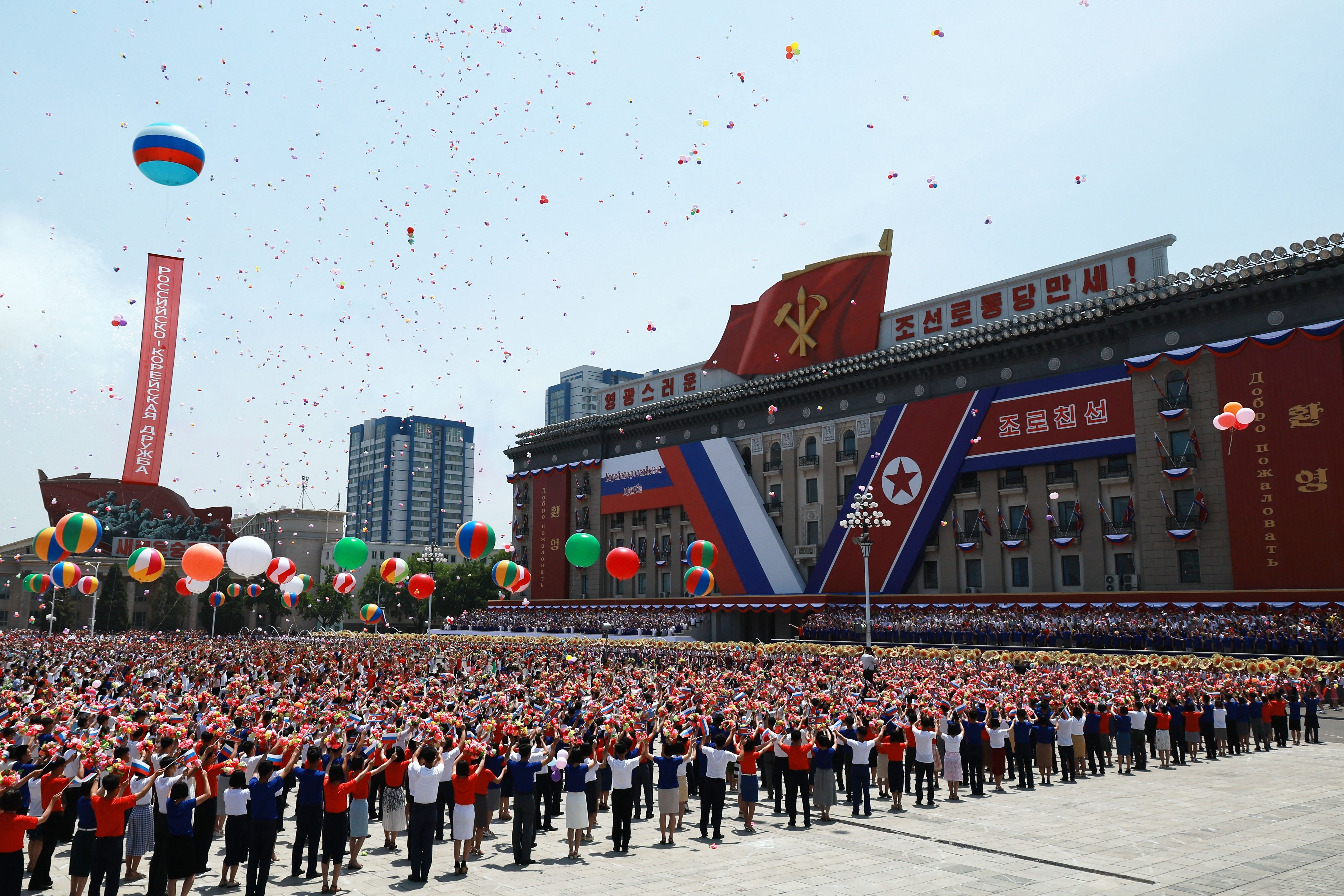
Faced with an increase in strategic maneuvering by Moscow and Pyongyang, Beijing will not sit idly by and allow Putin and Kim to shape the security environment on its behalf.

Tong Zhao
China views U.S. missile defense as posing a greater potential threat to China’s nuclear deterrent than other U.S. military capabilities.
Tong Zhao, Dmitry Stefanovich
There are certainly other issues among other P5 countries, but the U.S.-China competition is so by far the most consequential great power rivalry in the international system, and it has very far-reaching geopolitical implications at and beyond the Pacific region.
Tong Zhao

Satellite data has revealed the construction of new nuclear missile silos in Gansu and Xinjiang in western China. How U.S. and Chinese experts interpret the buildup and the motivations behind it could greatly reshape their security relationship.
Tong Zhao
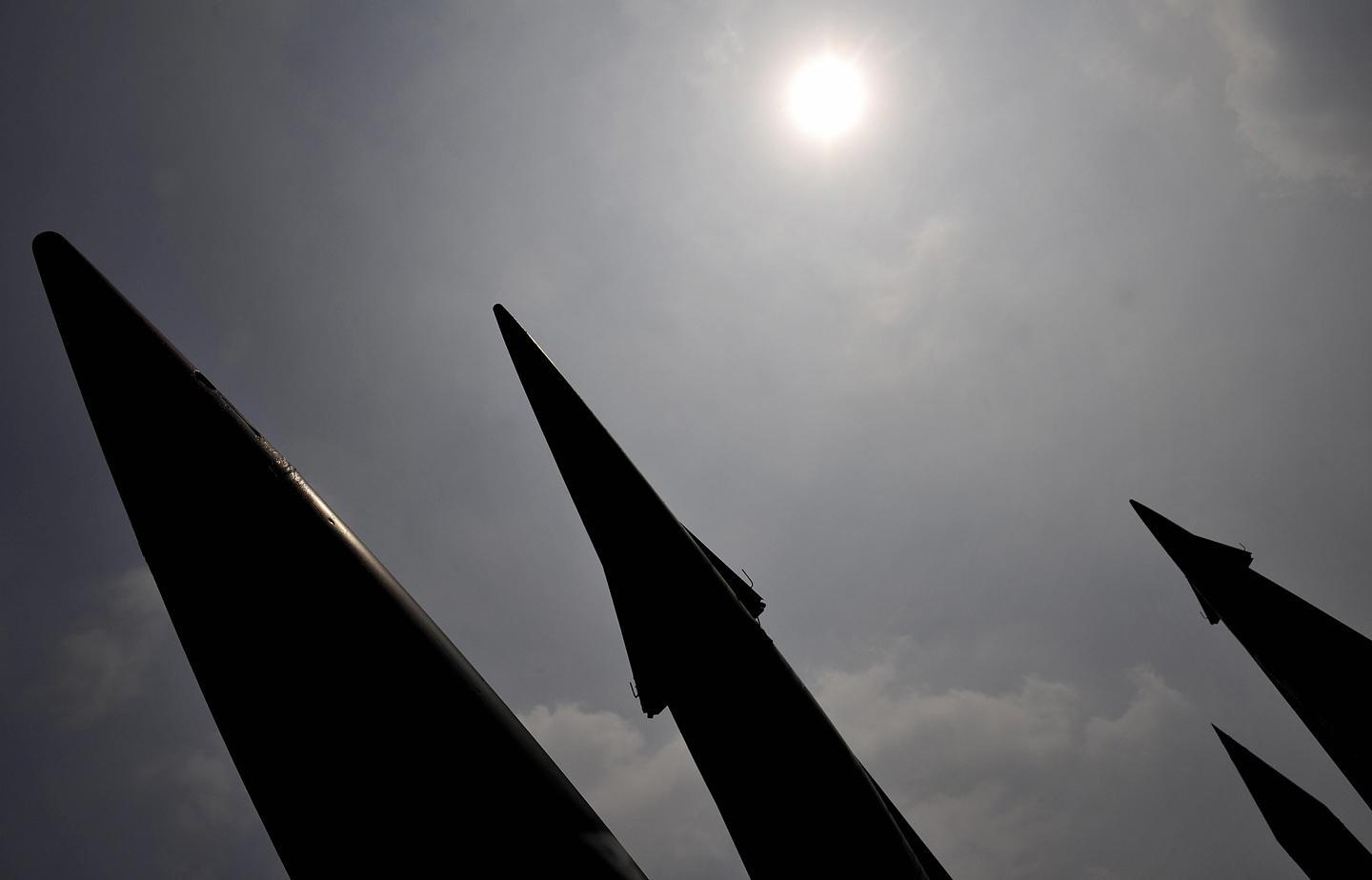
There are three guiding principles that can help make future arms control dialogues more successful.

Andrey Baklitskiy, Alexandra Bell, Tong Zhao