

In The Media
Josh Kurlantzick
{
  "authors": [
    "Josh Kurlantzick"
  ],
  "type": "legacyinthemedia",
  "centerAffiliationAll": "dc",
  "centers": [
    "Carnegie Endowment for International Peace"
  ],
  "collections": [],
  "englishNewsletterAll": "asia",
  "nonEnglishNewsletterAll": "",
  "primaryCenter": "Carnegie Endowment for International Peace",
  "programAffiliation": "AP",
  "programs": [
    "Asia",
    "South Asia"
  ],
  "projects": [],
  "regions": [
    "South Asia",
    "Pakistan",
    "East Asia",
    "China",
    "Southeast Asia"
  ],
  "topics": [
    "Political Reform"
  ]
}
Source: Getty
Once at the vanguard of democratization in the developing world, South and East Asia now find their democracies in peril. Only months after the Thai military made its move last summer, the armed forces in Bangladesh and Fiji also grabbed power. Meanwhile, rulers in Malaysia, Singapore, Sri Lanka, Cambodia, Pakistan and the Philippines have taken steps to further stymie democratic reform.
Source: The Washington Post

Until recently, it was hard to find large-scale public opposition in the Thai capital to the military coup -- the first putsch in Thailand in about 15 years, which has led to the occasional imposition of martial law in Bangkok.
And Thailand is hardly unique. Once at the vanguard of democratization in the developing world, South and East Asia now find their democracies in peril. Only months after the Thai military made its move last summer, the armed forces in Bangladesh and Fiji also grabbed power. Meanwhile, rulers in Malaysia, Singapore, Sri Lanka, Cambodia, Pakistan and the Philippines have taken steps to further stymie democratic reform.
Worst of all for Asia's liberals, these days the men in green have received at least initial support from the region's middle class, which is fed up with corrupt, ineffective democratic leaders and is looking to the military or an enlightened dictator to clean up politics. In Thailand last year, hordes of young people tossed flowers on grim-faced troops carrying assault rifles as the coup began. In Bangladesh, columnists and other opinion leaders cheered the military's crackdown on corruption. "It was a necessary evil, if you look at it," Thai commentator Kavi Chongkittavorn told reporters after the coup last year.
Only five years ago, Asia seemed the best evidence that the Bush administration's policy of spreading democracy worldwide would lead to liberal and stable societies. In the wake of the 1997-98 Asian financial crisis, protesters in Indonesia toppled its dictator, Suharto; in Malaysia, demonstrators lashed out at the authoritarian rule of Mahathir Mohamad. Liberalization spread to East Timor and Cambodia, which emerged from years of civil war to hold a series of elections -- and even Burma seemed to flirt with reform when the junta released opposition leader Aung San Suu Kyi from house arrest. Nations such as Thailand and Bangladesh drew up constitutions designed to bring checks and balances into the government. In vibrant Asian cities such as Bangkok, where growth had built towering skylines and flashy shopping districts, the idea of a military coup seemed as obsolete as a rotary phone.
But the new constitutions did little to prevent graft and to reduce the excessive influence of Asia's powerful families and companies. "Nothing happens here without payments," Harry Roque, a Philippine human rights lawyer, told me. "Nothing changes." In Bangladesh, one of the world's most corrupt nations, investigators have recently looked into allegations that ministers used state money to buy themselves Hummers. In Malaysia, the head of the government anti-corruption agency now faces graft allegations.
A key problem was that despite paying lip service to the trappings of democracy -- holding elections and writing constitutions -- many politicians in Asia turned out to be lousy losers. They failed to assimilate a central precept of a free political system: respecting defeat and serving as a loyal opposition. Instead, parties dissatisfied with election results took their cases to the streets.
In 2001, Manila street protests toppled President Joseph Estrada and brought to power his vice president, Gloria Macapagal Arroyo. Three years later, similar demonstrations almost brought her down. The demonstrators wrapped themselves in the cloak of the country's old democracy movements, calling themselves People Power 2 -- a throwback to the protests that forced dictator Ferdinand Marcos from power in 1986. But make no mistake about it: These were power grabs, not battles for the right to vote.
In Bangladesh, political parties run by two women who reportedly detest each other, Sheikh Hasina and Khaleda Zia, took this unwillingness to go quietly to a perverse degree. For years, when one party won an election, the Bangladeshi opposition would respond with waves of paralyzing strikes that brought the country to its knees.
The rollback of democracy has occurred against a dramatically shifting balance of power in Asia. The "war on terror" has consumed the White House's attention, and accounts of prison torture at Iraq's Abu Ghraib and Cuba's Guantanamo Bay have undermined Washington's moral standing. The United States is now more concerned about whether other nations are aiding the fight against its enemies than it is about human rights. Malaysia has utilized the Internal Security Act to imprison people without charging them; the U.S. government criticized that act before the attacks of Sept. 11, 2001, but says little now.
At the same time, China has begun to hawk its own undemocratic model of development as an alternative, offering the promise of economic liberalization without the chaos of political reform. And Beijing's growing regional power ties Washington's hands. In nations such as Burma, where the military has tossed Suu Kyi back into house arrest, China's influence makes it hard for Washington to help the embattled reformers. Earlier this year, China joined with Russia to veto proposed U.S. censure of the Burmese regime in the U.N. Security Council. Polls in Southeast Asia have shown that most citizens say that China has a more positive impact on the world than the United States does, and top officials in countries such as Cambodia and Vietnam debate how they could apply the Chinese model to their own nations.
Still, there are bright spots. In some countries, the middle class's honeymoon with autocrats appears to be ending. As the military has shown itself to be incapable of managing Thailand's economy (the junta's telecommunications minister recently admitted to rarely using e-mail), many Thais have turned against the coup. But in other countries, such as Bangladesh, as the prospect of civilian rule returns, the expected winners of upcoming elections are the same corrupt politicos who prompted the military to seize power in the first place.
This article was originally published in The Washington Post.

Former Visiting Scholar, China Program
A special correspondent for The New Republic, a columnist for Time, and a senior correspondent for The American Prospect, Kurlantzick assesses China’s relationship with the developing world, including Southeast Asia, Africa, and Latin America.
Recent Work
Josh Kurlantzick
Carnegie does not take institutional positions on public policy issues; the views represented herein are those of the author(s) and do not necessarily reflect the views of Carnegie, its staff, or its trustees.

Malaysia’s chairmanship sought to fend off short-term challenges while laying the groundwork for minimizing ASEAN’s longer-term exposure to external stresses.

Elina Noor

For Malaysia, the conjunction that works is “and” not “or” when it comes to the United States and China.
Elina Noor

ASEAN needs to determine how to balance perpetuating the benefits of technology cooperation with China while mitigating the risks of getting caught in the crosshairs of U.S.-China gamesmanship.
Elina Noor
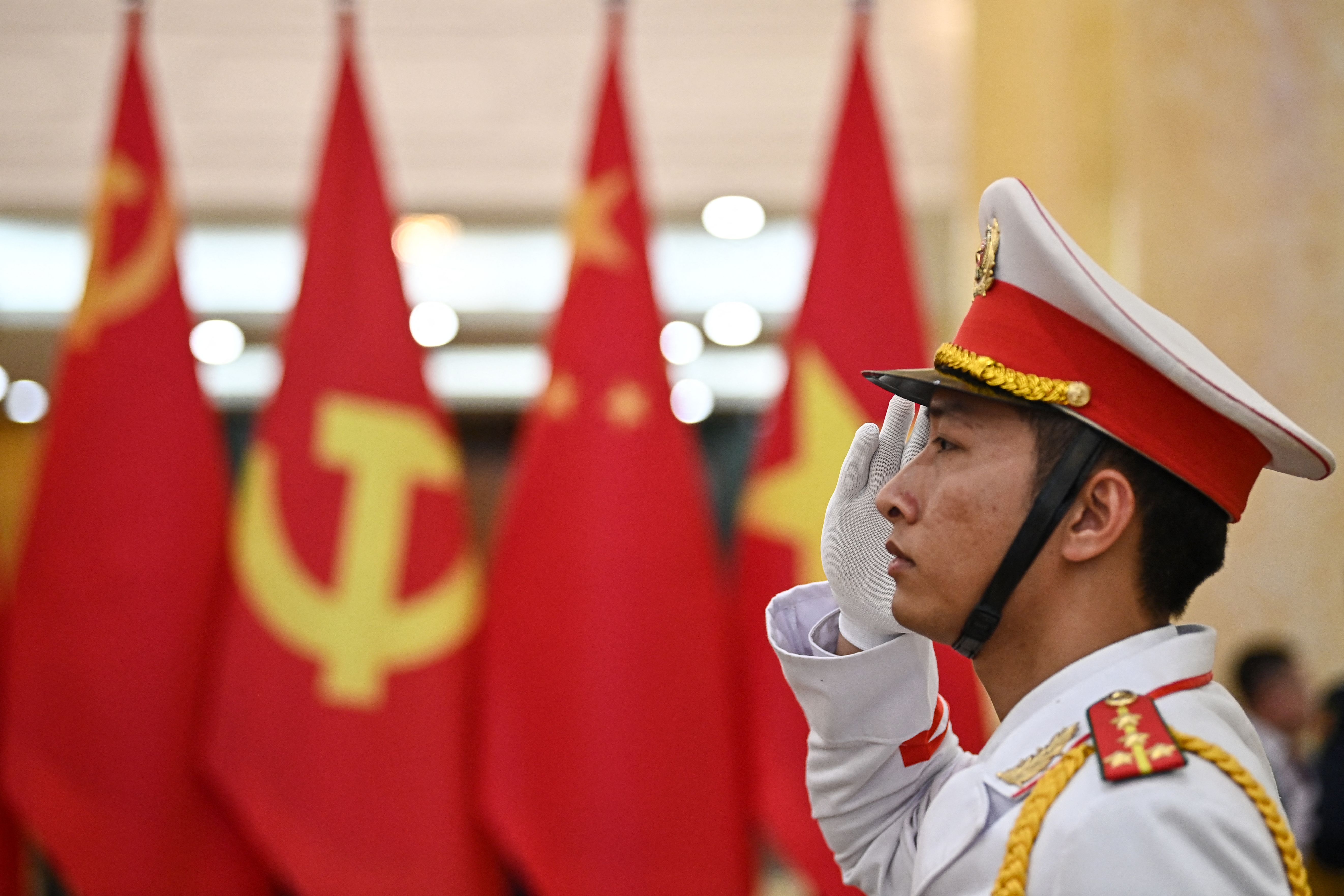
In July 2025, Vietnam and China held their first joint army drill, a modest but symbolic move reflecting Hanoi’s strategic hedging amid U.S.–China rivalry.

Nguyễn Khắc Giang

Regulation, not embargo, allows Beijing to shape how other countries and firms adapt to its terms.
Alvin Camba