

In The Media
David Rothkopf
{
  "authors": [
    "David Rothkopf"
  ],
  "type": "legacyinthemedia",
  "centerAffiliationAll": "",
  "centers": [
    "Carnegie Endowment for International Peace"
  ],
  "collections": [],
  "englishNewsletterAll": "",
  "nonEnglishNewsletterAll": "",
  "primaryCenter": "Carnegie Endowment for International Peace",
  "programAffiliation": "",
  "programs": [],
  "projects": [],
  "regions": [
    "North America",
    "United States",
    "South America"
  ],
  "topics": [
    "Economy",
    "Trade"
  ]
}
Source: Getty
As the U.S. government steps in to rescue the financial system, Latin American leaders are using the crisis to justify their own leftist policies, claiming the United States' free-market approach has collapsed. But some U.S. scholars see a middle ground; future regulation may help guide markets on the national and even the global stage, without completely departing from the free market system.
Source: NPR's All Things Considered

Latin American governments that have not adhered to the free-market “Washington Consensus” in now feel a certain sense of vindication as the flaws of free-market fundamentalism have become increasingly evident. While most U.S. experts believe that some form of free-market system is still the best option for the future, there is an increasing consensus in favor or greater regulation. As Rothkopf sees it, this moment marks a watershed in economic philosophy, when the hands-off approach of the past 25 years will give way to a new era—one where greater a governmental role in the economy may even include some forms of economic regulation on the global stage.
Click here for the full story.

Former Visiting Scholar
David Rothkopf was a visiting scholar at the Carnegie Endowment as well as the former CEO and editor in chief of the FP Group.
Recent Work
David Rothkopf
David Rothkopf
Carnegie does not take institutional positions on public policy issues; the views represented herein are those of the author(s) and do not necessarily reflect the views of Carnegie, its staff, or its trustees.

For Malaysia, the conjunction that works is “and” not “or” when it comes to the United States and China.

Elina Noor

Regulation, not embargo, allows Beijing to shape how other countries and firms adapt to its terms.
Alvin Camba

Rather than climate ambitions, compatibility with investment and exports is why China supports both green and high-emission technologies.

Mathias Larsen
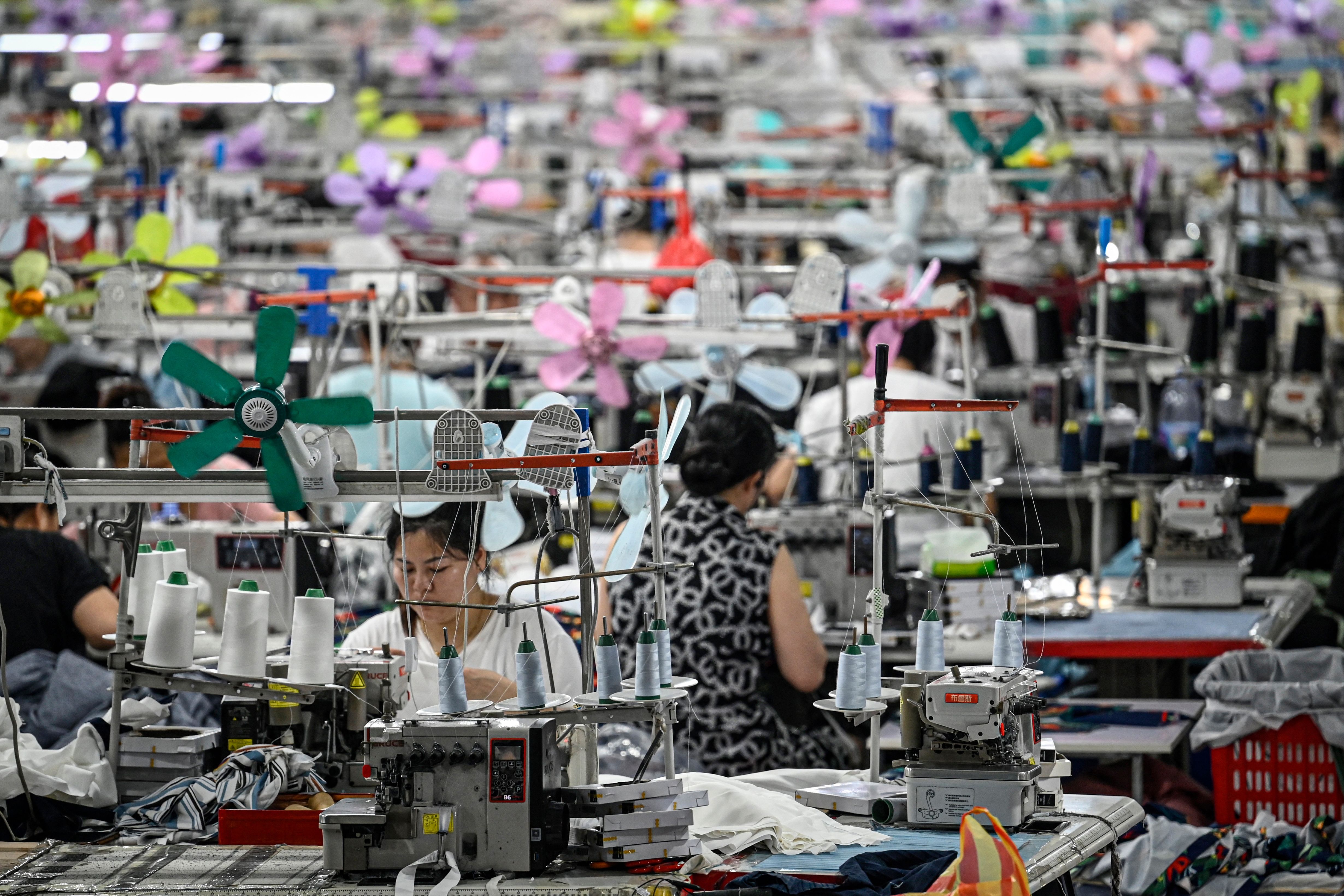
“Involution” is a new word for an old problem, and without a very different set of policies to rein it in, it is a problem that is likely to persist.

Michael Pettis

While China's investment story seems contradictory from the outside, the real answers to Beijing's high-quality growth ambitions are hiding in plain sight across the nation's cities.

Yuhan Zhang