

Commentary
By deepening its political, economic and military engagement in Afghanistan, and by formally signing a Memorandum of Understanding in 2016, China seems to be emerging as a long-term player in the region’s new Great Game.
Arushi Kumar
{
  "authors": [],
  "type": "pressRelease",
  "centerAffiliationAll": "dc",
  "centers": [
    "Carnegie Endowment for International Peace"
  ],
  "collections": [],
  "englishNewsletterAll": "ctw",
  "nonEnglishNewsletterAll": "",
  "primaryCenter": "Carnegie Endowment for International Peace",
  "programAffiliation": "SAP",
  "programs": [
    "South Asia"
  ],
  "projects": [],
  "regions": [
    "Afghanistan"
  ],
  "topics": []
}
REQUIRED IMAGE
Afghanistan’s weak central government and limited resources make the informal networks employed by local warlords a viable option for governance. The country’s former warlords, made powerful governors by President Hamid Karzai, use both formal and informal powers to achieve security objectives and deliver development in their provinces.
WASHINGTON, Sept 23—Afghanistan’s weak central government and limited resources make the informal networks employed by local warlords a viable option for governance, concludes a new paper from the Carnegie Endowment. The country’s former warlords, made powerful governors by President Hamid Karzai, use both formal and informal powers to achieve security objectives and deliver development in their provinces.
Based on substantial in-country research and interviews, Dipali Mukhopadhyay examines the performance of two such governors, Atta Mohammed Noor and Gul Agha Sherzai, who govern the northern province of Balkh and the eastern province of Nangarhar, respectively.
Key points:
“A ‘good enough’ governor, who can demonstrate success in counternarcotics, security, and economic and infrastructural development, becomes a valuable asset in the absence of unlimited resources, troops, and political will,” writes Mukhopadhyay. “Acknowledgment of hybrid governance need not mean the abandonment of formal institutional capacity building on the part of international, intervening organizations. Rather, they must adopt more realistic expectations of formal institutions.”
###
NOTES
Carnegie does not take institutional positions on public policy issues; the views represented herein are those of the author(s) and do not necessarily reflect the views of Carnegie, its staff, or its trustees.
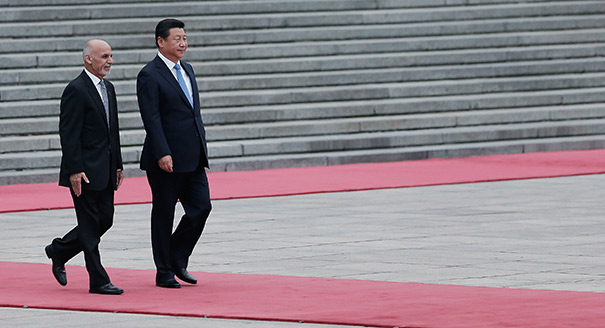
By deepening its political, economic and military engagement in Afghanistan, and by formally signing a Memorandum of Understanding in 2016, China seems to be emerging as a long-term player in the region’s new Great Game.
Arushi Kumar
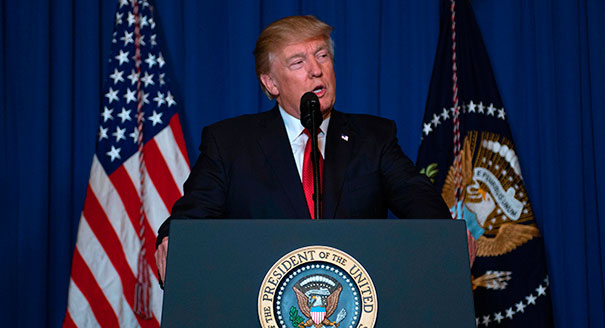
It remains to be seen whether recent foreign policy pivots by the Trump administration amount to a departure from its earlier views about America’s role in the world.

William J. Burns
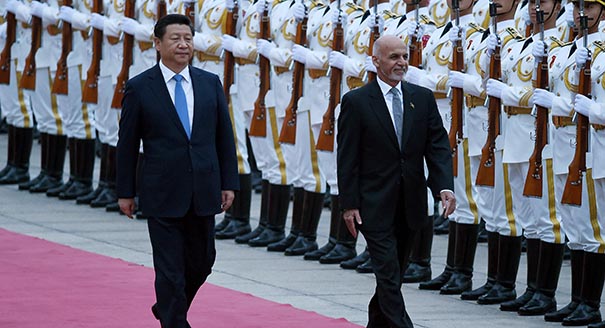
Regional actors like China, India, and Pakistan can cooperate effectively through multilateral platforms to promote reconstruction efforts in Afghanistan.

Shi Zhiqin, Lu Yang
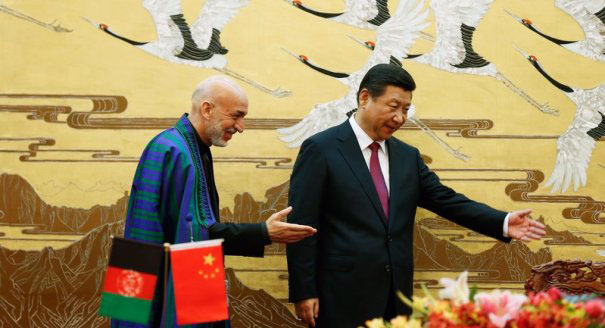
In the past year, Beijing has become more diplomatically engaged with Afghanistan, raising the potential for China to play a helpful role in Afghanistan’s future economic and security prospects.
Zhao Huasheng
As the American occupation of Afghanistan comes to an end, China is getting ready to play a significant role in a country that has seen many great powers bite the dust.
C. Raja Mohan