

Article
Henri J. Barkey
{
  "authors": [
    "Henri J. Barkey"
  ],
  "type": "legacyinthemedia",
  "centerAffiliationAll": "dc",
  "centers": [
    "Carnegie Endowment for International Peace"
  ],
  "collections": [],
  "englishNewsletterAll": "menaTransitions",
  "nonEnglishNewsletterAll": "",
  "primaryCenter": "Carnegie Endowment for International Peace",
  "programAffiliation": "MEP",
  "programs": [
    "Middle East"
  ],
  "projects": [],
  "regions": [
    "United States"
  ],
  "topics": [
    "Foreign Policy",
    "Nuclear Policy"
  ]
}
Source: Getty
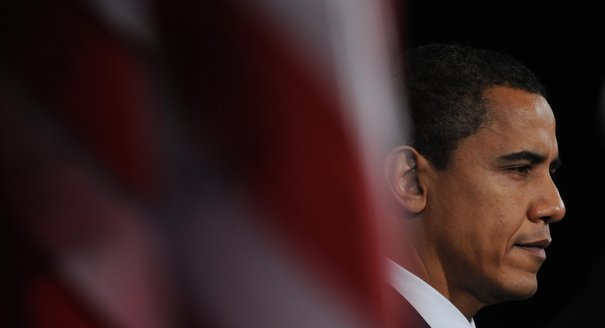
The recent awarding of the Nobel Peace Prize puts a great additional burden on President Obama. He must now live up to the expectations of the prize and harness the power of the award.
Source: The Hill

This was not a prize he sought, much less wanted at this stage of his presidency precisely because it would engender such criticisms and increase expectations. He did the right thing; he accepted it with a great deal humility and modesty.
The fact remains that the Nobel Committee has put a great additional burden on his shoulders. As if he did not have enough problems to deal with, he has to live up to the expectations of the prize, which no matter what one says about the selections over the years, it is one of the most important institutions in the Western world.
The important issue for the President now is how to harness the power of the award without succumbing to its potentially destructive expectations aspect. Let us face it, once behind closed doors, a Nobel Prize does not add any negotiating power to its recipient. What it does do is create a moment of aura at the very moment the award is conferred. The speech he will deliver at Oslo is the magical moment when the prize will literally have its most influence.
Hence, in his speech he needs to outline two very specific initiatives. One which he has significant control over-such as a reduction in nuclear weapons and one of the important reasons he was awarded the prize-and one that is far more ambitious but which he intends to carry through. My recommendation would be the Arab-Israeli peace process because so much depends on it.

Former Visiting Scholar, Middle East Program
Barkey served as a member of the U.S. State Department Policy Planning Staff, working primarily on issues related to the Middle East, the Eastern Mediterranean, and intelligence from 1998 to 2000.
Recent Work
Henri J. Barkey
Henri J. Barkey
Carnegie does not take institutional positions on public policy issues; the views represented herein are those of the author(s) and do not necessarily reflect the views of Carnegie, its staff, or its trustees.

The nuclear relationship between China and the United States is increasingly shaped by widening perception gaps rather than deliberate strategic design.

Tong Zhao

But their "principal to principal" model will only be as effective as the political strength of each leader back home.

Damien Ma

U.S. unpredictability has allowed China to capitalize on its positioning as the “responsible great power”. Paradoxically, the more China wins the perception game, the more likely expectations will rise for Beijing to deliver not just words but to demonstrate with its deeds.

Chong Ja Ian

Hanoi and Beijing have long treated each other as distant cousins rather than comrades in arms. That might be changing as both sides draw closer to hedge against uncertainty and America’s erratic behavior.

Nguyễn Khắc Giang

Across Asia, China is better positioned to withstand energy shocks from the fallout of the Iran war. Its abundant coal capacity can ensure stability in the near term. Yet at the same time, the country’s energy transition away from coal will make it even less vulnerable during the next shock.
Damien Ma