

Commentary
Faced with an increase in strategic maneuvering by Moscow and Pyongyang, Beijing will not sit idly by and allow Putin and Kim to shape the security environment on its behalf.
Tong Zhao
{
  "authors": [
    "George Perkovich",
    "James M. Acton"
  ],
  "type": "legacyinthemedia",
  "centerAffiliationAll": "dc",
  "centers": [
    "Carnegie Endowment for International Peace"
  ],
  "collections": [],
  "englishNewsletterAll": "ctw",
  "nonEnglishNewsletterAll": "",
  "primaryCenter": "Carnegie Endowment for International Peace",
  "programAffiliation": "NPP",
  "programs": [
    "Nuclear Policy"
  ],
  "projects": [],
  "regions": [],
  "topics": [
    "Nuclear Policy"
  ]
}
Source: Getty
World government need not be invoked in considerations of abolishing nuclear weapons. Instead, nuclear abolition can be a realistic organizing principle of states seeking to balance and order their relations in ways that remove the threats of mass destruction.
Source: Abolition Debate Series

Those who think that nuclear deterrence will not be fail-safe forever tend to put a premium on pursuing abolition. So do people who find threats of mass destruction to be morally unacceptable. Lawrence Freedman speaks for the former: “The case for abolition, though, is that it is hard to believe that the past 60 years of self-restraint can continue for the next 60 years.” Jonathan Schell adds that “a world without nuclear weapons, though hardly without dangers, would be incomparably safer and more decent than a world with them.” None of this means that abolition would be secure and feasible without the removal of major security obstacles. The argument is that the goal of abolition can help motivate both nuclear-armed states and those that do not possess nuclear weapons to mobilize power to remove these obstacles.
On the other side are those who think that the risks of major warfare in a world without nuclear deterrence would be greater than the risks that nuclear weapons would actually be used. They worry that focusing on abolition could increase the chance of its being undertaken without reliable alternative means of deterring major aggression. Frank Miller writes: “Nuclear weapons exist because nation states retain the option to use military force in world affairs. Nuclear weapons compensate for conventional military inferiority and moderate against the use of force by one great power against another. The problem lies not in the weapons, but in the nature of humankind.” Bruno Tertrais adds: “Nuclear-armed states assume that maintaining nuclear deterrence is a safer means to ensure the absence of major conventional war than taking the risk to disarm.” Brad Roberts is more open to the value of abolition but judges that we underestimate the difficulties of securing it: “How would the major powers do their jobs as global sheriffs against a nuclear-armed challenger?” “Could deterrence of such a challenger be effective by conventional means alone?”
Takaya Suto and Hirofumi Tosaki eloquently summarize the contradiction between these views and the dilemma that results:
Although the abolition of nuclear weapons may very well be “justice” … blind pursuance of this cause could disturb order and stability .… However, in the nuclear age, order and stability are provided under the sword of Damocles. The [argument] that deep reductions and the subsequent abolition of nuclear weapons cannot be initiated without the assurance of security and “strategic stability” is prone to be used as a pretext for maintaining the status quo under the premise that the present order and stability would continue. But there is no guarantee that this premise would hold indefinitely. Nor is there a guarantee that nuclear deterrence would continue to function in today’s increasingly complicated security environment as it did when it rendered the Cold War “the long peace.”
Suto and Tosaki’s invocation of “justice” is particularly instructive. It underscores the political, moral, and psychological nature of this issue as perceived by many, adding balance to the emphasis on security that states under nuclear deterrent umbrellas stress. The requirement to balance justice with security emerges in multiple critiques calling for greater attention to be paid to the moral and legal dimensions of the abolition issue.
Security and justice are, in fact, closely interlinked. Societies fear aggression and occupation in part because of the injustice such acts of domination would bring. Conversely, people feel secure when they are confident that the state in which they live protects them against major injustice. Nuclear weapons cut both ways here: On the one hand, the destruction threatened by nuclear weapons is a form of mega-injustice insofar as it could entail the taking of innocent life on a massive scale, hence the moral opprobrium that many feel toward nuclear weapons. On the other hand, nuclear weapons can be attractive because they deter aggression. Part of the challenge, then, in abolishing nuclear weapons is to build confidence that societies living under nuclear deterrent umbrellas will not suffer the injustice of aggression if they relinquish that protection, while simultaneously reassuring those who do not have nuclear deterrents that they will not suffer intervention or unjust power displays by those who do.
James Doyle points to a partial resolution of this tension by focusing on “transforming the role [that nuclear arms] play in today’s world, the nature of the infrastructure that supports them, and the manner in which they are deployed and operated.” He points to steps nuclear-armed states could take starting now to reassure each other and non–nuclear-weapon states that they will not suffer intervention, terrorist acquisition of nuclear weapons, or nuclear blackmail even if nuclear weapons remain in national arsenals. His recommendations can be read as policies to greatly reduce the fears of the material and political injustices associated with nuclear use and status, while time is taken to build confidence that major aggression can be deterred without nuclear weapons.
Harald Müller complements Doyle’s synthesis by focusing on limiting the danger of major power competition, which he recognizes is far from being accomplished today. “It is … urgent,” Müller writes, “to provide a security environment, one that is strategic as well as institutional, to prevent the repetition of great-power rivalry in the classical sense.” The Concert of Europe after the Napoleonic wars provides a model whose basic principles Müller adumbrates. The core attribute was the major powers’ agreement on basic rules of conduct that were practiced through “a dense process of conferences and ambassadorial consultations” in which the actors “showed moderation and restraint when it counted most—in international crises, including those that were caused by internal upheaval in smaller states.”
The “concert” model deserves much greater attention in part because it clarifies that world government need not be invoked in considerations of abolishing nuclear weapons. Nuclear abolition is not an alternative to international politics and power balancing. Rather, it can be a realistic organizing principle of states seeking to balance and order their relations in ways that remove the singular threats of nuclear mass destruction.

Japan Chair for a World Without Nuclear Weapons, Senior Fellow
George Perkovich is the Japan Chair for a World Without Nuclear Weapons and a senior fellow in the Carnegie Endowment for International Peace’s Nuclear Policy Program. He works primarily on nuclear deterrence, nonproliferation, and disarmament issues.

Jessica T. Mathews Chair, Co-director, Nuclear Policy Program
Acton holds the Jessica T. Mathews Chair and is co-director of the Nuclear Policy Program at the Carnegie Endowment for International Peace.
Carnegie does not take institutional positions on public policy issues; the views represented herein are those of the author(s) and do not necessarily reflect the views of Carnegie, its staff, or its trustees.
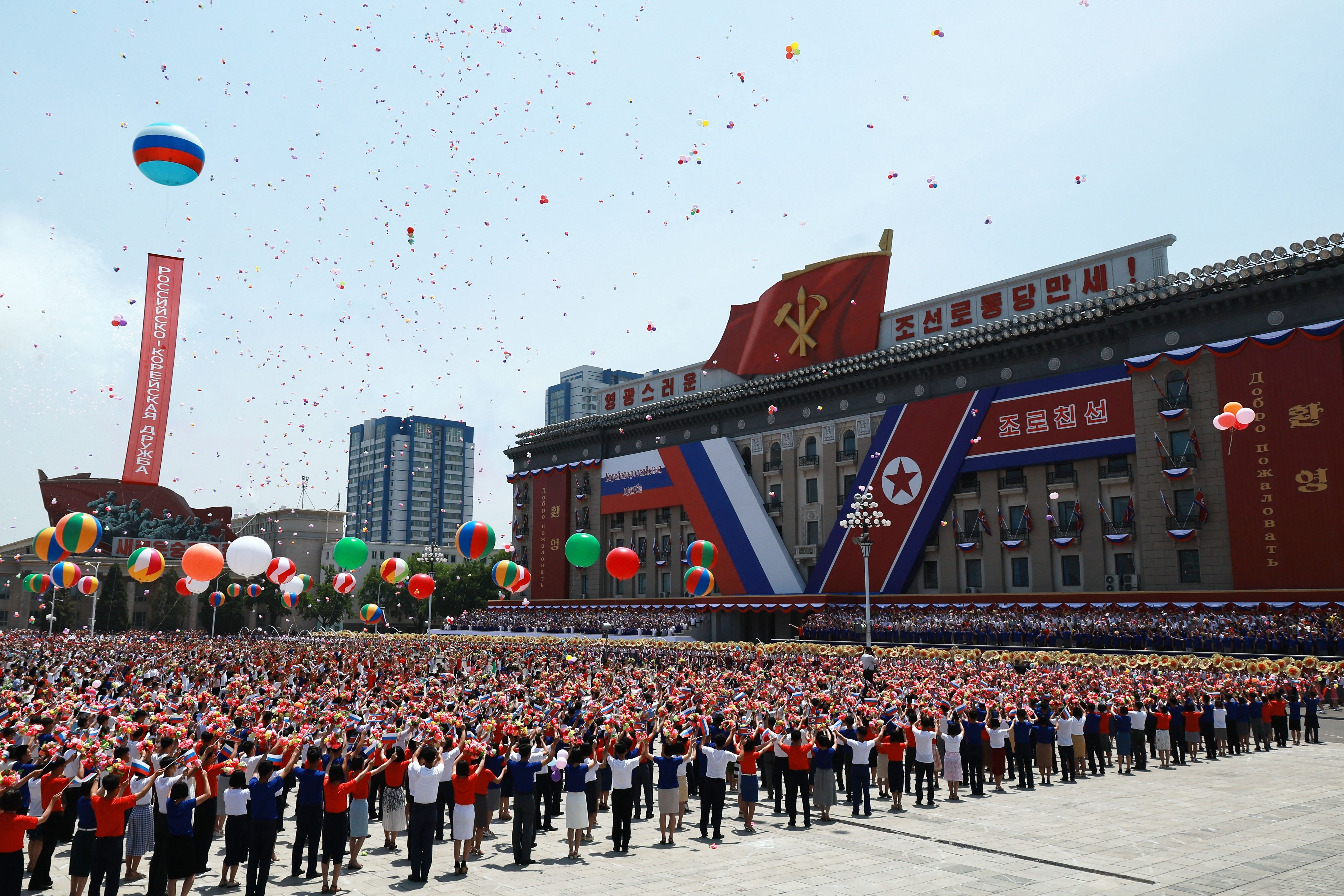
Faced with an increase in strategic maneuvering by Moscow and Pyongyang, Beijing will not sit idly by and allow Putin and Kim to shape the security environment on its behalf.

Tong Zhao

China views U.S. missile defense as posing a greater potential threat to China’s nuclear deterrent than other U.S. military capabilities.
Tong Zhao, Dmitry Stefanovich
There are certainly other issues among other P5 countries, but the U.S.-China competition is so by far the most consequential great power rivalry in the international system, and it has very far-reaching geopolitical implications at and beyond the Pacific region.
Tong Zhao
Satellite data has revealed the construction of new nuclear missile silos in Gansu and Xinjiang in western China. How U.S. and Chinese experts interpret the buildup and the motivations behind it could greatly reshape their security relationship.
Tong Zhao
There are three guiding principles that can help make future arms control dialogues more successful.

Andrey Baklitskiy, Alexandra Bell, Tong Zhao