

Commentary
Faced with an increase in strategic maneuvering by Moscow and Pyongyang, Beijing will not sit idly by and allow Putin and Kim to shape the security environment on its behalf.
Tong Zhao
{
  "authors": [
    "George Perkovich",
    "James M. Acton"
  ],
  "type": "legacyinthemedia",
  "centerAffiliationAll": "dc",
  "centers": [
    "Carnegie Endowment for International Peace"
  ],
  "collections": [],
  "englishNewsletterAll": "ctw",
  "nonEnglishNewsletterAll": "",
  "primaryCenter": "Carnegie Endowment for International Peace",
  "programAffiliation": "NPP",
  "programs": [
    "Nuclear Policy"
  ],
  "projects": [],
  "regions": [],
  "topics": [
    "Nuclear Policy"
  ]
}
Source: Getty
It is difficult to predict how public opinion will affect disarmament dynamics. However, it could act as a brake on disarmament progress rather than as an accelerator.
Source: Abolition Debate Series

Lawrence Freedman suggests that “if popular opinion becomes animated, it is as likely to serve as a brake on disarmament progress as an accelerator.” Moreover, public opinion is unlikely to be the same in all states, creating dilemmas that are intractable or at least extremely difficult to resolve, as Zia Mian trenchantly notes. Arguments that might convince the public of one nuclear-armed state that it will gain security in a world without nuclear weapons might communicate to other states that they would lose relative power in such a world. Mian avers that “some of the potential problems over nuclear-weapon abolition that result from arguments based purely on national security and national interest” could be overcome “by broadening the frame to include normative, moral, and legal considerations” that are universal and therefore do not convey relative advantage or disadvantage. This recommendation deserves to be taken seriously. Yet, it is probably arguments from security that will ultimately overcome the braking impulses of public opinion and opposition parties contemplating decisions by their leaders to relinquish nuclear weapons.
Historically, public movements to affect nuclear weapon policies have arisen in few states, primarily in the United Kingdom, the United States, and continental Europe. Some key nuclear-armed states do not allow independent public movements. Developments since President Barack Obama’s famous April 2009 Prague speech suggest that nuclear policy does not inspire significant numbers of citizens to mobilize, even where they are free to do so. An impressive array of former officials from many states have joined the Global Zero organization, but the issue remains the province of elites. This need not impede governments from adopting policies to reduce nuclear arsenals, strengthen the nonproliferation regime, and prepare conditions conducive to the multilateral elimination of nuclear weapons. Yet if such policies were to animate popular opposition to disarmament, as Freedman speculates they might, the question is whether countervailing public opinion would be mobilized in favor of it. This is difficult to foresee especially in nuclear-armed states whose governments believe—publicly or privately—that nuclear disarmament would disadvantage them relative to their more powerful competitors.

Japan Chair for a World Without Nuclear Weapons, Senior Fellow
George Perkovich is the Japan Chair for a World Without Nuclear Weapons and a senior fellow in the Carnegie Endowment for International Peace’s Nuclear Policy Program. He works primarily on nuclear deterrence, nonproliferation, and disarmament issues.

Jessica T. Mathews Chair, Co-director, Nuclear Policy Program
Acton holds the Jessica T. Mathews Chair and is co-director of the Nuclear Policy Program at the Carnegie Endowment for International Peace.
Carnegie does not take institutional positions on public policy issues; the views represented herein are those of the author(s) and do not necessarily reflect the views of Carnegie, its staff, or its trustees.
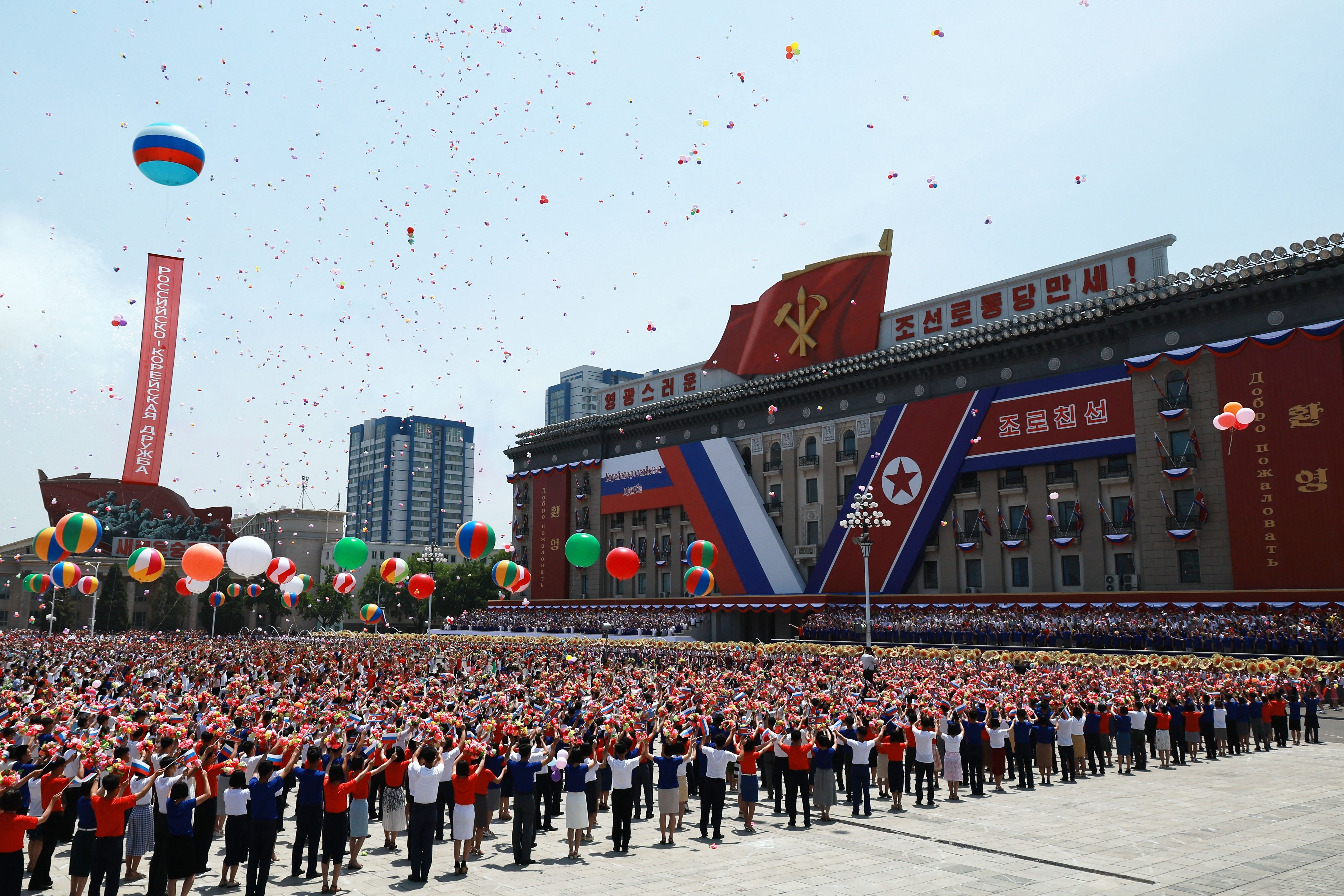
Faced with an increase in strategic maneuvering by Moscow and Pyongyang, Beijing will not sit idly by and allow Putin and Kim to shape the security environment on its behalf.

Tong Zhao

China views U.S. missile defense as posing a greater potential threat to China’s nuclear deterrent than other U.S. military capabilities.
Tong Zhao, Dmitry Stefanovich
There are certainly other issues among other P5 countries, but the U.S.-China competition is so by far the most consequential great power rivalry in the international system, and it has very far-reaching geopolitical implications at and beyond the Pacific region.
Tong Zhao

Satellite data has revealed the construction of new nuclear missile silos in Gansu and Xinjiang in western China. How U.S. and Chinese experts interpret the buildup and the motivations behind it could greatly reshape their security relationship.
Tong Zhao
There are three guiding principles that can help make future arms control dialogues more successful.

Andrey Baklitskiy, Alexandra Bell, Tong Zhao