• Commentary
  • Research
  • Experts
  • Events
Carnegie China logoCarnegie lettermark logo
{
  "authors": [],
  "type": "pressRelease",
  "centerAffiliationAll": "dc",
  "centers": [
    "Carnegie Endowment for International Peace"
  ],
  "collections": [],
  "englishNewsletterAll": "ctw",
  "nonEnglishNewsletterAll": "",
  "primaryCenter": "Carnegie Endowment for International Peace",
  "programAffiliation": "SAP",
  "programs": [
    "South Asia"
  ],
  "projects": [],
  "regions": [
    "South Asia",
    "Pakistan"
  ],
  "topics": []
}
REQUIRED IMAGE

REQUIRED IMAGE

Press Release

Tax reform essential for rescuing Pakistan’s economy

Unable to sustain solid growth, Pakistan’s economy is teetering on the brink of collapse, with one-third of the population living below the poverty line. S. Akbar Zaidi writes that without tax reform, Pakistan will continue to run an unsustainable debt and be forced to rely on Western donors for bailouts.

Link Copied
Published on Sep 15, 2010

WASHINGTON, September 15—Unable to sustain solid growth, Pakistan’s economy is teetering on the brink of collapse, with one-third of the population living below the poverty line. S. Akbar Zaidi writes in a new brief that Pakistan’s economic instability stems in large part from low government revenue due to the elite’s use of tax evasions, loopholes, and exemptions. Without tax reform, Pakistan will continue to run an unsustainable debt and be forced to rely on Western donors for bailouts.

Policy Recommendations:
  • Eliminate exemptions. Fewer than three million of Pakistan’s 175 million citizens pay any income tax, and the country’s tax-to-GDP ratio is just 9 percent. By eliminating tax exemptions for the rich, politicians can fund essential social services.
  • Increase tax revenue. Pakistani legislators must build a consensus to tax the rich and elite if they want to match growth rates in nearby developing countries.
  • Spend more on development. Pakistan has spent twice as much on defense during peacetime as it has on education and health combined—this needs to change.
  • Stop the bailouts. Donor countries must put conditions on funding and should emphasize tax and economic reform to help Pakistan develop long-term economic plans for sustainable growth.

“Pakistan’s lack of a proper tax and revenue regime has resulted in high rates of tax evasion, burdening the country with unsustainable debt and undermining its development priorities,” writes Zaidi. “The key to the country’s economic prosperity—even its survival—is a far-reaching program of tax reform.”

###

NOTES
  • Click here to read the full brief.
  • S. Akbar Zaidi is a visiting scholar in the Carnegie Endowment’s South Asia Program. A visiting professor at Columbia University, with a joint appointment in the School of International Public Affairs and the Department of Middle Eastern, South Asian, and African Studies, his research focuses on development, governance, and political economy in South Asia.  His twelfth book, Military, Civil Society and Democratization in Pakistan, is to be published by Vanguard Press, Lahore in October 2010.
  • The Carnegie South Asia Program informs policy debates relating to the region’s security, economy, and political development. From the war in Afghanistan to Pakistan’s internal dynamics to U.S. engagement with India, the Program’s renowned team of experts offer in-depth analysis derived from their unique access to the people and places defining South Asia’s most critical challenges. offers in-depth expertise on a range of issues relating to South Asia, including nonproliferation, international security, and political and economic development.
  • Press Contact: Kendra Galante, 202-939-2289, pressoffice@ceip.org
South AsiaPakistan

Carnegie does not take institutional positions on public policy issues; the views represented herein are those of the author(s) and do not necessarily reflect the views of Carnegie, its staff, or its trustees.
More Work from Carnegie China

  • Commentary
    Renewed Clashes on the China-India Border

    Can China and India disengage from contested territories along the border?

      • +1

      Paul Haenle, Ashley J. Tellis, Han Hua, …
  • Commentary
    India’s New Crypto Proposals Should Worry Virtual Currency Fans

    The government extends the uncertainty with its two new taxes and digital rupee.

      Anirudh Burman, Priyadarshini D.
  • Commentary
    Beneficial Currency Ecosystem

    China and Pakistan should strive to build a RMB closed-chain cycle based on capital exports and trade returns.

      Lu Yang
  • Article
    How the United States Should Deal With China in Pakistan

    The Trump administration holds a decidedly critical view of China’s infrastructure initiatives in Pakistan. Although there is much to criticize in the China-Pakistan Economic Corridor, the administration’s fixation on commercial and economic issues threatens to distract U.S. policymakers from deeper concerns.

      Daniel Markey
  • Commentary
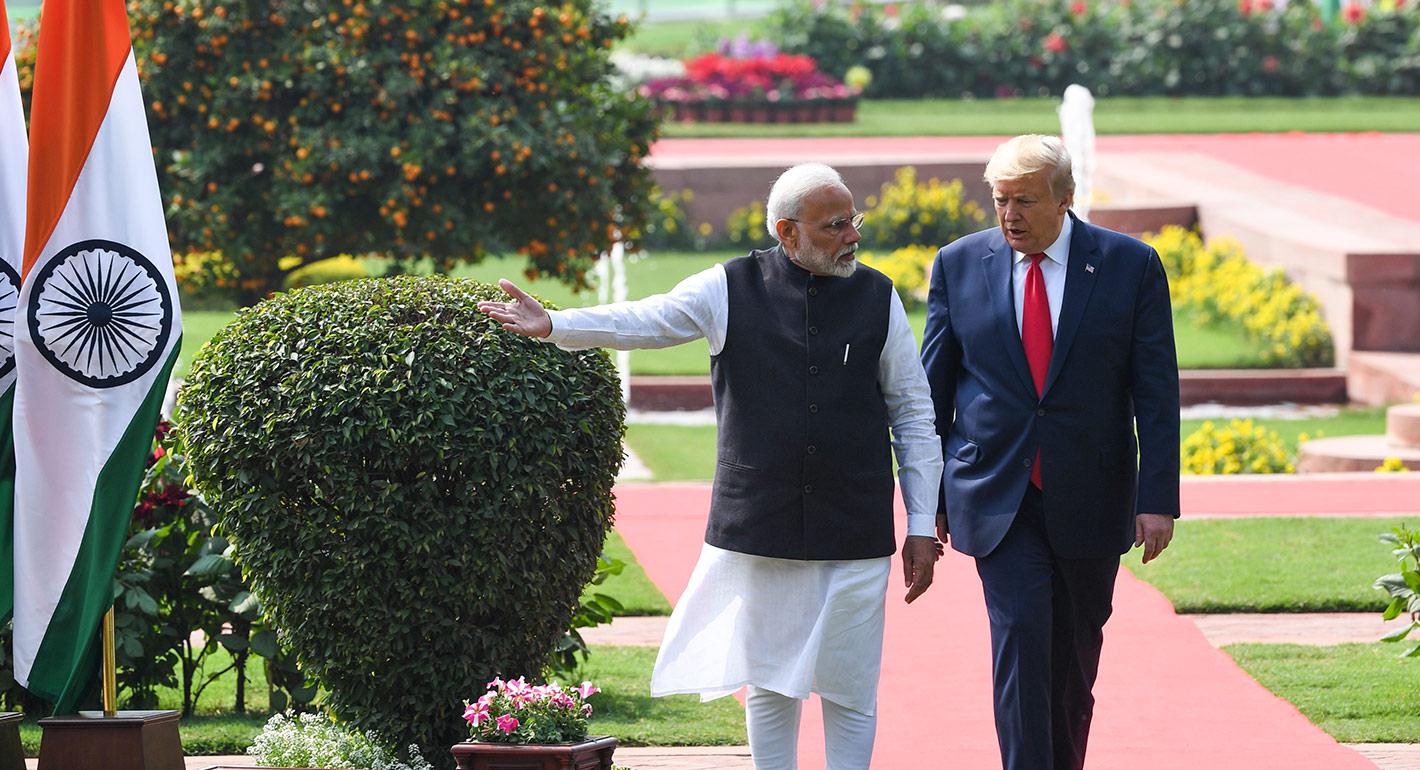
    What Trump’s Trip to India Means for China

    India manages a delicate balancing act between the United States and China, but in several key areas, the three giants could advance shared interests.

      Lu Yang

Get more news and analysis from
Carnegie China
Carnegie China logo, white
Keck Seng Tower133 Cecil Street #10-01ASingapore, 069535Phone: +65 9650 7648
  • Research
  • About
  • Experts
  • Events
  • Contact
  • Careers
  • Privacy
  • For Media
Get more news and analysis from
Carnegie China
© 2026 Carnegie Endowment for International Peace. All rights reserved.