

In The Media
Minxin Pei
{
  "authors": [
    "Minxin Pei"
  ],
  "type": "legacyinthemedia",
  "centerAffiliationAll": "dc",
  "centers": [
    "Carnegie Endowment for International Peace"
  ],
  "collections": [],
  "englishNewsletterAll": "asia",
  "nonEnglishNewsletterAll": "",
  "primaryCenter": "Carnegie Endowment for International Peace",
  "programAffiliation": "AP",
  "programs": [
    "Asia"
  ],
  "projects": [],
  "regions": [
    "East Asia",
    "China"
  ],
  "topics": [
    "Political Reform"
  ]
}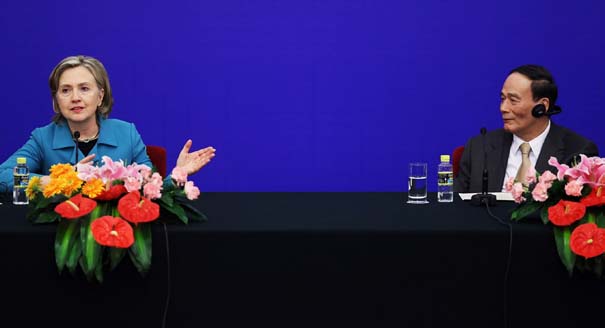
Source: Getty
China's foreign policies created considerable tensions with several major powers in 2010. In the coming year, Beijing should adopt a more constrained and modest approach to repair its diplomatic relationships.
Source: South China Morning Post

The year began when the European Union was still smarting from the humiliation it suffered at the hands of the Chinese during the UN summit on global climate change in Copenhagen in December 2009. Wielding its influence and asserting its interests, China torpedoed the EU’s plans at the summit and prevented the passage of any meaningful agreement.
After the Copenhagen debacle, Beijing confronted Washington on arms sales to Taiwan and President Barack Obama’s meeting with the Dalai Lama. Although these were old issues in bilateral ties, China’s histrionics unsettled the Obama administration, which had hoped to strengthen U.S.-China ties as a means to address global and regional challenges. Already, U.S.-China relations were not helped by the persistent controversy over the value of the Chinese currency, a trade issue that became highly politicised when China’s growth and American unemployment both reached double-digit levels.
The bottom for Chinese diplomacy nearly fell out in September when Beijing responded with disproportionate harshness to Tokyo’s detention of the captain of a Chinese fishing trawler in the waters of the Diaoyu Islands. A shocked and humiliated Japan released the captain, but China paid a dear price: its tough action only confirmed Japanese fears that a powerful China is a threat.
Disaster, as the Chinese staying goes, never comes alone. In late November, North Korea, a Chinese client state, launched an artillery attack against a South Korean island, killing both soldiers and civilians. Instead of condemning its belligerent ally, China tried to trot out the dormant six-party talks to calm down the crisis. But it was initially rebuffed by both the U.S. and South Korea. Since then, military ties between the U.S., Japan and South Korea have grown closer and stronger, a development that must have greatly troubled Chinese strategists.
If Beijing’s missteps towards Japan and South Korea turned potential friends into likely foes close to home, its reaction to the Nobel Peace Prize awarded to Liu Xiaobo (刘晓波), a jailed Chinese dissident, must have dented its image throughout the West. Instead of cutting its losses after Liu was awarded the prize, the Chinese government launched a high-profile campaign to demonise the Nobel Committee, harass Liu’s family and Chinese human rights activists, bully the Norwegians, and organise a boycott of the award ceremonies. All China accomplished, judging by the unfavourable media coverage, was the opposite. Aside from a fizzled boycott, the media spotlight on China’s poor human rights record accentuates for the international community the most unpleasant aspect of the Middle Kingdom: it may have the world’s second-largest economy, but it is still a repressive one-party regime.
For Beijing, all is not lost. The year just past might have been a horrible one for Chinese diplomacy, but since most of the damage was self-inflicted, one could expect things to improve this year. Based on preliminary signs, China seems to have started repairing its tarnished international image. To Beijing’s credit, it finally got involved in the Korean crisis and apparently restrained the Kim Jong-il regime. Sino-U.S. relations are on the mend as well. U.S. Secretary of Defence Robert Gates will be visiting China for the first time this month. Such a high-level exchange of the two militaries could be part of a process to build mutual confidence. President Hu Jintao’s (胡锦涛) visit to the U.S. later this month should create another opportunity to reset a contentious relationship.
To capitalise on these opportunities, China needs to do more. Psychologically, Beijing must suppress its own hubris and resist the temptation to flaunt its newfound power.
One of the reasons China managed to antagonise many important powers at the same time must be the new Chinese mindset that views the West as caught in an inexorable decline and itself as an unstoppable future superpower. Such a mindset is dangerous and grounded more in wishful thinking than reality.
China should let two concepts guide its foreign policy: strategic restraint and great-power responsibility. In 2010, Chinese policy demonstrated neither. One can only hope that China has learned its lesson and will behave differently in 2011.

Former Adjunct Senior Associate, Asia Program
Pei is Tom and Margot Pritzker ‘72 Professor of Government and the director of the Keck Center for International and Strategic Studies at Claremont McKenna College.
Recent Work
Minxin Pei
Minxin Pei
Carnegie does not take institutional positions on public policy issues; the views represented herein are those of the author(s) and do not necessarily reflect the views of Carnegie, its staff, or its trustees.

The Plaza Accord was not an externally imposed punishment of Japan but part of a broader restructuring that Japanese economists and policymakers themselves recognized was necessary. Its effects were undermined, however, when Tokyo responded to the resulting slowdown with policies that exacerbated investment, credit expansion, and the very imbalances the adjustment was intended to resolve.

Michael Pettis

The nuclear relationship between China and the United States is increasingly shaped by widening perception gaps rather than deliberate strategic design.

Tong Zhao
China’s banking crisis in the 2000s was resolved by transferring the costs to households through financial repression—a decision that recapitalized the banks while exacerbating the structural imbalances that continue to shape the Chinese economy today.
Michael Pettis

Chinese biotech companies have been on the receiving end of U.S. economic coercion. Yet their responses have differed significantly because firm and state interests are not uniformly aligned. For Washington, treating all Chinese tech firms the same, irrespective of their actual interests, risks pushing them farther into Beijing’s corner.

Xue Gong
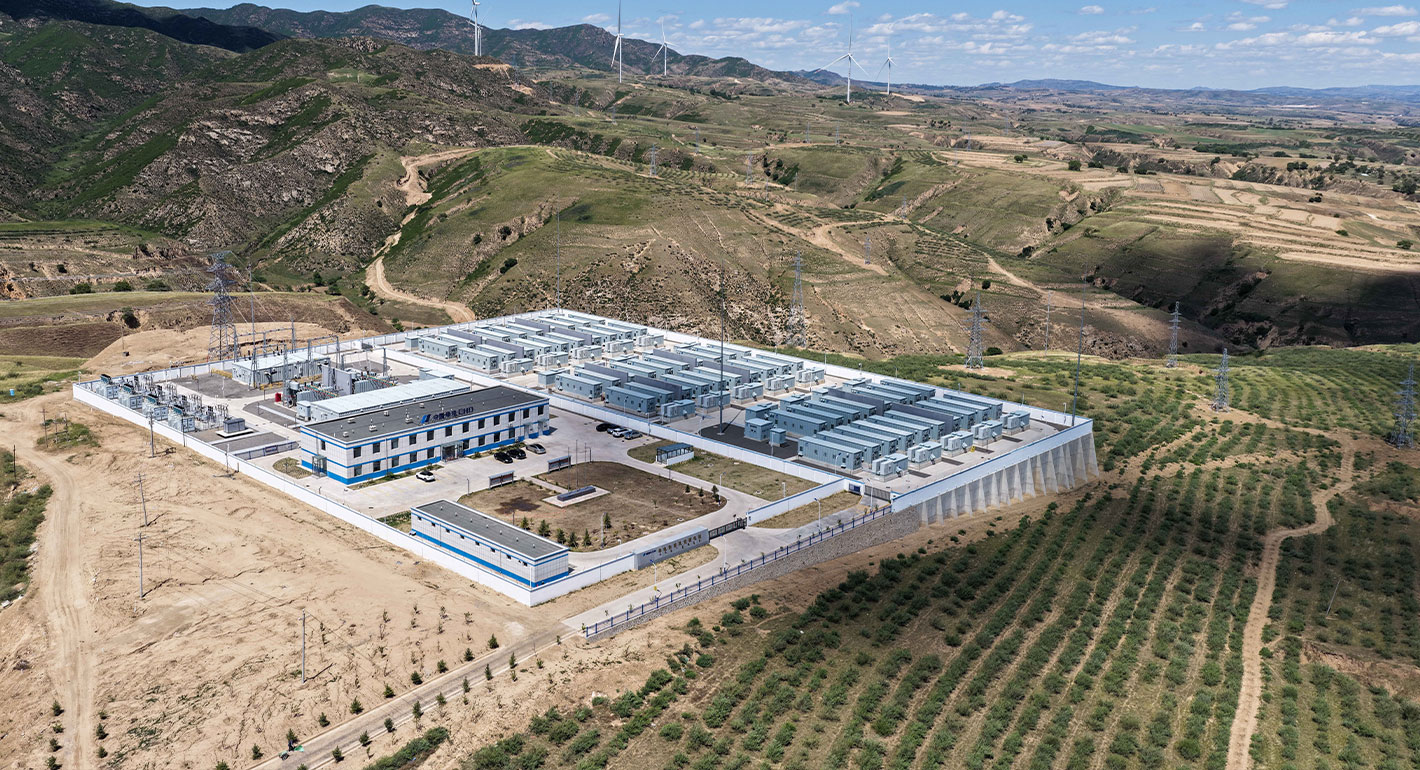
China’s latest energy plan explicitly calls for integrating data centers into the electricity system, particularly connecting them to green energy. It appears Beijing wants to use compute as a source of domestic demand to absorb renewables excess capacity.

Damien Ma