

Paper
Douglas H. Paal
{
  "authors": [
    "Douglas H. Paal"
  ],
  "type": "questionAnswer",
  "centerAffiliationAll": "dc",
  "centers": [
    "Carnegie Endowment for International Peace",
    "Carnegie China",
    "Carnegie Russia Eurasia Center"
  ],
  "collections": [
    "China’s Foreign Relations"
  ],
  "englishNewsletterAll": "asia",
  "nonEnglishNewsletterAll": "",
  "primaryCenter": "Carnegie China",
  "programAffiliation": "AP",
  "programs": [
    "Asia"
  ],
  "projects": [],
  "regions": [
    "East Asia",
    "China"
  ],
  "topics": [
    "Political Reform",
    "Security"
  ]
}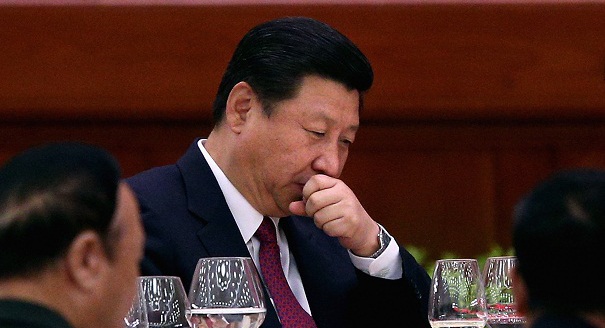
Source: Getty
China’s new leaders will stay focused on domestic issues. With its growing relative economic and military advantages, China is largely comfortable with its current foreign policies.
Xi Jinping is expected to formally take over China’s presidency in the coming days. Speculation is swirling about the impact Beijing’s next generation of leaders will have on China.
In a Q&A, Douglas Paal analyzes what we know about Xi’s potential to make changes at home and abroad. Paal says China’s new leaders will stay focused on domestic issues. With its growing relative economic and military advantages, China is largely comfortable with its current foreign policies.
The Chinese leadership, in preparation for the current National People’s Congress and the associated meeting of the Chinese political consultative conference, have indicated that they are going to make some changes in the way the government is organized. And the personnel changes that are due (that were basically decided last fall before the Party Congress) will be announced at the end of these two sessions.
The consolidation of the government sounds like it has potential for reform, but we’ve seen consolidations before that didn’t produce much reform at all. We’re going to have to watch and see what the results show.
The more consequential set of meetings is widely believed to be next fall when the leaders meet in the third full meeting of the Communist Party’s central committee. That’s when the people who come to office will present their ideas going forward for the next five years. And that will be a much better test of whether or not real reform and real change is coming.
This is a big change in the personnel—not so much new people as a reshuffling of people in new jobs. It could offer the opportunity to make adjustments in foreign policy. But I don’t think the incentives are there for China to make policy changes.
China is pretty comfortable with where it is. Beijing has been having rough relations with some of its neighbors, but China is basically gaining on them in terms of economic weight and military capability.
The general thrust of Beijing’s policy allows new leaders to focus on domestic issues first, and to leave foreign policy pretty much to caretakers.
Xi is telling the world and the people at home, that he’s not in America’s hip pocket and has a different agenda. He’s not going to just go to Moscow, but continue on to South Africa for the BRIC summit, visit two other African countries, and then the Boao Forum for Asia in southern China, where a host of leaders from smaller countries will be gathered.
He’s not making his first trip to Seoul, Tokyo, or Washington—Xi’s trying to signal something different. What that will amount to over time beyond the initial symbolism is hard to assess, because in each of those areas there’s room for Chinese economic interaction, including greater energy and commodities from Russia and African investments, but not a great deal of strategic potential.
Even with Russia, the differences between the people in Moscow and the people in Beijing are as big as the similarities. Moscow and Beijing both have tactical things in mind: they worked together on Syria, against what they think are Western efforts to undermine the regime.
I think the Chinese would like to get the Russians on their side of the split with the Japanese over the Senkaku/Diaoyu Islands. North Korea is another one. They’re limiting the sanctions on North Korea to help protect that regime from instability. So there are some tactical opportunities.
There is a risk. In the case of the Senkaku/Diaoyu Islands, fishing season starts next month. We’ll see large numbers of mostly Chinese and Taiwanese fishermen going there. The Japanese tend not to go there because it’s contrary to the winds and the currents to sail all that way.
When the boats start mixing it up and there are Chinese surveillance ships, Japanese coastguard ships, and overhead aircraft in the area, the potential for accidents to escalate is real. Do governments want to go to war over these islands? Absolutely not. The question is can the frictions be managed so that they don’t erupt with damaging effects, such as loss of life among the ships.
There has been a phenomenon since North Korea’s third nuclear test of many more outspoken items appearing in the non-official Chinese media that are very critical of North Korea. They call for an end to the special relationship between Beijing and Pyongyang, a reduction in aid or an end to aid, or even cutting off all relations. One recent article, which caught a lot of attention, called for reunification of the Korean Peninsula on the terms of South Korea, not the terms of the North.
These are radical views. Unfortunately, they’re more likely to be a reflection of the views of the people in China who would like to see reform both abroad and at home, and who are not eager to see the Communist Party retain its monopoly on power. The people who hold power in China will view them just as that: people who want to change the political situation.
These views will be considered inhospitable. China is unlikely to shift its preoccupation with preserving the stability of the regime in North Korea, while occasionally adding sanctions to send a reminder that Pyongyang needs to pay attention to what Beijing thinks. I think this is where China’s leaders want to stay.
Of course, new people will be in new offices, and we’ll see if there are some adjustments. But I think that Chinese policy is fundamentally likely to remain on course, and that means North Korea will remain sheltered by Chinese protection.
The new Chinese leader, by scheduling his first trip abroad to countries that have nothing to do with the United States, is saying, “Look, I’ve dealt with the United States. We’ve got it in its box. I’m going to move on to other things.”
My view is that the United States should have a larger interest in trying to engage Xi earlier and try to put on the table some areas of conflict or potential conflict that have emerged in the relationship.
Political leaders are not in charge of where the dynamics of the U.S.-China relationship are. They think they are, but in fact, the U.S. and Chinese security forces are really driving the agenda because as China modernizes its armed forces the United States has to take counter measures. And the United States has allies to work with on countermeasures.
This is a competition that’s very familiar from history: the competition puts countries into a so-called security dilemma, where one country has to do more than the other, and then the other country has to do more.
And whatever is said in political circles about cooperation and managing competition, the competition is getting ahead of the cooperation. So this is a good time to try and find some areas where the United States and China can emphasize cooperation and deconflict their forces. This is important on the Korean Peninsula, disputed Japanese islands, South China Sea, and Taiwan.
There should be a serious political dialogue. But is that going to happen? I’m skeptical.

Distinguished Fellow, Asia Program
Paal previously served as vice chairman of JPMorgan Chase International and as unofficial U.S. representative to Taiwan as director of the American Institute in Taiwan.
Recent Work
Douglas H. Paal


Douglas H. Paal, Tong Zhao, Chen Qi, …
Carnegie does not take institutional positions on public policy issues; the views represented herein are those of the author(s) and do not necessarily reflect the views of Carnegie, its staff, or its trustees.

China’s banking crisis in the 2000s was resolved by transferring the costs to households through financial repression—a decision that recapitalized the banks while exacerbating the structural imbalances that continue to shape the Chinese economy today.

Michael Pettis

Chinese biotech companies have been on the receiving end of U.S. economic coercion. Yet their responses have differed significantly because firm and state interests are not uniformly aligned. For Washington, treating all Chinese tech firms the same, irrespective of their actual interests, risks pushing them farther into Beijing’s corner.

Xue Gong

China’s latest energy plan explicitly calls for integrating data centers into the electricity system, particularly connecting them to green energy. It appears Beijing wants to use compute as a source of domestic demand to absorb renewables excess capacity.

Damien Ma

But their "principal to principal" model will only be as effective as the political strength of each leader back home.
Damien Ma

U.S. unpredictability has allowed China to capitalize on its positioning as the “responsible great power”. Paradoxically, the more China wins the perception game, the more likely expectations will rise for Beijing to deliver not just words but to demonstrate with its deeds.

Chong Ja Ian