

Article
Muthiah Alagappa
{
  "authors": [
    "Muthiah Alagappa"
  ],
  "type": "legacyinthemedia",
  "centerAffiliationAll": "dc",
  "centers": [
    "Carnegie Endowment for International Peace"
  ],
  "collections": [],
  "englishNewsletterAll": "asia",
  "nonEnglishNewsletterAll": "",
  "primaryCenter": "Carnegie Endowment for International Peace",
  "programAffiliation": "AP",
  "programs": [
    "Asia"
  ],
  "projects": [],
  "regions": [
    "Southeast Asia"
  ],
  "topics": [
    "Political Reform",
    "Democracy"
  ]
}
Source: Getty
There are three areas of concern that require attention to strengthen democratic governance after a government accedes to state power.
Source: Edge Malaysia
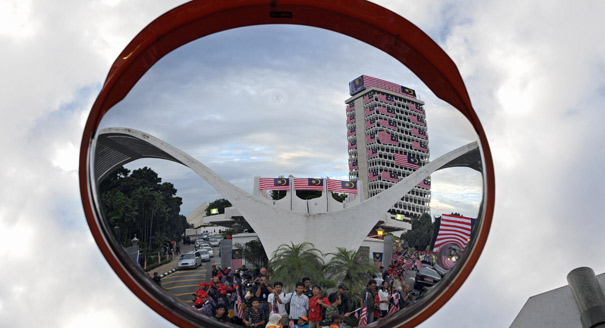
In my last column (Issue 950, Feb 18), I addressed several ways to strengthen the democratic election of government. This week, I highlight three areas of concern that require attention to strengthen democratic governance after a government accedes to state power.
First is the concentration of state power in the executive branch of government and the importance of checks and balances in the exercise of that power. Second is the confrontational and suspicious relationship between civil society and government. Third is the bitter, confrontational relationship between government and the opposition. Addressing these concerns will go a long way towards strengthening democratic governance and the development of a mature democracy in the country.Although there are four branches of government in Malaysia - executive, parliament, judiciary and the Rulers - for a number of reasons, over the last five decades, there has been a steady growth in the power and role of the executive and a corresponding erosion in the power and role of the other branches of government.
Today, the power of the executive is in several ways unbridled. Concentration of power in the state and in the executive has made for intense competition with opportunities for patronage and abuse. To prevent such consequences, it is important to set firm criteria for the exercise of state power and correct the imbalances among the four branches of government.
State power is the prize for which political parties compete. Victory allows the winning party to execute its preferred policy platform. However, victory does not give the incumbent government a blank cheque. The party in power cannot do as it pleases.
Three criteria must govern the exercise of state power. One, state power must be deployed to serve the public good. Public good here implies the interests of all citizens and groups and the interests of the country as a whole, not just of those who supported the party or of party members. The hallmark of a democratic government is that it is responsive to citizen interests. At the same time, the government must have sufficient autonomy to act on behalf of the entire national community and in the longer-term interests of the country.
This is a challenging task that requires careful balancing between popular policies and responsible governance. Victory in political competition for state power must be seen as a mandate to implement certain philosophy of government and a set of policies. Success or failure in that effort provides a measure of judgment for the electorate in future elections. Encouraging policy competition, this criterion for the exercise of state power would discourage personality-based competition for state power and money politics.
This article was originally published in Edge Malaysia.
Former Nonresident Senior Fellow, Asia Program
Alagappa, formerly a nonresident senior fellow in the Asia Program, was the first holder of the Tun Hussein Onn Chair in international studies at the Institute of Strategic and International Studies in Kuala Lumpur, Malaysia. His research focuses primarily on Asian security, the political legitimacy of governments, civil society and political change, and the political role of the military in Asia.
Recent Work
Muthiah Alagappa
Muthiah Alagappa
Carnegie does not take institutional positions on public policy issues; the views represented herein are those of the author(s) and do not necessarily reflect the views of Carnegie, its staff, or its trustees.

U.S. unpredictability has allowed China to capitalize on its positioning as the “responsible great power”. Paradoxically, the more China wins the perception game, the more likely expectations will rise for Beijing to deliver not just words but to demonstrate with its deeds.

Chong Ja Ian

Hanoi and Beijing have long treated each other as distant cousins rather than comrades in arms. That might be changing as both sides draw closer to hedge against uncertainty and America’s erratic behavior.

Nguyễn Khắc Giang

Malaysia’s chairmanship sought to fend off short-term challenges while laying the groundwork for minimizing ASEAN’s longer-term exposure to external stresses.

Elina Noor

For Malaysia, the conjunction that works is “and” not “or” when it comes to the United States and China.
Elina Noor

ASEAN needs to determine how to balance perpetuating the benefits of technology cooperation with China while mitigating the risks of getting caught in the crosshairs of U.S.-China gamesmanship.
Elina Noor