

Commentary
Bayram Balci
{
  "authors": [
    "Bayram Balci"
  ],
  "type": "legacyinthemedia",
  "centerAffiliationAll": "dc",
  "centers": [
    "Carnegie Endowment for International Peace",
    "Malcolm H. Kerr Carnegie Middle East Center"
  ],
  "collections": [],
  "englishNewsletterAll": "menaTransitions",
  "nonEnglishNewsletterAll": "",
  "primaryCenter": "Carnegie Endowment for International Peace",
  "programAffiliation": "MEP",
  "programs": [
    "Middle East"
  ],
  "projects": [],
  "regions": [
    "Middle East",
    "Türkiye"
  ],
  "topics": [
    "Political Reform"
  ]
}
Source: Getty
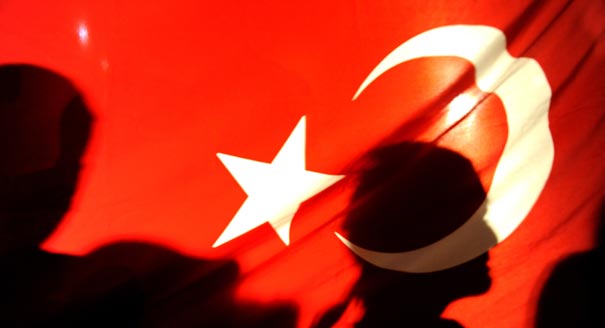
Regardless of the path the prime minister chooses to take to deal with protests, the rejuvenation of political debate in Turkey ensures that the country has a brighter future.
Source: World Politics Review
The protests that began in Istanbul last month and soon spread throughout Turkey have become a globally watched demonstration against Prime Minister Recep Tayyip Erdogan and his recent policies. By their nature and, most importantly, because this crisis was so badly managed by the prime minister, the protests will undoubtedly represent a turning point in the country’s political life, affecting Turkish society and democracy. However, the past month’s events, while alarming, do not necessarily represent the worst-case scenario for Turkish democracy that many have made them out to be.
In fact, the protests in Turkey are reinvigorating public debate in a remarkably positive way for the country’s politics. Although events have revealed a divided society, the growth of an effective popular opposition stands in sharp contrast to the failure of political parties opposing Prime Minister Recep Tayyip Erdogan’s Justice and Development Party (AKP) in the national discourse over the past decade. The current eruption of political engagement is great news for Turkey in the medium term, as it will inspire parties to adapt and modernize to capture the spirit of the opposition in the street. There are clearly significant immediate challenges facing Turkey, but it is the prime minister’s personal political future that is at great risk, not the future of the country.
Above all, the protests raise two fundamental questions: How did the AKP, elected three times in the past decade with increasing majorities, end up inspiring so much hostility? And what does the spontaneous and profound unrest say about modern Turkey?The current anger is directed against the party’s perceived authoritarian excesses. After he was democratically elected in 2002, and even after his re-election in 2007, Erdogan unquestionably succeeded in boosting Turkish prosperity and reforming state institutions for the better. The fact that the army, which has historically exercised tight control over the Turkish state, has been deprived of its overbearing political role is proof enough of AKP’s extraordinary achievements in terms of democratization and state reform. However, since winning a third term in June 2011, Erdogan has become increasingly controlling and paternalistic. Erdogan’s moves to intimidate the media and impose more-conservative and traditional behavioral norms at odds with the secular legacy of modern Turkey, combined with the opposition’s silence and inaction, led to increasing disenchantment with Erdogan’s leadership.
What do the protesters want? Two major and related desires are, first, a guarantee that the Turkish government will respect the differences among its citizens and, second, that there will be no imposition of AKP-inspired behavioral norms on Turkish citizens. Many of those Turks who put the AKP in power and who are grateful to the party for the economic boom now oppose the direction the party is taking the country, including its exclusively Sunni Turkish cultural isolationism. The protests are therefore a reassuring indication of the level of political maturity within Turkish society.
Turkey has a history of massive demonstrations, both before and during Erdogan’s decade or so in power—for example, demonstrations in defense of Kurdish minority rights, secularism and founding President Kemal Ataturk’s legacy. However, the protests that began on May 31 are unprecedented in the way that they have brought together so many different groups. The protests have become a social and political crossover movement that has expanded to 50 or so of the largest cities across the country, regardless of demonstrators’ class, religion or cultural background. Moving beyond their differences and occasional antagonism, extreme leftists, members of the Alevi religious minority, nationalists, Kemalists, feminists, gays, soccer fan clubs and anti-capitalist Islamists are coming together to defend the republic’s institutions and the fundamental principles of the Turkish state and democracy and to condemn Erdogan’s abuse of power.
Whatever the outcome of the crisis, Turkish democracy has already won a victory. In response to pressure from the street, two major AKP figures—President Abdullah Gul and Deputy Prime Minister Bulent Arinc—have adopted a more accommodating and consensus-seeking attitude. This breach in the previously monolithic AKP should serve to remind the party leaders that democracy by a majority vote is not to be mistaken for participative and consensual democracy.
However, if the repression continues or intensifies, the situation in Turkey could deteriorate. Although there have been limited interactions between the prime minister and the protest leaders, so far efforts at dialogue have been insufficient to alleviate the tension. New clashes occurred between the police and protesters in Ankara and Istanbul on the weekend of June 22-23, and the protesters want tangible evidence and safeguards of their rights to protest and take part in other peaceful political activity.
Erdogan has engaged himself in a showdown with his own electorate, and now he has a delicate choice to make. Does he want to lead Turkey on the path to a more open and participatory democracy, respecting his people’s aspirations? Or does he want to take Turkey back to the dark years of the 1970s and 1980s, when democracy was muffled? For the first time in his long and, until now, almost flawless political career, Erdogan has committed a major political mistake. He is already finding out that he is not above the people, and ultimately they hold the keys to his future success or failure. Whether he wants to be remembered as a hero of the Turkish republic or as the gravedigger of Turkish democracy is unclear. But the rejuvenation of political debate in Turkey ensures that the nation itself has a bright future regardless.
This article originally appeared in the World Politics Review.
Former Nonresident Scholar, Russia and Eurasia Program
Balci was a nonresident scholar in Carnegie’s Russia and Eurasia Program, where his research focuses on Turkey and Turkish foreign policy in Central Asia and the Caucasus.
Recent Work
Bayram Balci
Bayram Balci, Daniyar Kosnazarov
Carnegie does not take institutional positions on public policy issues; the views represented herein are those of the author(s) and do not necessarily reflect the views of Carnegie, its staff, or its trustees.
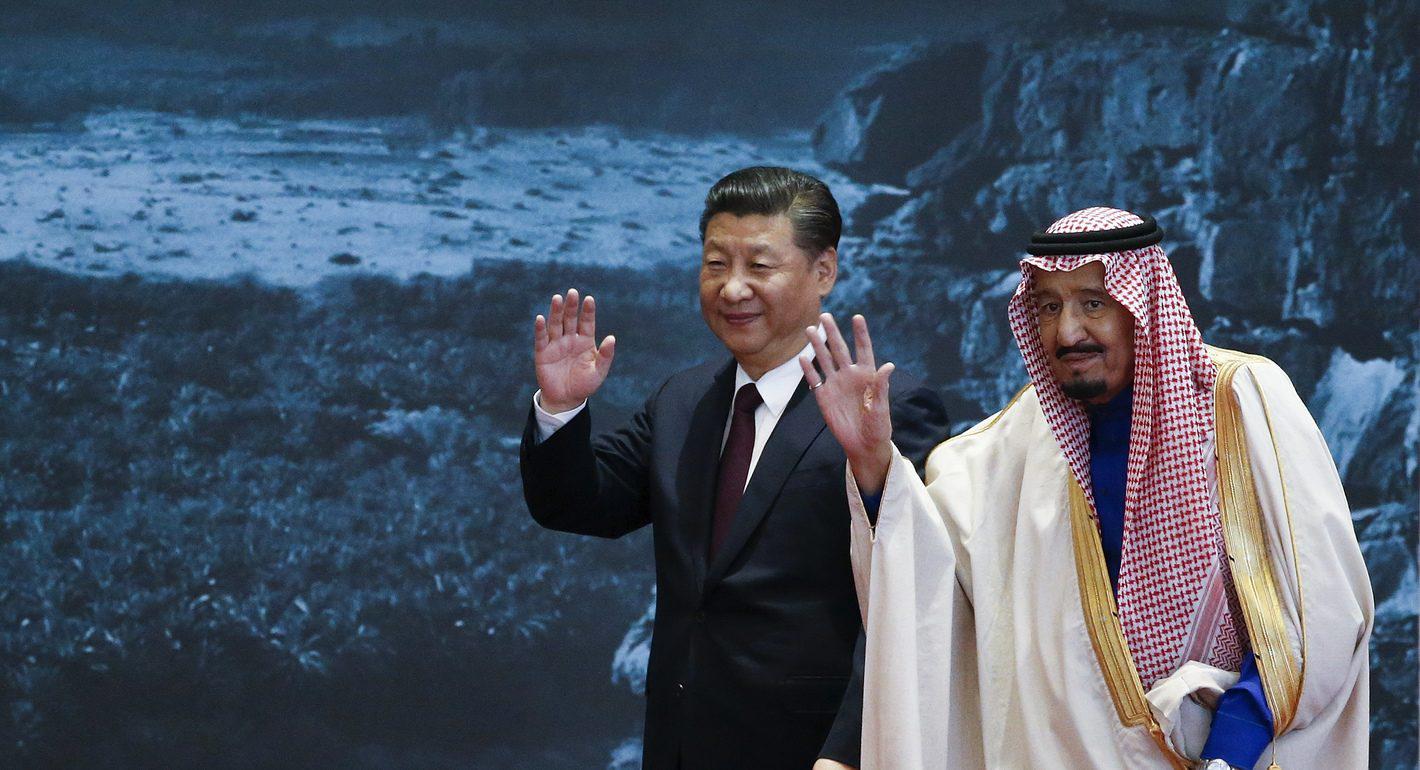
The advantage that China has over other global powers, especially America, is that its foreign policy is closely aligned with those of many of the Middle Eastern countries.


Jin Liangxiang, Maha Yahya, Hesham Alghannam

Transactional relationships are stable but can be shallow.


Paul Haenle, Maha Yahya, Benjamin Ho, …

It’s about managing oil prices, bread prices, and strategic partnerships.



Amr Hamzawy, Karim Sadjadpour, Aaron David Miller, …
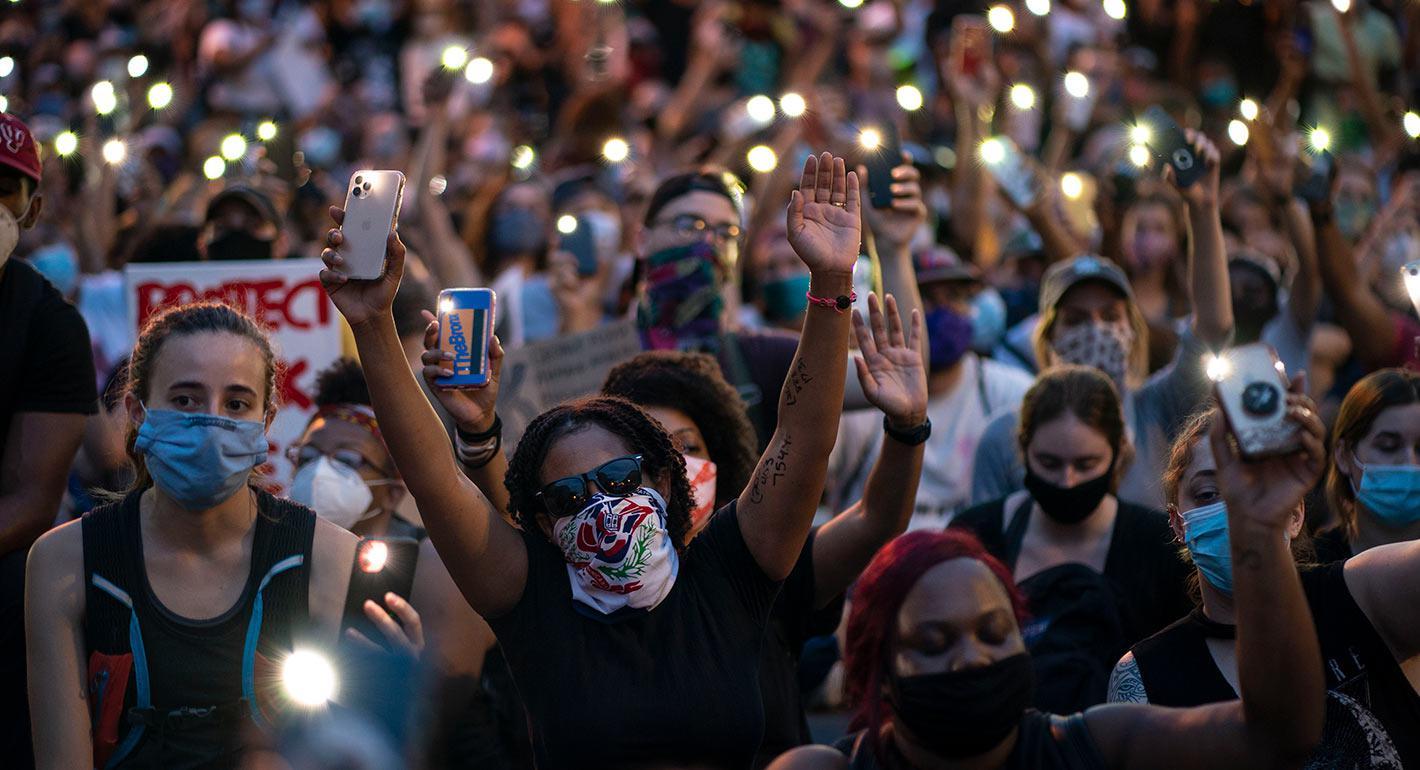
The murder of George Floyd has underscored the deep inequities that have long plagued American society. In a note to the Carnegie community, Bill Burns reflects on Carnegie’s commitment to build a more just future here at home and around the world, without which peace will remain beyond our grasp.
William J. Burns
While the world hoped this pandemic might lead to more cooperation between these two great powers, American and Chinese leaders instead fell into a blame game and allowed their increasing suspicions to guide their decision-making.
Lyu Jinghua