

Research
- +4
Milan Vaishnav, Rahul Verma, Rukmini S., …
{
  "authors": [
    "Christophe Jaffrelot"
  ],
  "type": "legacyinthemedia",
  "centerAffiliationAll": "dc",
  "centers": [
    "Carnegie Endowment for International Peace"
  ],
  "collections": [],
  "englishNewsletterAll": "ctw",
  "nonEnglishNewsletterAll": "",
  "primaryCenter": "Carnegie Endowment for International Peace",
  "programAffiliation": "SAP",
  "programs": [
    "South Asia"
  ],
  "projects": [
    "India Decides 2014"
  ],
  "regions": [
    "South Asia",
    "India"
  ],
  "topics": [
    "Political Reform",
    "Democracy"
  ]
}
Source: Getty
The Aam Aadmi Party has capitalised on the anti-corruption campaign of Anna Hazare in which Arvind Kejriwal played a major role, which has somewhat re-politicised the urban middle class.
Source: Rediff News
'Modi cannot content himself anymore with merely indulging in Congress bashing and referring to the Gujarat "miracle".'
'He will have to show that his party is as clean and as innovative as the AAP. And this is impossible because the AAP is new and the BJP is now old.'
Rediff.com begins its coverage of Election 2014 with insightful interviews with experts who know India best.
Today: Christophe Jaffrelot, author of several acclaimed books on Indian politics, speaks to Rediff.com's Archana Masih.Christophe Jaffrelot is a Senior Research Fellow at CNRS (the Centre National de la Recherche Scientifique) and teaches South Asian politics and history at Sciences Po (Paris).
A well-known international scholar specialising on Indian politics, he has written several books focusing on India's democracy, mobilisation of castes and Hindu nationalism.
His forthcoming book on Narendra Modi's experiment with Gujarat will be published in February.
A professor at the King's College India Institute in London and a Princeton Global Scholar at Princeton University, Professor Jaffrelot analyses the dramatic rise and impact of the Aam Aadmi Party in the first part of an e-mail interview with Rediff.com's Archana Masih.
The AAP has obviously benefitted from the growing unpopularity of the Congress in Delhi where the anti-incumbency factor, after 15 years of Sheila Dikshit's rule, has played a major role.
But the party has also capitalised on the anti-corruption campaign of Anna Hazare in which Arvind Kejriwal played a major role - and which had somewhat re-politicised the urban middle class of the state.
Last but not least, the AAP has been able to go beyond this constituency and reach out to slum dwellers, something few parties do.
At the same time, the rise of the AAP needs to be qualified: It has contested elections in only one city of the country so far.
It may take AAP as much time as it has taken to the BSP to become a national party.
No, there is no comparison. The Janata Party resulted from the merger of existing political parties whose leaders had been sent to jail by Indira and Sanjay Gandhi.
The government of Manmohan Singh has been rejected for other reasons -- corrupt practices mostly -- and in a more spontaneous way.
It (the AAP) has emerged from a popular movement. If one comparison can be made, it's between the JP (Jayaprakash Narayan).
The only common feature is the anger of the people regarding corruption.
Expectations should continue to rise and to support the rise of the AAP till the Lok Sabha elections, then, the accountability factor will become more important.
It will also depend upon the capacity of the AAP to resist the rise of Modi in the political arena of urban India.
This constituency was attracted by the AAP before the party formed the government.
The attraction may continue if Kejriwal can recruit good party cadres and nominate good candidates out of Delhi.
For that, the AAP will also need funds. Many parties are now giving tickets to those who can pay for their electoral expenditures -- irrespective of their past records and ideology. The AAP will only be able to avoid these pitfalls if the party gets funds.
The AAP will not be able to reach out to rural India easily, for sure: you do not build a party machine across huge states like UP and Madhya Pradesh in a few months. But if it contests elections in urban seats, that will already be a great achievement -- and India is getting urbanised rather rapidly with semi-urban seats replacing rural seats at a quick pace.
It is very difficult to say whether the Left would be natural allies of the AAP.
Certainly, the party carries some socialist legacy, but Indian Socialists have not often partnered with trhe Communists. And the CPI and CPI-M are not present in many places out of West Bengal and Kerala anyway.
This coalition business will also be complicated because the AAP has emerged from an anti-corruption movement which targeted the political class as a whole.
It may easily lose its charm if it joins hands with its enemies of yesterday, except if they are junior partners like the Congress in Delhi today.
It has already happened: The Lokpal Bill would have not been passed had not the AAP won the Delhi election.
Its leaders may compel the other parties to behave in a better manner if they continue to be looked at as role models, deliver and resist the temptations of power.
Of course: The AAP is a competitor for the existing parties -- so why should they be happy with its success?
Kejriwal will force Modi to change his electoral campaign indeed.
Modi cannot content himself anymore with merely indulging in Congress bashing and referring to the Gujarat 'miracle'.
He will have to show that his party is as clean and as innovative as the AAP. And this is impossible because AAP is new and the BJP is now old: The people have tried it already.
What they have not tried already is Modi, and this is what may make the difference.
The AAP has added to the fire. In fact the Anna Hazare movement has started it.
But the media may underestimate the resilience of the Congress and its capacity to relate to others -- including as a junior partner, as evident from the support it is now giving to the AAP government in Delhi.
It all depends on the kind of challenge the AAP may represent for the BJP in the cities.
In a large metropolis, like Delhi, Mumbai and Bangalore, the AAP may field good candidates, but the BJP has a strong following among the middle class of smaller cities.

Former Nonresident Scholar, South Asia Program
Jaffrelot’s core research focuses on theories of nationalism and democracy, mobilization of the lower castes and Dalits (ex-untouchables) in India, the Hindu nationalist movement, and ethnic conflicts in Pakistan.
Recent Work

Milan Vaishnav, Rahul Verma, Rukmini S., …
Christophe Jaffrelot
Carnegie does not take institutional positions on public policy issues; the views represented herein are those of the author(s) and do not necessarily reflect the views of Carnegie, its staff, or its trustees.
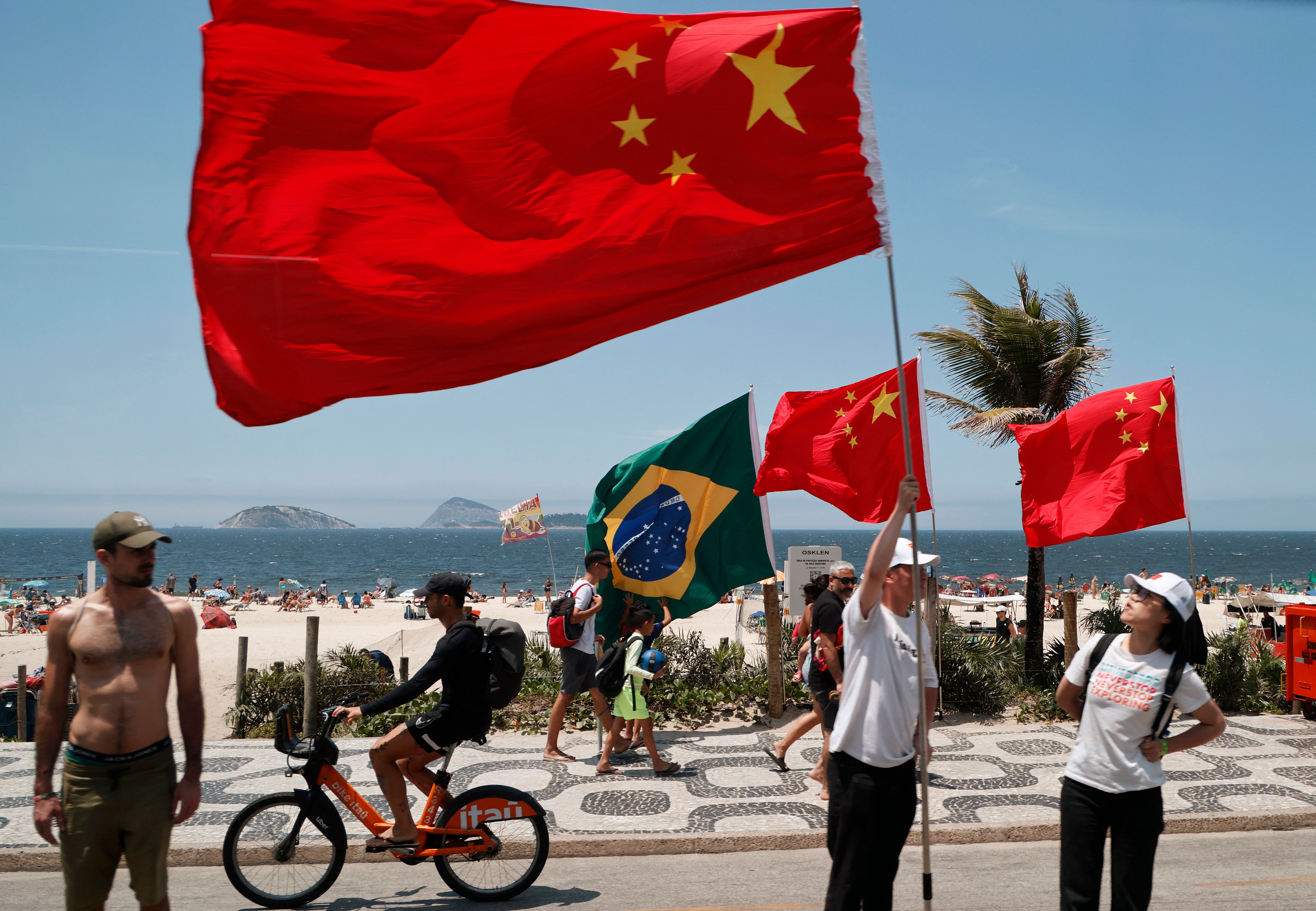
While China will remain a significant political and economic force in the Global South, its ambition to leverage the Global South as a counterbalance to the United States and the Global North is far from assured.

Xue Gong
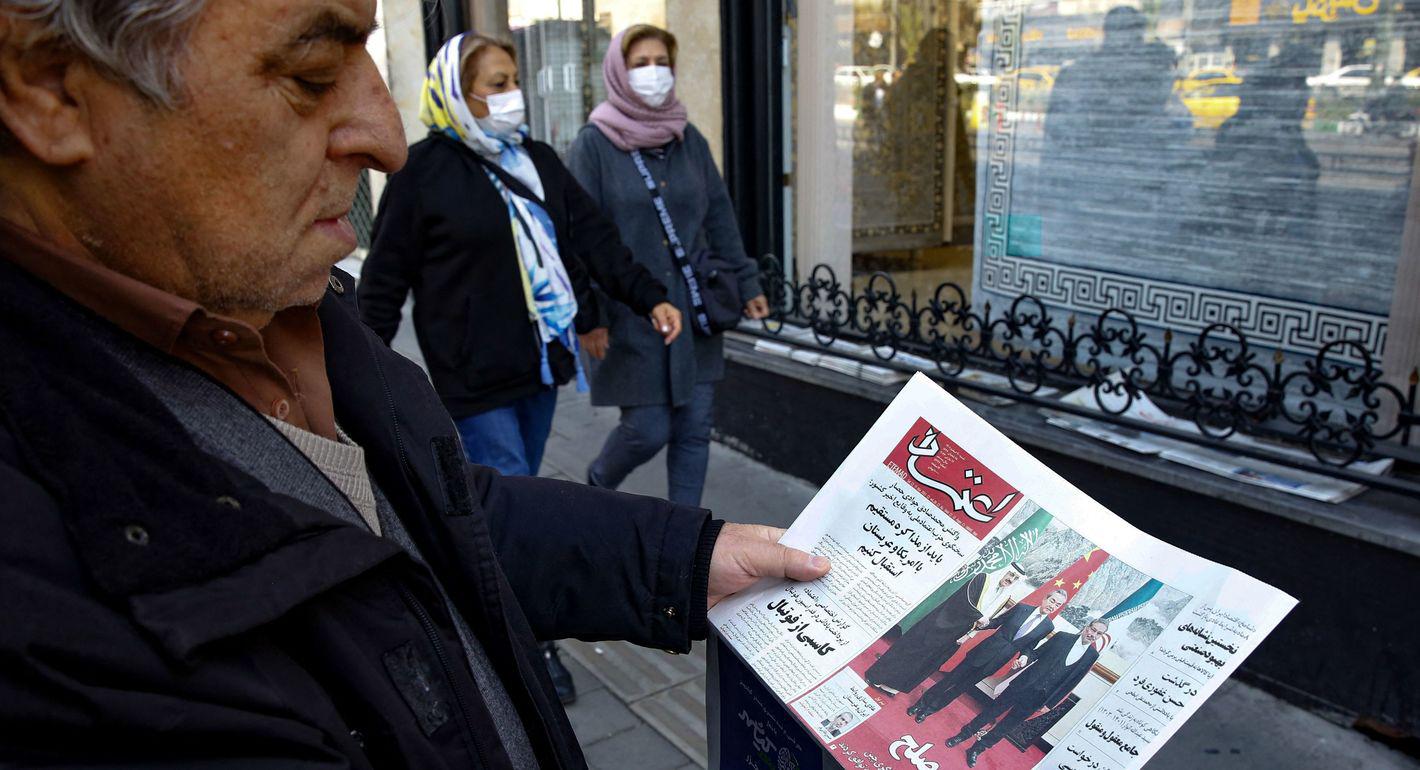
Transactional relationships are stable but can be shallow.


Paul Haenle, Maha Yahya, Benjamin Ho, …
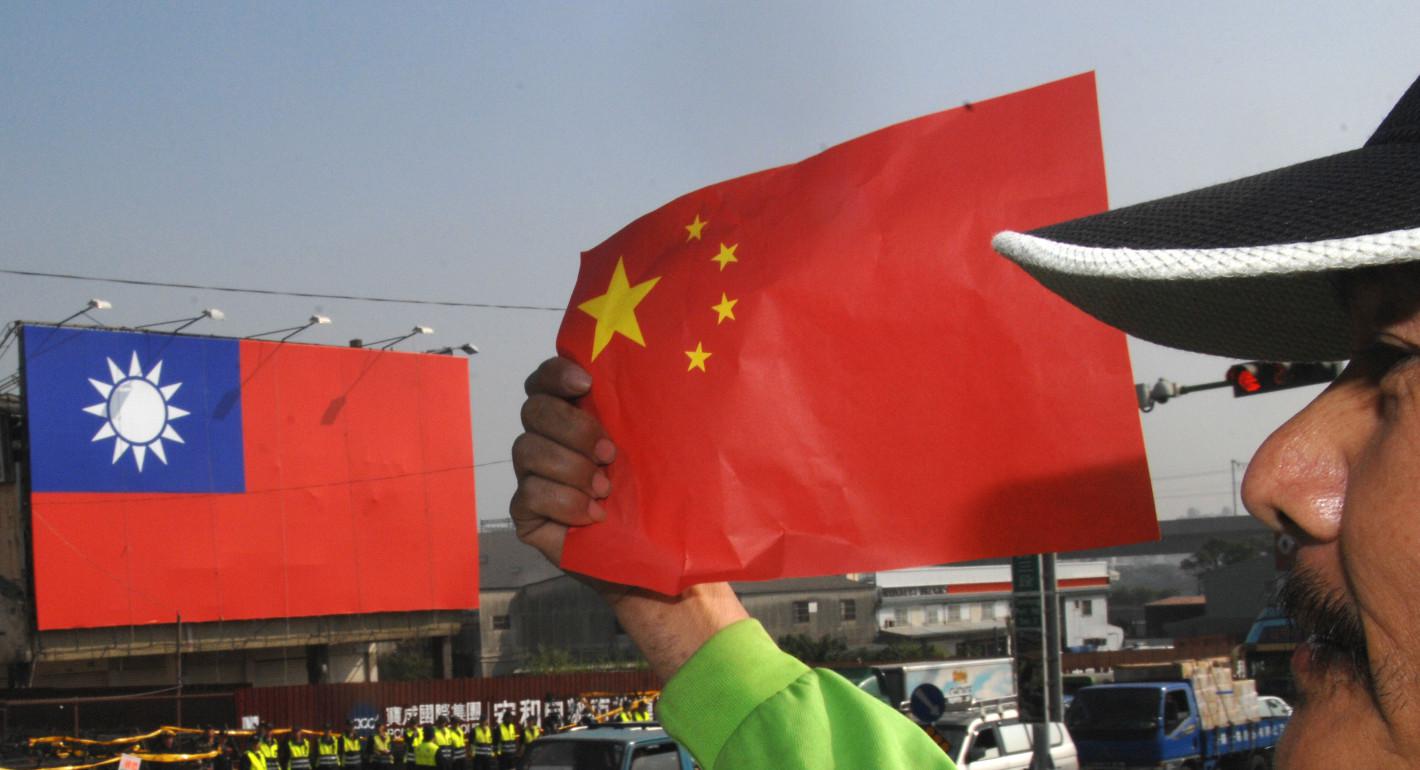
Beijing says that over 180 countries accept its “one China principle” regarding Taiwan, but the reality is more complicated.

Chong Ja Ian
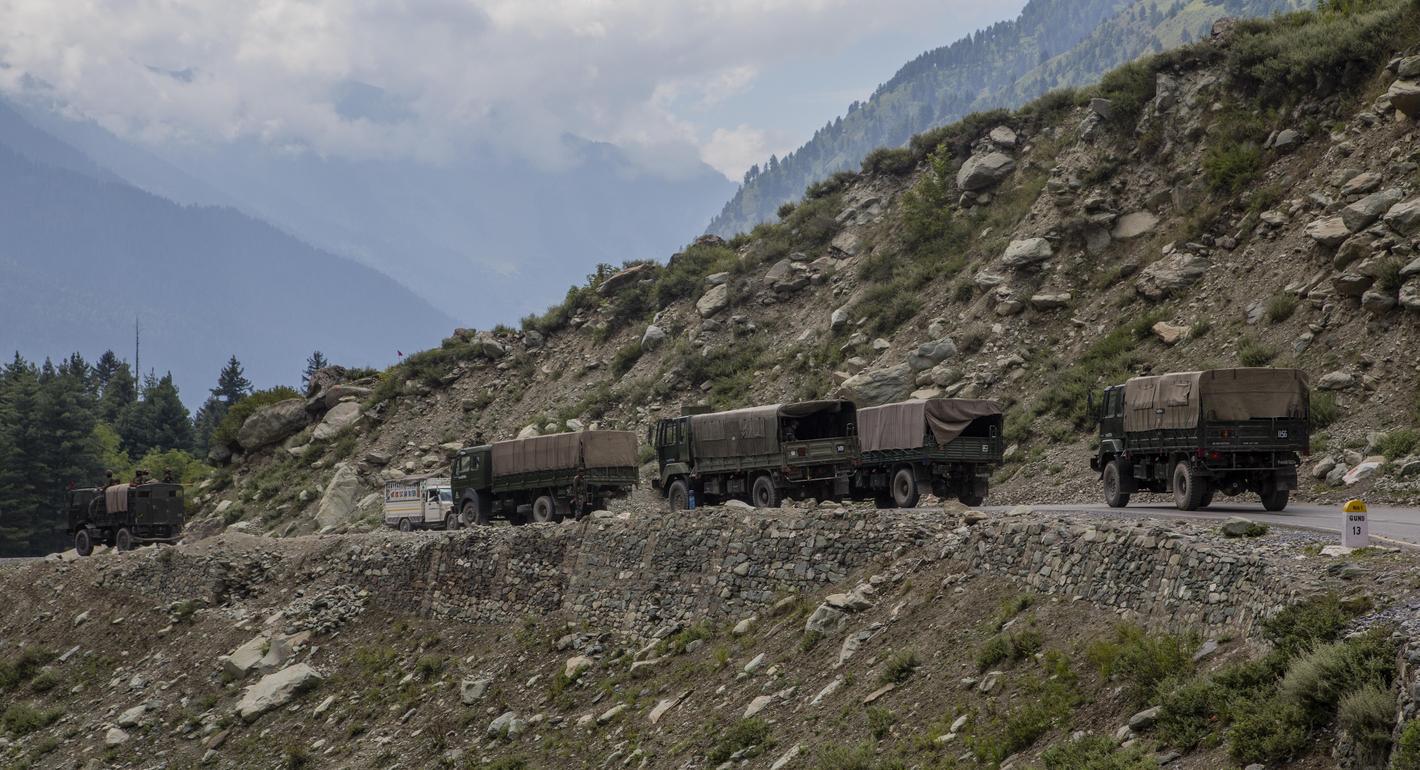
Can China and India disengage from contested territories along the border?
Paul Haenle, Ashley J. Tellis, Han Hua, …

Beijing must choose between preserving its pandemic narrative or facing more unrest.
Paul Haenle