

Paper
Christopher S. Chivvis, Rohan Mukherjee, Milan Vaishnav
{
  "authors": [
    "Milan Vaishnav"
  ],
  "type": "legacyinthemedia",
  "centerAffiliationAll": "dc",
  "centers": [
    "Carnegie Endowment for International Peace"
  ],
  "collections": [],
  "englishNewsletterAll": "ctw",
  "nonEnglishNewsletterAll": "",
  "primaryCenter": "Carnegie Endowment for International Peace",
  "programAffiliation": "SAP",
  "programs": [
    "South Asia"
  ],
  "projects": [],
  "regions": [
    "South Asia",
    "India"
  ],
  "topics": [
    "Political Reform"
  ]
}
Source: Getty
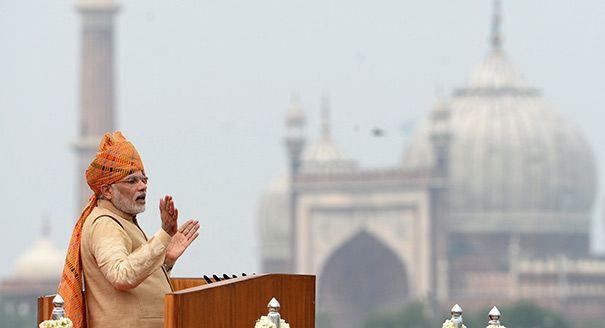
For a government whose claim to fame was governance delivered straight from the top, the view from the summit is unexpectedly cloudy.
Source: Indian Express
The year 2015 ends not with a bang, but with a whimper for Narendra Modi’s government. Parliament’s winter session has disappointed, with the government’s hopes of passing the GST temporarily dashed. The finance ministry’s Mid-Year Economic Analysis was notable for its disquieting prognoses: the government has slashed its growth outlook for the year and cautions that onward fiscal consolidation targets look dicey.
Analysts are looking to the PM for answers — but even after 18 months in office, Modi’s mood is inscrutable. Indeed, there is a cottage industry of outsiders reading the tea leaves to divine why he is acting the way he is. Three questions are the subject of heated debate. The first is about Modi “the Decider.” Why has the man who so skillfully branded himself a CEO-style leader allowed his party colleagues to repeatedly undermine him? Indeed, many ministers have engaged in distracting majoritarian rhetoric, damaging the PM’s standing and giving the opposition ammunition. Yet, no heads have rolled. Cynics point to the PM’s own campaign speeches in Bihar, claiming that Modi, a former RSS pracharak, implicitly endorses these views and sees no need to rein in his colleagues. Another narrative posits that Modi hesitates to silence voluble ministers for fear the Sangh will either ramp down support for the party or ramp up sabotage.Beyond Hindutva distractions, Modi is also handicapped by colleagues who articulate policy views opposed to the government’s agenda. Last week, a newspaper report suggested that the US, once supportive of India’s induction into Asia-Pacific Economic Cooperation, has backed down, put off by the commerce ministry’s protectionist posturing. Similarly, while Modi’s leadership was central to achieving the climate agreement in Paris, rumblings from the environment ministry were often out of sync with the PMO’s views. Even 18 months in, nobody knows whether the administration is clumsily playing good cop/bad cop, or whether the left hand truly does not know what the right hand is doing.
The second question concerns the use of federal power. Why has Modi not done more to ensure that BJP-ruled states lead by example on reforms? Supporters point out that the government has assented to some state-level labour law alterations that improve the investment climate. But this is a far cry from articulating and implementing a common minimum reform programme for all eight BJP-controlled states. Here, too, the tea leaves are inconclusive. Some claim this reticence reflects pushback from state units, while others have suggested the PM is more interested in efficiency and infrastructure than policy change. There is a third possibility: with an overburdened PMO, Modi lacks bandwidth to micromanage directives to allied states.
The final question is why the PM, arguably the most charismatic politician of his generation, has struggled to communicate. The government has been steamrolled on big reforms, like its proposed amendments to the land acquisition bill. It allowed itself to get trampled by a party with 44 Lok Sabha seats and a snappy one-liner. Yet, even when the government wins, they do not effectively trumpet their success. There are several areas where, unless policies are rectified, no amount of savvy marketing will obscure the underlying morass. But that does not mean that successes like expanding road construction, reforming subsidies, and auctioning coal blocks should remain hidden.
Modi’s silence rings loudest after moments like Dadri. Following the San Bernardino massacre, President Obama delivered an Oval Office address. Debates about policy prescriptions aside, Obama used the telecast to mollify the fears of America’s Muslims, and in turn the fear of home-grown terrorism. While Modi’s defenders are correct in pointing out that India lacks the precedent for the kind of public addresses US presidents rely upon, Modi exhibits little reticence to shirk tradition when it suits him. Comparisons between the US and India may be easy to dismiss, but a leader’s role as healer-in-chief should not be.
It is still early days for the Modi government. But these lingering questions have already become easy fodder for criticism and discomfort among investors, foreign governments, and even Indian voters. For a government whose claim to fame was governance delivered straight from the top, the view from the summit is unexpectedly cloudy.
This article was originally published in the Indian Express.

Director and Senior Fellow, South Asia Program
Milan Vaishnav is a senior fellow and director of the South Asia Program and the host of the Grand Tamasha podcast at the Carnegie Endowment for International Peace. His primary research focus is the political economy of India, and he examines issues such as corruption and governance, state capacity, federalism, and electoral behavior. He also conducts research on the Indian diaspora.
Recent Work
Christopher S. Chivvis, Rohan Mukherjee, Milan Vaishnav



Sophia Besch, Eric Ciaramella, Steve Feldstein, …
Carnegie does not take institutional positions on public policy issues; the views represented herein are those of the author(s) and do not necessarily reflect the views of Carnegie, its staff, or its trustees.
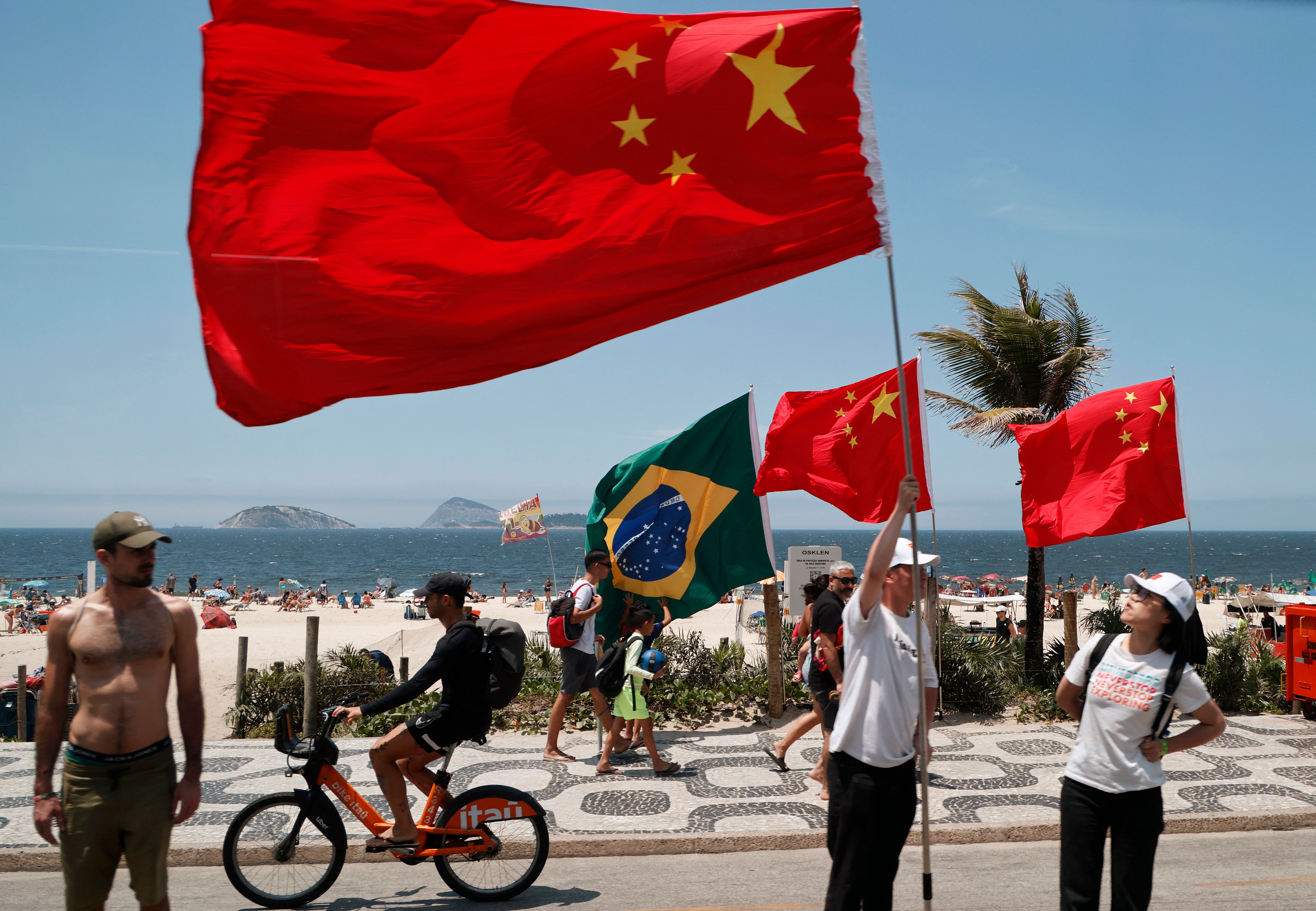
While China will remain a significant political and economic force in the Global South, its ambition to leverage the Global South as a counterbalance to the United States and the Global North is far from assured.

Xue Gong
Transactional relationships are stable but can be shallow.


Paul Haenle, Maha Yahya, Benjamin Ho, …
Can China and India disengage from contested territories along the border?
Paul Haenle, Ashley J. Tellis, Han Hua, …
It’s about managing oil prices, bread prices, and strategic partnerships.



Amr Hamzawy, Karim Sadjadpour, Aaron David Miller, …
The government extends the uncertainty with its two new taxes and digital rupee.

Anirudh Burman, Priyadarshini D.