

Research
- +4
Milan Vaishnav, Rahul Verma, Rukmini S., …
{
  "authors": [
    "Christophe Jaffrelot"
  ],
  "type": "other",
  "centerAffiliationAll": "dc",
  "centers": [
    "Carnegie Endowment for International Peace"
  ],
  "collections": [],
  "englishNewsletterAll": "ctw",
  "nonEnglishNewsletterAll": "",
  "primaryCenter": "Carnegie Endowment for International Peace",
  "programAffiliation": "SAP",
  "programs": [
    "South Asia"
  ],
  "projects": [],
  "regions": [
    "South Asia",
    "India"
  ],
  "topics": [
    "Democracy",
    "Economy"
  ]
}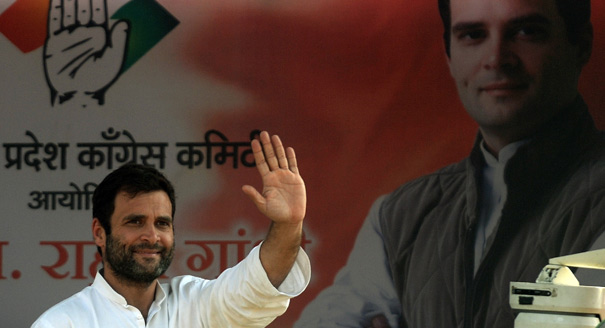
Source: Getty
Caste politics are partially returning to Gujarat, as the Patel caste has begun to back Congress once more. Their shift away from the BJP is in response to growing inequality.
Source: Studies in Indian Politics
The Patels, a dominant caste of Gujarat, rallied around the Congress in the 1920s and remained behind the ruling party until the 1980s, when they shifted to the Bharatiya Janata Party (BJP) because of the pro-Other Backward Classes (OBCs) reservation policy of the Congress Chief Minister Madhavsinh Solanki. As evident from the 2015 local elections, rural Patels are getting back to Congress. They resent the fact that the BJP, the ruling party for almost two decades, refuses to include Patels on the list of the OBCs. This demand, articulated by Hardik Patel, and other youth leaders, reflects the growing socio-economic inequalities within this caste group, not only because of the gap between peasants and urban dwellers but also because of the scarcity of good jobs in the private sectors, one of the outcomes of the ‘Gujarat model’....
This article was originally published in Studies in Indian Politics.

Former Nonresident Scholar, South Asia Program
Jaffrelot’s core research focuses on theories of nationalism and democracy, mobilization of the lower castes and Dalits (ex-untouchables) in India, the Hindu nationalist movement, and ethnic conflicts in Pakistan.
Recent Work

Milan Vaishnav, Rahul Verma, Rukmini S., …
Christophe Jaffrelot
Carnegie does not take institutional positions on public policy issues; the views represented herein are those of the author(s) and do not necessarily reflect the views of Carnegie, its staff, or its trustees.

China’s banking crisis in the 2000s was resolved by transferring the costs to households through financial repression—a decision that recapitalized the banks while exacerbating the structural imbalances that continue to shape the Chinese economy today.

Michael Pettis

In the latest Five-Year Plan, the Chinese president cements the shift to an innovation-driven economy over a consumption-driven one.

Damien Ma

Rather than climate ambitions, compatibility with investment and exports is why China supports both green and high-emission technologies.

Mathias Larsen
“Involution” is a new word for an old problem, and without a very different set of policies to rein it in, it is a problem that is likely to persist.
Michael Pettis

While China's investment story seems contradictory from the outside, the real answers to Beijing's high-quality growth ambitions are hiding in plain sight across the nation's cities.

Yuhan Zhang