

Article
Muthiah Alagappa
{
  "authors": [
    "Muthiah Alagappa"
  ],
  "type": "legacyinthemedia",
  "centerAffiliationAll": "dc",
  "centers": [
    "Carnegie Endowment for International Peace"
  ],
  "collections": [],
  "englishNewsletterAll": "asia",
  "nonEnglishNewsletterAll": "",
  "primaryCenter": "Carnegie Endowment for International Peace",
  "programAffiliation": "AP",
  "programs": [
    "Asia"
  ],
  "projects": [],
  "regions": [
    "Southeast Asia"
  ],
  "topics": [
    "Political Reform",
    "Democracy"
  ]
}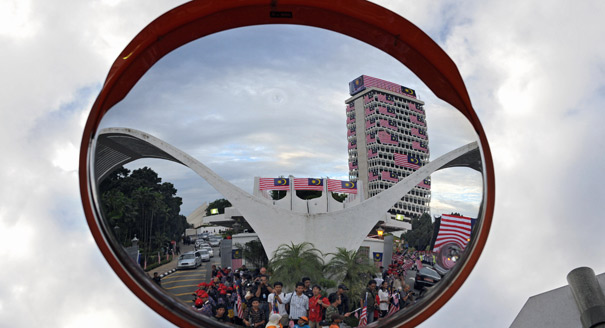
Source: Getty
Building a cohesive nation and developing an effective state are long-term processes that may take several decades, if not centuries.
Source: Edge Malaysia
Prominent banker Datuk Nazir Razak has again articulated the need for a second National Consultative Council (NCC2). This call has been supported by a number of political parties, including certain parties within the governing Barisan Nasional and senior politicians Tan Sri Rafidah Aziz, who was the former minister of international trade and industry.
I strongly endorse the need for NCC2 and future NCCs as they become necessary for Malaysia to become a cohesive nation and an effective state. Building a cohesive nation and developing an effective state are long-term processes that may take several decades, if not centuries….
This piece was originally published in the Edge Malaysia. It was published with a mistake; the original says ‘On nation-building, my view is that measures should be instituted to strengthen democracy in the country …’. It should say ‘On state-building, my view is that measures should be instituted to strengthen democracy in the country …’
Former Nonresident Senior Fellow, Asia Program
Alagappa, formerly a nonresident senior fellow in the Asia Program, was the first holder of the Tun Hussein Onn Chair in international studies at the Institute of Strategic and International Studies in Kuala Lumpur, Malaysia. His research focuses primarily on Asian security, the political legitimacy of governments, civil society and political change, and the political role of the military in Asia.
Recent Work
Muthiah Alagappa
Muthiah Alagappa
Carnegie does not take institutional positions on public policy issues; the views represented herein are those of the author(s) and do not necessarily reflect the views of Carnegie, its staff, or its trustees.

U.S. unpredictability has allowed China to capitalize on its positioning as the “responsible great power”. Paradoxically, the more China wins the perception game, the more likely expectations will rise for Beijing to deliver not just words but to demonstrate with its deeds.

Chong Ja Ian

Hanoi and Beijing have long treated each other as distant cousins rather than comrades in arms. That might be changing as both sides draw closer to hedge against uncertainty and America’s erratic behavior.

Nguyễn Khắc Giang

Malaysia’s chairmanship sought to fend off short-term challenges while laying the groundwork for minimizing ASEAN’s longer-term exposure to external stresses.

Elina Noor
For Malaysia, the conjunction that works is “and” not “or” when it comes to the United States and China.
Elina Noor

ASEAN needs to determine how to balance perpetuating the benefits of technology cooperation with China while mitigating the risks of getting caught in the crosshairs of U.S.-China gamesmanship.
Elina Noor