

Paper
The nuclear relationship between China and the United States is increasingly shaped by widening perception gaps rather than deliberate strategic design.
Tong Zhao
{
  "authors": [
    "Se Young Jang"
  ],
  "type": "other",
  "centerAffiliationAll": "dc",
  "centers": [
    "Carnegie Endowment for International Peace"
  ],
  "collections": [
    "Korean Peninsula"
  ],
  "englishNewsletterAll": "ctw",
  "nonEnglishNewsletterAll": "",
  "primaryCenter": "Carnegie Endowment for International Peace",
  "programAffiliation": "NPP",
  "programs": [
    "Nuclear Policy"
  ],
  "projects": [],
  "regions": [
    "East Asia",
    "South Korea"
  ],
  "topics": [
    "Nuclear Policy"
  ]
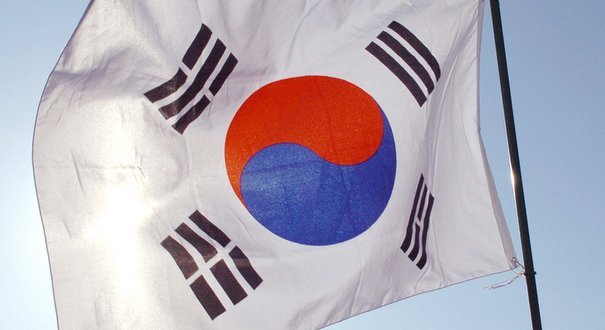
}
Source: Getty
Pressure by the United States was less decisive in forcing South Korea to ratify the NPT in 1975 than commonly assumed.
Source: Wilson Center
In this Nuclear Proliferation International History Project (NPIHP) Working Paper, Se Young Jang challenges the the common narrative that US pressure forced South Korea to ratify the NPT in 1975. Using new evidence from international archives, Jang finds that the decisive pressure came from a different country—Canada.
Pressure by the United States was less decisive in forcing South Korea to ratify the NPT in 1975 than commonly assumed. Records show that a consensus to ratify the treaty was reached within the ROK government by early March 1975—before the US applied meaningful pressure.
There is little evidence that the 1975 Congressional resolution calling on the EX-IM bank to defer financing for reactor construction in Korea had an impact on ROK decision-making. The short time between the introduction of the resolution to the Senate Committee on Foreign Relations on March 7th and the notification of ROK President Park’s decision to ratify the NPT by the Korean Ministry of Foreign Affairs on March 8th suggests the events were not directly related.
South Korea joined the NPT to secure the sale of Canadian heavy-water reactors, whose sale had been made contingent on ratification. The ROK government chose to pursue the plutonium route to a bomb in 1972, making the acquisition of heavy-water reactors critical to the entire project.
The South Korean government did not regard NPT ratification as the end of its military nuclear pursuits. South Korea’s program was not formally suspended until December 1976—over one-and-a-half years after the Korean National Assembly ratified the NPT in March 1975.
Former Nonresident Scholar, Nuclear Policy Program
Se Young Jang was a nonresident scholar in the Nuclear Policy Program at the Carnegie Endowment for International Peace.
Carnegie does not take institutional positions on public policy issues; the views represented herein are those of the author(s) and do not necessarily reflect the views of Carnegie, its staff, or its trustees.

The nuclear relationship between China and the United States is increasingly shaped by widening perception gaps rather than deliberate strategic design.

Tong Zhao

Chinese biotech companies have been on the receiving end of U.S. economic coercion. Yet their responses have differed significantly because firm and state interests are not uniformly aligned. For Washington, treating all Chinese tech firms the same, irrespective of their actual interests, risks pushing them farther into Beijing’s corner.

Xue Gong

Across Asia, China is better positioned to withstand energy shocks from the fallout of the Iran war. Its abundant coal capacity can ensure stability in the near term. Yet at the same time, the country’s energy transition away from coal will make it even less vulnerable during the next shock.

Damien Ma

GDP growth means something fundamentally different in China than in most countries.

Michael Pettis
The Trump administration’s effort to reshape the global trading system and reset overseas security commitments is creating an historic inflection point. Less clear is how far China will be able to capitalize on these dynamics.



Li Mingjiang, Le Hong Hiep, Ngeow Chow Bing, …