
• Commentary
  • Research
  • Experts
  • Events
Carnegie China logoCarnegie lettermark logo
{
  "authors": [
    "Se Young Jang"
  ],
  "type": "legacyinthemedia",
  "centerAffiliationAll": "dc",
  "centers": [
    "Carnegie Endowment for International Peace"
  ],
  "collections": [
    "Korean Peninsula"
  ],
  "englishNewsletterAll": "ctw",
  "nonEnglishNewsletterAll": "",
  "primaryCenter": "Carnegie Endowment for International Peace",
  "programAffiliation": "NPP",
  "programs": [
    "Nuclear Policy"
  ],
  "projects": [],
  "regions": [
    "East Asia",
    "South Korea",
    "North Korea",
    "China",
    "Japan"
  ],
  "topics": [
    "Nuclear Policy"
  ]
}

Source: Getty

In The Media

Do South Koreans Really Want U.S. Tactical Nukes Back on the Korean Peninsula?

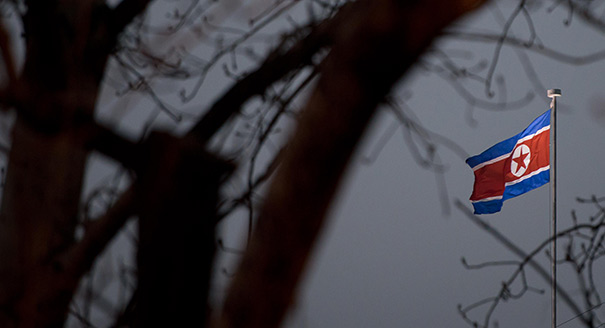
Amid escalating tensions, South Koreans have begun voicing their concerns about a nuclear-armed North Korea-and debating bringing U.S. tactical nuclear weapons back to the Korean peninsula.

Link Copied
By Se Young Jang
Published on Sep 19, 2017

Source: National Interest

North Korea increasingly poses a grave threat to its southern neighbor and the world by conducting a series of nuclear and missile tests. Amid this escalating tension on and around the Korean Peninsula, South Koreans have started voicing their concerns about a nuclear-armed North Korea.

A Korea Society Opinion Institute (KSOI) poll conducted September 8–9 shows that 68.2 percent of those surveyed believe that U.S. tactical nuclear weapons, which were withdrawn in 1991, should be redeployed to South Korea to protect the country from Pyongyang’s growing nuclear threat. A Gallup poll conducted September 5–7 also found that 60 percent of the respondents said that South Korea should arm itself with nuclear weapons. Extrapolating from the polls, some people could believe that an absolute majority of the South Koreans favors nuclear rearmament in response to a nuclear-armed North Korea.

Indeed, backed by the results of these latest polls, the right-wing Liberty Korea Party (LKP)—the main opposition party in South Korea—is further stepping up its demands for the redeployment of tactical nukes, not only to the South Korean government but also to the Trump administration. Having already adopted bringing back U.S. tactical nuclear weapons to South Korea as its party platform last month, the LKP argues that a “nuclear balance” is the best way to guarantee South Korea’s security in this dire situation. The LKP’s push for nuclear rearmament is in stark contrast with President Moon Jae-in’s policy of upholding a long-lasting principle of denuclearization of the Korean Peninsula, which he reconfirmed during his latest interview with CNN.

This article was originally published in National Interest

Read the article

About the Author

Se Young Jang

Former Nonresident Scholar, Nuclear Policy Program

Se Young Jang was a nonresident scholar in the Nuclear Policy Program at the Carnegie Endowment for International Peace.

Se Young Jang
Former Nonresident Scholar, Nuclear Policy Program
Nuclear PolicyEast AsiaSouth KoreaNorth KoreaChinaJapan

Carnegie does not take institutional positions on public policy issues; the views represented herein are those of the author(s) and do not necessarily reflect the views of Carnegie, its staff, or its trustees.

More Work from Carnegie China

  • Commentary
    When It Comes to Superpower Geopolitics, Malaysia Is Staunchly Nonpartisan

    For Malaysia, the conjunction that works is “and” not “or” when it comes to the United States and China.

      Elina Noor

  • Commentary
    ASEAN-China Digital Cooperation: Deeper but Clear-Eyed Engagement

    ASEAN needs to determine how to balance perpetuating the benefits of technology cooperation with China while mitigating the risks of getting caught in the crosshairs of U.S.-China gamesmanship.

      Elina Noor

  • Commentary
    Neither Comrade nor Ally: Decoding Vietnam’s First Army Drill with China

    In July 2025, Vietnam and China held their first joint army drill, a modest but symbolic move reflecting Hanoi’s strategic hedging amid U.S.–China rivalry.

      • Nguyen-khac-giang

      Nguyễn Khắc Giang

  • Commentary
    Today’s Rare Earths Conflict Echoes the 1973 Oil Crisis — But It’s Not the Same

    Regulation, not embargo, allows Beijing to shape how other countries and firms adapt to its terms.

      Alvin Camba

  • Commentary
    How China’s Growth Model Determines Its Climate Performance

    Rather than climate ambitions, compatibility with investment and exports is why China supports both green and high-emission technologies.

      Mathias Larsen

Get more news and analysis from
Carnegie China
Carnegie China logo, white
Keck Seng Tower133 Cecil Street #10-01ASingapore, 069535Phone: +65 9650 7648
  • Research
  • About
  • Experts
  • Events
  • Contact
  • Careers
  • Privacy
  • For Media
Get more news and analysis from
Carnegie China
© 2026 Carnegie Endowment for International Peace. All rights reserved.