

Paper
Christopher S. Chivvis, Rohan Mukherjee, Milan Vaishnav
{
  "authors": [
    "Milan Vaishnav"
  ],
  "type": "legacyinthemedia",
  "centerAffiliationAll": "dc",
  "centers": [
    "Carnegie Endowment for International Peace"
  ],
  "collections": [],
  "englishNewsletterAll": "ctw",
  "nonEnglishNewsletterAll": "",
  "primaryCenter": "Carnegie Endowment for International Peace",
  "programAffiliation": "SAP",
  "programs": [
    "South Asia"
  ],
  "projects": [
    "India Elects 2019"
  ],
  "regions": [
    "South Asia",
    "India"
  ],
  "topics": [
    "Political Reform",
    "Democracy"
  ]
}
Source: Getty
In an era when the Congress and the BJP can agree on next to nothing, they will gladly join hands to save their own skin—in this case, by changing a law that no longer exists.
Source: Print
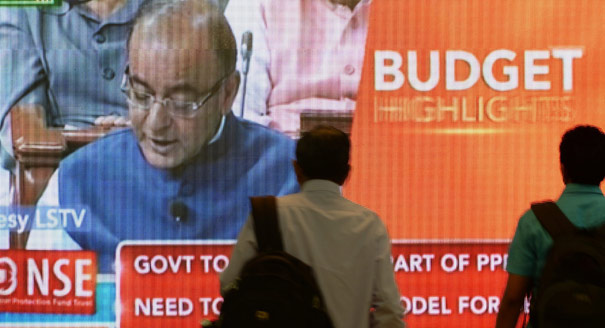
Among all the talk of the aam aadmi focus emerging from last week’s Budget, many people may have missed one of its most self-serving acts. This manoeuvre found no mention in the Union Finance Minister’s presentation itself, but was instead buried in innocuous-sounding legalese contained in the draft Finance Bill tabled by the government. It is a mere 34 words placed on page 52, Part XIX, Section 217. The offending section reads:
In the Finance Act, 2016, in section 236, in the opening paragraph, for the words, figures and letters “the 26th September, 2010”, the words, figures and letters “the 5th August, 1976” shall be substituted.
This humdrum language sounds innocent enough—hardly worthy of further comment, unless, of course, you are a chartered accountant. And that superficial mundanity is precisely the point. But, look beneath the surface and these approximately three-dozen words are the latest stunt in a multi-year, subterranean effort to rewrite India’s election finance rules.
As with the recent introduction of electoral bonds, a new instrument that legalises opacity in political giving, India’s election finance regime—never particularly robust to begin with—is rapidly hurtling backwards. Don’t look to the opposition to come to the rescue, however, for it is implicated as well.
The origins of the present tamasha date back to 2014, when the Delhi High Court issued an order that found both the Bharatiya Janata Party (BJP) and its principal rival, the Indian National Congress, guilty of accepting donations from foreign corporations. Under the terms of Foreign Contribution (Regulation) Act 2010 (FCRA), a “foreign source” is defined as a company that has “more than one-half of the nominal value of its share capital held” by “corporations incorporated in a foreign country or territory”. By that definition, the Delhi High Court ruled, multiple donations from the London-based natural resources giant Vedanta (among a few others) provided to both parties ran afoul of the law on the books.
Caught red-handed by the court and referred to the Election Commission for punitive action, the two national parties got creative. In 2016, under the cover of darkness, the present Finance Minister inserted another seemingly routine clause into that year’s Finance Bill, retroactively amending the 2010 FCRA law in order to redefine what a “foreign source” actually is.
The Bill, which was soon passed into law, stated that a company will no longer be deemed a foreign source under FCRA as long as the “nominal value of share capital is within the limits specified for foreign investment.” In other words, majority foreign ownership would no longer be the standard by which a company would be deemed to be “foreign” or not; instead, as long as the share of foreign investment in a given company was in line with sector-specific limits designated by the government, such companies would be deemed to be Indian companies under the law.
To be fair, reasonable people can disagree as to the appropriate definition of what a foreign company ought to be. But the government was not interested in a reasoned, fact-based debate; in fact, it was not interested in a debate at all. To the contrary, what it—and the Congress opposition – desired was for their legal woes to go away with the stroke of a pen and without too many people taking notice. And what better way that an obscure clause in the Finance Bill, which as a “money bill” does not even need approval from the upper house of Parliament?
With the passage of the 2016 Finance Act, the parties breathed a momentary sigh of relief. But in their rush to cover up their tracks, the offending parties slipped and committed an amateur mistake. That is because several of the foreign donations the BJP and Congress received pre-dated 2010, the date of the amended FCRA legislation. As the Delhi High Court order makes clear, the two national parties were actually found to be in violation of the original FCRA statute that dates back to 1976 (which was repealed and re-enacted by the modified 2010 statute). If “illegal” donations from foreign sources were received before 2010, redefining things as of 2010 actually does little good. One has to go back further.
And so we arrive at the present moment, where the 2018 Finance Act—to be debated by Parliament in the coming weeks—has been used to remedy this embarrassing glitch. The government plans to amend its 2016 language so that it covers the period beginning August 5, 1976—the date the original FCRA law came into being. In the mundane words of the “Statement of Objects and Reasons” appended to the draft Finance Bill:
It is proposed to bring the said amendment with effect from the 5th August, 1976 the date of commencement of the Foreign Contribution (Regulation) Act, 1976, which was repealed and re-enacted as the Foreign Contribution (Regulation) Act, 2010.
Whether or not Parliament can amend an act that no longer exists will be a matter senior advocates racking up crores in billable hours will likely argue about in the coming months. As Jagdeep Chhokar, one of the founders of the non-profit Association for Democratic Reforms (ADR), which brought the original Public Interest Litigation (PIL) that spurred the Delhi High Court ruling, has written, “The proposed amendment of FCRA 1976 is akin to trying to conduct a heart or liver transplant on a person who has been dead for seven years.”
The larger lesson is clear: in an era when the Congress and the BJP can agree on next to nothing, rest assured, that they will gladly join hands to save their own skin. From their defiance of the Central Information Commission’s ruling on the Right to Information (RTI) Act to the elimination of the cap on corporate contributions to political parties and the whimsical redefinition of what constitutes a “foreign” source, political parties of all stripes have been all too eager to scratch each others’ backs. In the meantime, we have been regaled with hyperbolic tales of great victories in the fight to curb money power in elections and of the valiant struggles against black money. In actuality, the ruling party, with support from the outside, has skillfully and cynically finessed the fine print to suit its private interests. We are united in cleaning up election funding, they argue. Just don’t read the fine print.

Director and Senior Fellow, South Asia Program
Milan Vaishnav is a senior fellow and director of the South Asia Program and the host of the Grand Tamasha podcast at the Carnegie Endowment for International Peace. His primary research focus is the political economy of India, and he examines issues such as corruption and governance, state capacity, federalism, and electoral behavior. He also conducts research on the Indian diaspora.
Recent Work


Christopher S. Chivvis, Rohan Mukherjee, Milan Vaishnav



Sophia Besch, Eric Ciaramella, Steve Feldstein, …
Carnegie does not take institutional positions on public policy issues; the views represented herein are those of the author(s) and do not necessarily reflect the views of Carnegie, its staff, or its trustees.

China’s political future will be shaped between now and next October. As the Communist Party enters its intense “campaign season” to prepare for a major political transition in 2027, reading Beijing's actions and responses may become more difficult as domestic politics weigh on its behavior more than usual.

Damien Ma
While China will remain a significant political and economic force in the Global South, its ambition to leverage the Global South as a counterbalance to the United States and the Global North is far from assured.

Xue Gong
Transactional relationships are stable but can be shallow.



Paul Haenle, Maha Yahya, Benjamin Ho, …
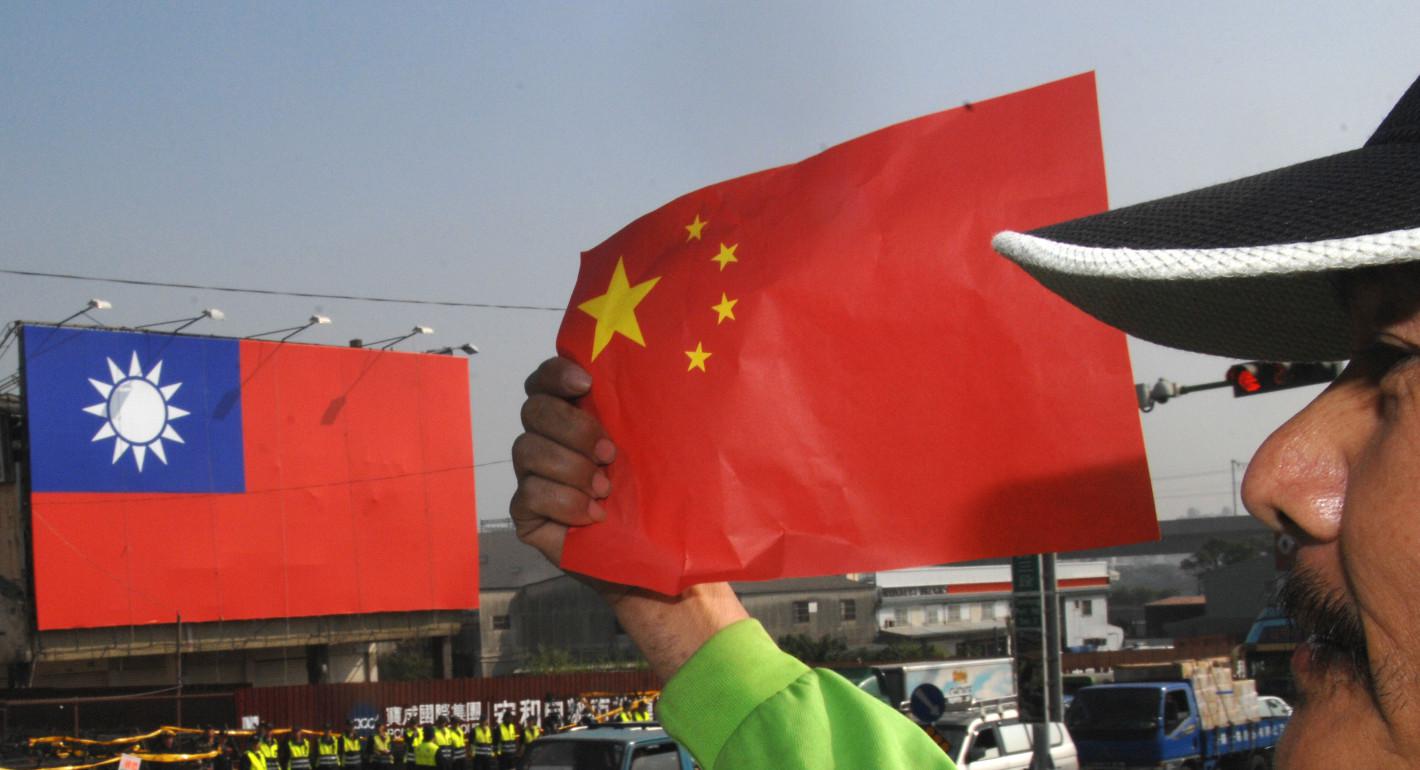
Beijing says that over 180 countries accept its “one China principle” regarding Taiwan, but the reality is more complicated.

Chong Ja Ian

Can China and India disengage from contested territories along the border?
Paul Haenle, Ashley J. Tellis, Han Hua, …