

Paper
The nuclear relationship between China and the United States is increasingly shaped by widening perception gaps rather than deliberate strategic design.
Tong Zhao
{
  "authors": [
    "Sarah Yerkes",
    "Daniel H. Rubinstein"
  ],
  "type": "commentary",
  "centerAffiliationAll": "dc",
  "centers": [
    "Carnegie Endowment for International Peace"
  ],
  "collections": [],
  "englishNewsletterAll": "menaTransitions",
  "nonEnglishNewsletterAll": "",
  "primaryCenter": "Carnegie Endowment for International Peace",
  "programAffiliation": "MEP",
  "programs": [
    "Middle East"
  ],
  "projects": [
    "Tunisia Monitor"
  ],
  "regions": [
    "North America",
    "United States",
    "North Africa",
    "Tunisia"
  ],
  "topics": [
    "Political Reform",
    "Foreign Policy"
  ]
}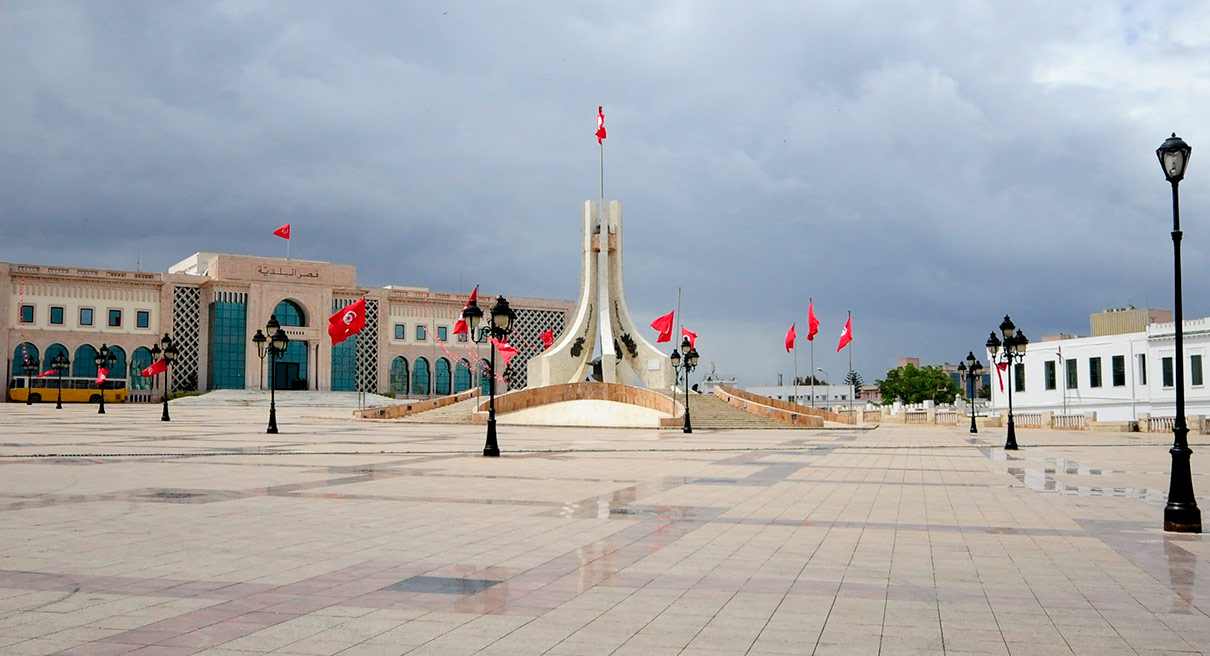
Source: Getty
Tunisia’s friends in the international community need to continue focusing on countering corruption and ensuring that this features prominently in foreign assistance.
The United States is committed to providing robust levels of economic assistance to Tunisians and the country’s nascent democracy that will allow the country room to maneuver to take difficult decisions without negatively impacting key constituencies. As we have seen in many other countries, foreign assistance can be part of a cushion as the government tries to deal with the fallout of a transition. Along with foreign assistance, the United States has continued to encourage our Tunisian friends to have more lasting, comprehensive efforts at combating corruption and to reflect and improve on competitiveness. But in both areas, we want Tunisians to recognize that there is room for improvement.
Tunisia’s friends in the international community need to continue focusing on countering corruption and ensuring that this features prominently in our foreign assistance. Tunisia continues to attract substantial foreign assistance from its friends, so it is important to support the country in its endeavor to improve the pace of measures to mitigate corruption, improve government transparency and adopt reforms to enhance its capacity and core competitiveness. Robust efforts are needed. This is not an easy journey.
I am fortunate to have arrived after former ambassador Jake Walles, who did excellent work, so I inherited a relationship in very good shape where the United States is viewed positively by key sectors of Tunisia. There clearly has been further development of the relationship in the defense and security sectors. Some seeds were planted before my time, some have been developed since. The cooperation with the United States in this area is now broader, deeper, and more intense. Tunisia has good tools to meet its defense challenges and enhance U.S. national security in this part of the world.
In January 2016, the country went through a very challenging set of protests, and the geographic spread of the protests was broad. Tunisian law enforcement successfully dealt with people exercising their right to demonstrate and used tools to handle the protests in a measured way. While the protests were intense, no demonstrators died by the use of force by law enforcement, which was a contrast to previous episodes. This signaled a moment of a significant increase in Tunisian law enforcement’s technique and discipline while broad parts of the population exercised their right to protest. This also signified positive progress in the ability of the people to strongly express their views with relative safety.
A second example—in 2016, it was the first time I gave a speech in [colloquial Tunisian]. This was a Technovation program that encourages girls and women to learn about computer coding in order compete in Tunisia and the world. During the event, I spoke to girls ages ten to eighteen from all twenty-four governorates, and I saw their energy and thirst for knowledge. This gave me a sense of optimism to see such a wellspring of energy, talent, and thinking. It showed me that Tunisia has the tools to succeed in the global economy. Tunisia has been prized for the role of women in modern history. There are many opportunities for women, but women are often still held back. At this event, however, I saw that women are learning and learning to dominate the tech field. I was proud that the United States was supporting such a program and happy to see private sector support for such work, which showed the consciousness of some in the private sector to reinvest in youth and gave me even more optimism for the future competitiveness of the country.

Acting Co-Director and Senior Fellow, Middle East Program
Sarah Yerkes is acting co-director and a senior fellow in Carnegie’s Middle East Program, where her research focuses on Tunisia’s political, economic, and security developments as well as state-society relations in the Middle East and North Africa.
Daniel H. Rubinstein
Carnegie does not take institutional positions on public policy issues; the views represented herein are those of the author(s) and do not necessarily reflect the views of Carnegie, its staff, or its trustees.

The nuclear relationship between China and the United States is increasingly shaped by widening perception gaps rather than deliberate strategic design.

Tong Zhao

But their "principal to principal" model will only be as effective as the political strength of each leader back home.

Damien Ma

U.S. unpredictability has allowed China to capitalize on its positioning as the “responsible great power”. Paradoxically, the more China wins the perception game, the more likely expectations will rise for Beijing to deliver not just words but to demonstrate with its deeds.

Chong Ja Ian

Hanoi and Beijing have long treated each other as distant cousins rather than comrades in arms. That might be changing as both sides draw closer to hedge against uncertainty and America’s erratic behavior.

Nguyễn Khắc Giang

Across Asia, China is better positioned to withstand energy shocks from the fallout of the Iran war. Its abundant coal capacity can ensure stability in the near term. Yet at the same time, the country’s energy transition away from coal will make it even less vulnerable during the next shock.
Damien Ma