

Research
- +16
Stewart Patrick, Erica Hogan, Oliver Stuenkel, …
{
  "authors": [
    "Trinh Nguyen"
  ],
  "type": "legacyinthemedia",
  "centerAffiliationAll": "dc",
  "centers": [
    "Carnegie Endowment for International Peace"
  ],
  "collections": [],
  "englishNewsletterAll": "asia",
  "nonEnglishNewsletterAll": "",
  "primaryCenter": "Carnegie Endowment for International Peace",
  "programAffiliation": "AP",
  "programs": [
    "Asia"
  ],
  "projects": [],
  "regions": [],
  "topics": [
    "Political Reform",
    "Economy",
    "Trade",
    "Foreign Policy",
    "Civil Society"
  ]
}
Source: Getty
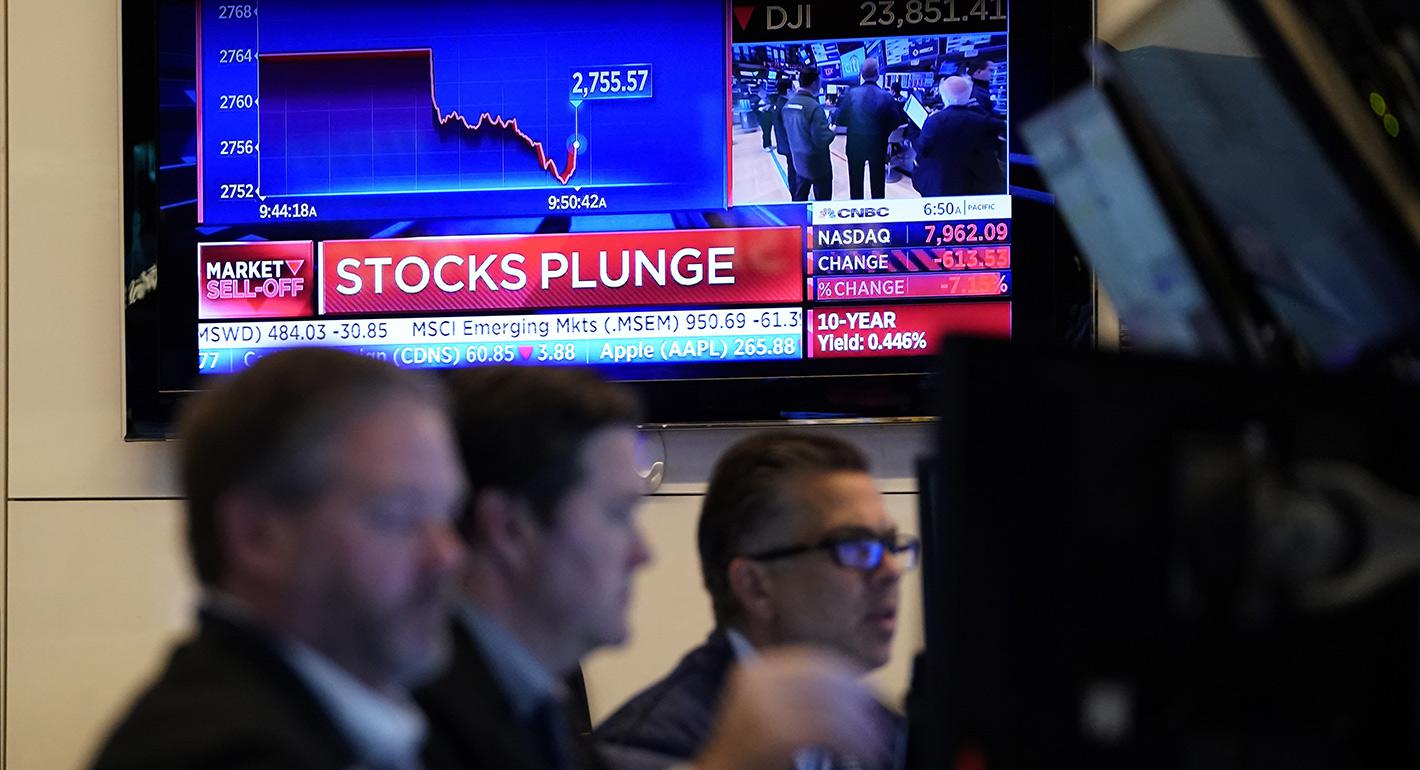
The global economy is on extended sick leave and central banks’ actions have failed to contain the contagion.
Source: Financial Times
The global economy is on extended sick leave and central banks’ actions so far have failed to contain the contagion. Despite aggressive measures to provide liquidity to markets, big central banks — from the US Federal Reserve and the European Central Bank to the Bank of Japan and the Reserve Bank of Australia — have not managed to stop big falls in asset prices or to shore up investors’ confidence. In the process, they have exposed three fundamental limitations of monetary policy.

Former Nonresident Scholar, Asia Program
Trinh Nguyen was a nonresident scholar in the Asia Program at the Carnegie Endowment for International Peace.
Recent Work

Stewart Patrick, Erica Hogan, Oliver Stuenkel, …
Trinh Nguyen
Carnegie does not take institutional positions on public policy issues; the views represented herein are those of the author(s) and do not necessarily reflect the views of Carnegie, its staff, or its trustees.

China’s banking crisis in the 2000s was resolved by transferring the costs to households through financial repression—a decision that recapitalized the banks while exacerbating the structural imbalances that continue to shape the Chinese economy today.

Michael Pettis

But their "principal to principal" model will only be as effective as the political strength of each leader back home.

Damien Ma

U.S. unpredictability has allowed China to capitalize on its positioning as the “responsible great power”. Paradoxically, the more China wins the perception game, the more likely expectations will rise for Beijing to deliver not just words but to demonstrate with its deeds.

Chong Ja Ian

Hanoi and Beijing have long treated each other as distant cousins rather than comrades in arms. That might be changing as both sides draw closer to hedge against uncertainty and America’s erratic behavior.

Nguyễn Khắc Giang

Across Asia, China is better positioned to withstand energy shocks from the fallout of the Iran war. Its abundant coal capacity can ensure stability in the near term. Yet at the same time, the country’s energy transition away from coal will make it even less vulnerable during the next shock.
Damien Ma