

{
  "authors": [
    "Alexander Gabuev",
    "Sabine Fischer",
    "Artyom Shraibman"
  ],
  "type": "commentary",
  "centerAffiliationAll": "",
  "centers": [
    "Carnegie Endowment for International Peace",
    "Carnegie Russia Eurasia Center"
  ],
  "collections": [],
  "englishNewsletterAll": "",
  "nonEnglishNewsletterAll": "",
  "primaryCenter": "Carnegie Endowment for International Peace",
  "programAffiliation": "",
  "programs": [],
  "projects": [],
  "regions": [],
  "topics": []
}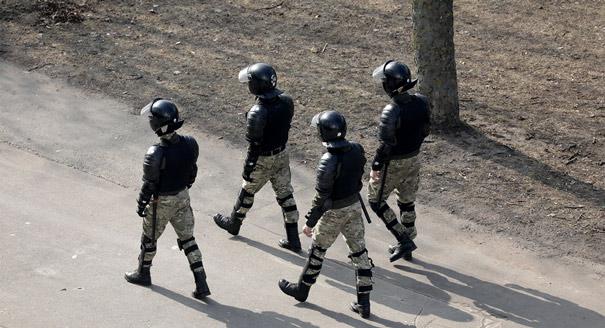
Source: Getty
Podcast: Where Will the Crackdown in Belarus End?
“Repression is spreading like gas in a room: as long as there’s space there, it’s going to expand.” What do the latest developments in Belarus mean for the country’s future?
What’s Alexander Lukashenko’s game plan in Belarus? Could the West have done more when protests broke out last year, and does it have any tools to impact the situation there now? Is there any alternative to Lukashenko that would be acceptable to Russia, or is any future regime now destined to be anti-Russian? Artyom Shraibman, a non-resident scholar at Carnegie Moscow Center, and Sabine Fischer, a senior fellow at the German Institute for International and Security Studies, join podcast host Alex Gabuev to discuss events in Belarus.
Listen or download: SoundCloud | Subscribe: iTunes, Google Podcasts, Google Play, Spotify, RSS
About the Authors

Director, Carnegie Russia Eurasia Center
Alexander Gabuev is director of the Carnegie Russia Eurasia Center. Gabuev’s research is focused on Russian foreign policy with particular focus on the impact of the war in Ukraine and the Sino-Russia relationship. Since joining Carnegie in 2015, Gabuev has contributed commentary and analysis to a wide range of publications, including the Financial Times, the New York Times, the Wall Street Journal, and the Economist.
Sabine Fischer
Senior fellow at the German Institute for International and Security Affairs

Nonresident Scholar, Carnegie Russia Eurasia Center
Artyom Shraibman is a nonresident scholar at the Carnegie Russia Eurasia Center.
Carnegie does not take institutional positions on public policy issues; the views represented herein are those of the author(s) and do not necessarily reflect the views of Carnegie, its staff, or its trustees.