

Feature
Damien Ma, Binyi Yang
{
  "authors": [
    "Damien Ma"
  ],
  "type": "commentary",
  "centerAffiliationAll": "",
  "centers": [
    "Carnegie China",
    "Carnegie Endowment for International Peace"
  ],
  "englishNewsletterAll": "",
  "nonEnglishNewsletterAll": "",
  "primaryCenter": "Carnegie China",
  "programAffiliation": "",
  "regions": [
    "China",
    "Asia",
    "East Asia"
  ],
  "topics": [
    "Domestic Politics",
    "Political Reform"
  ]
}
Source: Getty
China’s political future will be shaped between now and next October. As the Communist Party enters its intense “campaign season” to prepare for a major political transition in 2027, reading Beijing's actions and responses may become more difficult as domestic politics weigh on its behavior more than usual.
The weathervane of Chinese politics shifts the most in the spring and autumn. Generally speaking, spring is when major policies are decided, usually at the National People’s Congress (NPC), while autumn is when politics are front and center, typically at the Chinese Communist Party’s (CCP) Central Committee plenary sessions, or plenums.
The Fifth Plenum of the 20th Central Committee, slated for October 26, is one of these occasions. It will likely be an unusually potent barometer of the direction of Chinese politics because this Fifth Plenum essentially kicks off the political transition that culminates in the selection of new top leaders of the CCP at the 21st Party Congress in October 2027.
The coming year, then, is as close to a “campaign season” as the Chinese system has, with a hefty dose of Leninist characteristics. Personnel movements will intensify, party discipline will tighten, and political jostling and horse trading will take place. Much of that process, as is well known by now, will be predictably opaque.
Outcomes may be difficult to see immediately, but the absence of observable evidence does not mean evidence of absence when it comes to Chinese politics. Personnel matters, in fact, tend to matter more than other indicators for assessing how the CCP top brass is thinking about its future.
Plenums are high-level political events that typically take place seven times between one party congress and the next over five years. Each plenum is headed by the CCP general secretary and convened by the Central Committee, which is selected every five years at a party congress. At the plenums, decisions are made on personnel, ideology, party discipline, and major economic policies.
The first plenum confirms the new leadership at the start of the new party congress, while the last plenum approves the work report in preparation for the next party congress. While these bookend plenums are more pro forma, it’s the second to sixth plenums that usually provide significant decisions and signals of where the political winds are blowing.
To wit, the Third Plenum in 2013 unveiled an economic reform program that gave markets the “decisive role” in allocating resources. The Fifth Plenum in 2015 approved the 13th Five-Year Plan and quietly ended the one-child policy. The Sixth Plenum in 2021 adopted a historical resolution that essentially placed Xi Jinping alongside Mao Zedong and Deng Xiaoping ahead of Xi’s third term.
In terms of personnel, in July 2024, the Third Plenum stripped former foreign minister Qin Gang of his Central Committee seat. The Fourth Plenum in 2025 ratified the expulsion of nine senior officials, among them Central Military Commission vice chairman He Weidong.
This is especially so after a period of intense purges within the CCP and the People’s Liberation Army. The latest reported investigation of former Chongqing mayor Huang Qifan, eight years after his retirement, is another case in point. Huang was of course involved in one of the most significant political crises facing the party in 2012 that also ushered in the era of Xi Jinping. This case raises the prospect that retired elites are not immune from getting caught in the politics ahead of the 21st Party Congress.
Other stones will be turned and more political targets will be on the menu. But how key roles get filled between now and the March 2027 NPC will also offer important clues to how the party evaluates and selects officials ahead of the political transition. While it is far too early to speculate on the potential composition of the new top leadership at the Politburo level, it is clear that Xi Jinping intends to serve an unprecedented fourth term as general secretary through 2032.
Still, major questions loom over the 2027 transition, all of which point to the essential uncertainty over Xi’s succession plan or lack thereof. As the Chinese political campaign season unfolds, we will examine this question more deeply, including a retrospective of Xi’s fifteen-year run at the helm of Chinese politics and whether that yields clues to what’s in store post-2027.
But first, here’s how the upcoming Fifth Plenum matters as Chinese politics kicks into high gear over the next year.
In the two previous party congress cycles, both Fifth Plenums focused on ratifying China’s massive economic blueprints, or Five-Year Plans. However, this October’s Fifth Plenum deviates from this pattern and is instead expected to center on politics. Indeed, on September 21, the Politburo issued the Central Committee’s Decision on Several Major Issues Concerning the Persistent Advancement of Full and Rigorous Party Self-Governance, signifying that party politics will be the main theme of the Fifth Plenum.
This echoes the October 2016 Sixth Plenum, which was also convened the year before the 2017 political transition in which Xi paved the way to abolish presidential term limits. At that plenum, party governance was made a central priority. It adopted and revised two documents, the “Norms on Political Life Within the Party Under the New Situation” and the “Regulations on Internal Supervision of the Communist Party of China,” reinforcing the institutionalization of political discipline and intra-party oversight. These measures helped embed anti-corruption enforcement and party self-policing more firmly in Xi-era governance.
That plenum was followed by a series of high-level purges of senior party and military officials, with Sun Zhengcai, a Politburo member at the time, being the highest-profile politician to fall. All these personnel moves occurred between the Sixth and Seventh Plenums ahead of the 19th Party Congress.
In contrast, the recent flurry of purges that targeted the military in particular arrived before this Fifth Plenum. Those that fell included Zhang Youxia and Liu Zhenli, who were charged with “seriously trampling on and undermining” the military system of ultimate responsibility. They seemed to have been accused of, more severely than usual, political disloyalty alongside corruption.
The run-up to the 21st Party Congress will bring further personnel changes as the party manages its leadership ranks ahead of the 2027 transition. The key question is not whether disciplinary action will continue, but what the pattern of removals and appointments reveal about the direction of elite politics. Two indicators deserve particular attention: purges, in terms of scale and intensity, and promotions, in terms of how vacancies are being filled.
Further disciplinary action would be consistent with existing anti-corruption enforcement and political discipline under Xi, but would not be particularly revelatory of the personnel landscape ahead of the 21st Party Congress. A sustained change in the seniority of those targeted, the institutions affected, or the emphasis placed on political loyalty alongside corruption, would be more revealing.
Such changes in the scale or character of disciplinary enforcement could therefore offer clues about how intra-party power balances are shifting, because each senior official is usually the central node of an entire political network. Purges, therefore, are as much about the individual as it is about targeting those networks and alliances.
But whether purges intensify remains an outstanding question. That’s because the current cycle differs from the 2016–2017 cycle. Whereas the Sixth Plenum in 2016 preceded a series of prominent corruption cases before the 19th Party Congress, a spate of major military purges have already occurred ahead of this 2026 Fifth Plenum. This difference makes the coming months worth observing for any significant changes in the pattern.
Promotions will likely be a more revealing indicator of how the leadership is managing the transition. Disciplinary actions have left numerous senior positions vacant, so appointments will determine what experience, institutional background, and networks to the top leadership, particularly Xi himself, are elevated ahead of the transition. This is especially so for a younger generation of political rising stars that will likely do relatively well in this political transition, even if they do not climb to the apex just yet.
These decisions will offer concrete evidence of how the party is managing its senior ranks leading up to the 21st Party Congress. A promotion into a senior party or military role, for example, will carry different weight than an appointment to a government ministry. Assuming that Xi remains in charge, then networks will be an important criterion for promotions, given that those currently sitting on the Politburo Standing Committee are all of the president’s men.
Ultimately, the October 2026 Plenum provides a baseline for assessing how Chinese elite politics will progress and how stable the transition will be. It will not provide clear answers but will likely leave some breadcrumbs to be followed and to discern what patterns form and whether significant moves are made in personnel.
As Beijing heads into its political season, reading some of its actions can become more difficult, as the proximate cause of its behavior could be due to managing domestic politics. But the heightened level of domestic uncertainty tied to the political transition also means that there’s strong vested interest for Beijing to maintain a more stable external environment during this period.
The author thanks Hannah Zou for her research and support.

Director, Carnegie China; Maurice R. Greenberg Director’s Chair
Damien Ma is the director and Maurice R. Greenberg Director’s Chair of Carnegie China, an East Asia-based research center with its office in Singapore. For two decades, Damien has worked at the intersection of markets, policy, and global affairs, becoming a leading voice on China’s ascendance and U.S.-China dynamics, the most consequential bilateral relationship of the century.
Recent Work
Damien Ma, Binyi Yang
Damien Ma
Carnegie does not take institutional positions on public policy issues; the views represented herein are those of the author(s) and do not necessarily reflect the views of Carnegie, its staff, or its trustees.
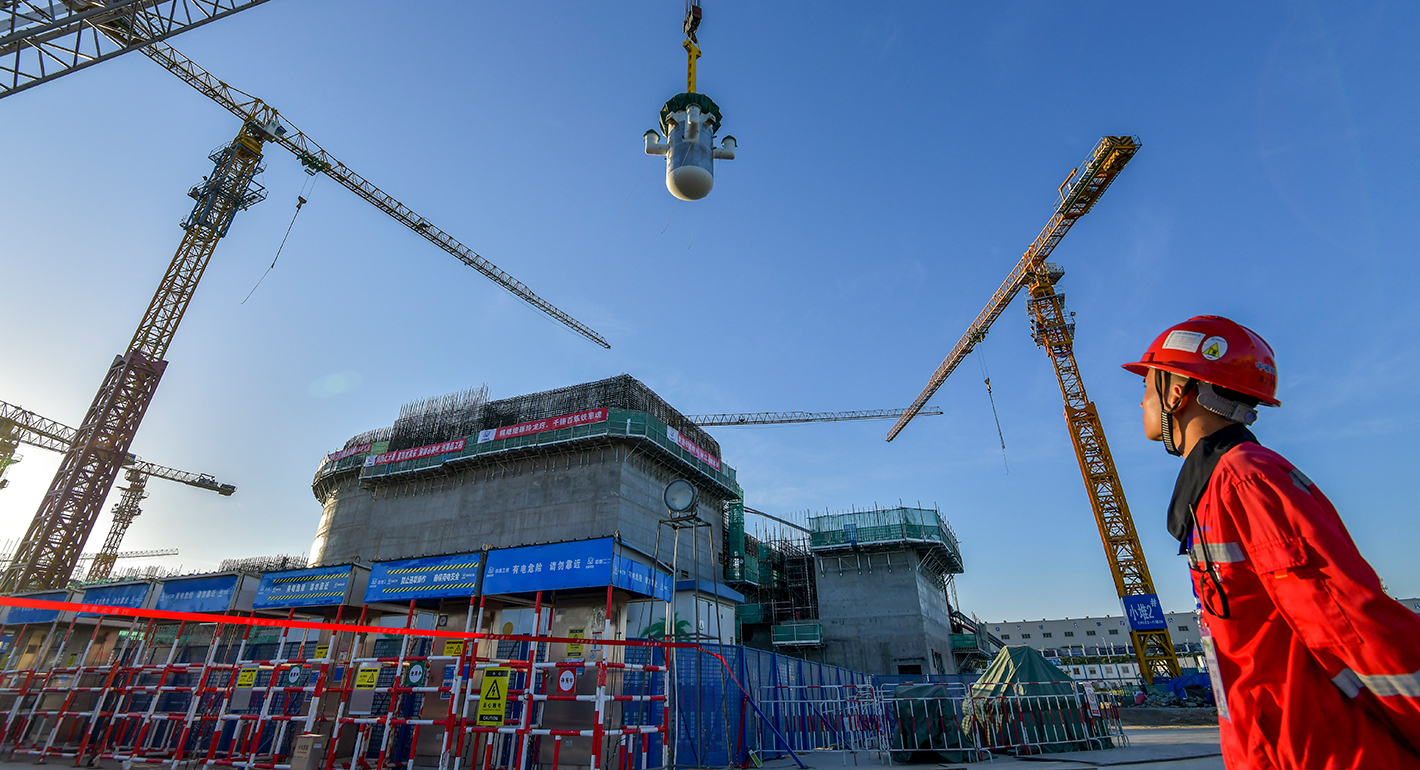
China has showcased its engineering prowess with small modular reactor demonstration projects. But turning these technological achievements into commercial success will be a greater challenge.

Tong Zhao

The Plaza Accord was not an externally imposed punishment of Japan but part of a broader restructuring that Japanese economists and policymakers themselves recognized was necessary. Its effects were undermined, however, when Tokyo responded to the resulting slowdown with policies that exacerbated investment, credit expansion, and the very imbalances the adjustment was intended to resolve.

Michael Pettis
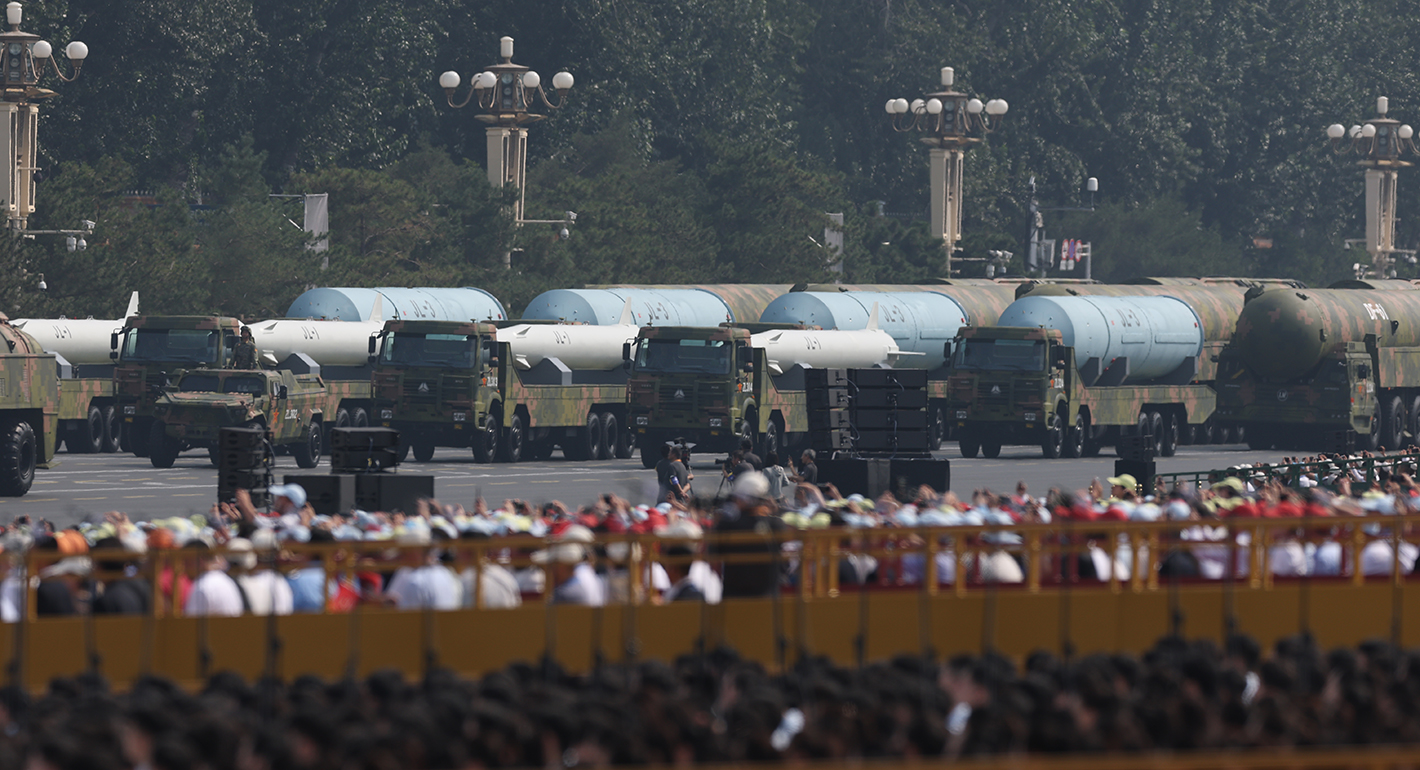
The nuclear relationship between China and the United States is increasingly shaped by widening perception gaps rather than deliberate strategic design.
Tong Zhao
China’s banking crisis in the 2000s was resolved by transferring the costs to households through financial repression—a decision that recapitalized the banks while exacerbating the structural imbalances that continue to shape the Chinese economy today.
Michael Pettis
Chinese biotech companies have been on the receiving end of U.S. economic coercion. Yet their responses have differed significantly because firm and state interests are not uniformly aligned. For Washington, treating all Chinese tech firms the same, irrespective of their actual interests, risks pushing them farther into Beijing’s corner.
Xue Gong