

Commentary
Faced with an increase in strategic maneuvering by Moscow and Pyongyang, Beijing will not sit idly by and allow Putin and Kim to shape the security environment on its behalf.
Tong Zhao
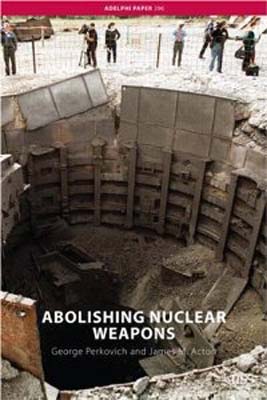
In this new Adelphi Paper published by the International Institute for Strategic Studies (IISS), George Perkovich and James M. Acton examine the challenges that exist to abolishing nuclear weapons completely, and suggest what can be done now to start overcoming them.
Source: Adelphi Paper
IMGXYZ1420IMGZYXNuclear disarmament is firmly back on the international agenda. But almost all current thinking on the subject is focused on the process of reducing the number of weapons from thousands to hundreds. In this new Adelphi Paper published by the International Institute for Strategic Studies (IISS), George Perkovich and James M. Acton examine the challenges that exist to abolishing nuclear weapons completely, and suggest what can be done now to start overcoming them.
The paper argues that the difficulties of ‘getting to zero’ must not preclude many steps being taken in that direction. It thus begins by examining steps that nuclear-armed states could take in cooperation with others to move towards a world in which the task of prohibiting nuclear weapons could be realistically envisaged.
The remainder of the paper focuses on the more distant prospect of prohibiting nuclear weapons, beginning with the challenge of verifying the transition from low numbers to zero. It moves on to examine how the civilian nuclear industry could be managed in a nuclear-weapons-free world so as to prevent rearmament. The paper then considers what political–security conditions would be required to make a nuclear-weapons ban enforceable and explores how enforcement might work in practice. Finally, it addresses the latent capability to produce nuclear weapons that would inevitably exist after abolition, and asks whether this is a barrier to disarmament, or whether it can be managed to meet the security needs of a world newly free of the bomb.
Click here for further information on ordering copies of this paper.

Japan Chair for a World Without Nuclear Weapons, Senior Fellow
George Perkovich is the Japan Chair for a World Without Nuclear Weapons and a senior fellow in the Carnegie Endowment for International Peace’s Nuclear Policy Program. He works primarily on nuclear deterrence, nonproliferation, and disarmament issues.

Jessica T. Mathews Chair, Co-director, Nuclear Policy Program
Acton holds the Jessica T. Mathews Chair and is co-director of the Nuclear Policy Program at the Carnegie Endowment for International Peace.
Carnegie does not take institutional positions on public policy issues; the views represented herein are those of the author(s) and do not necessarily reflect the views of Carnegie, its staff, or its trustees.
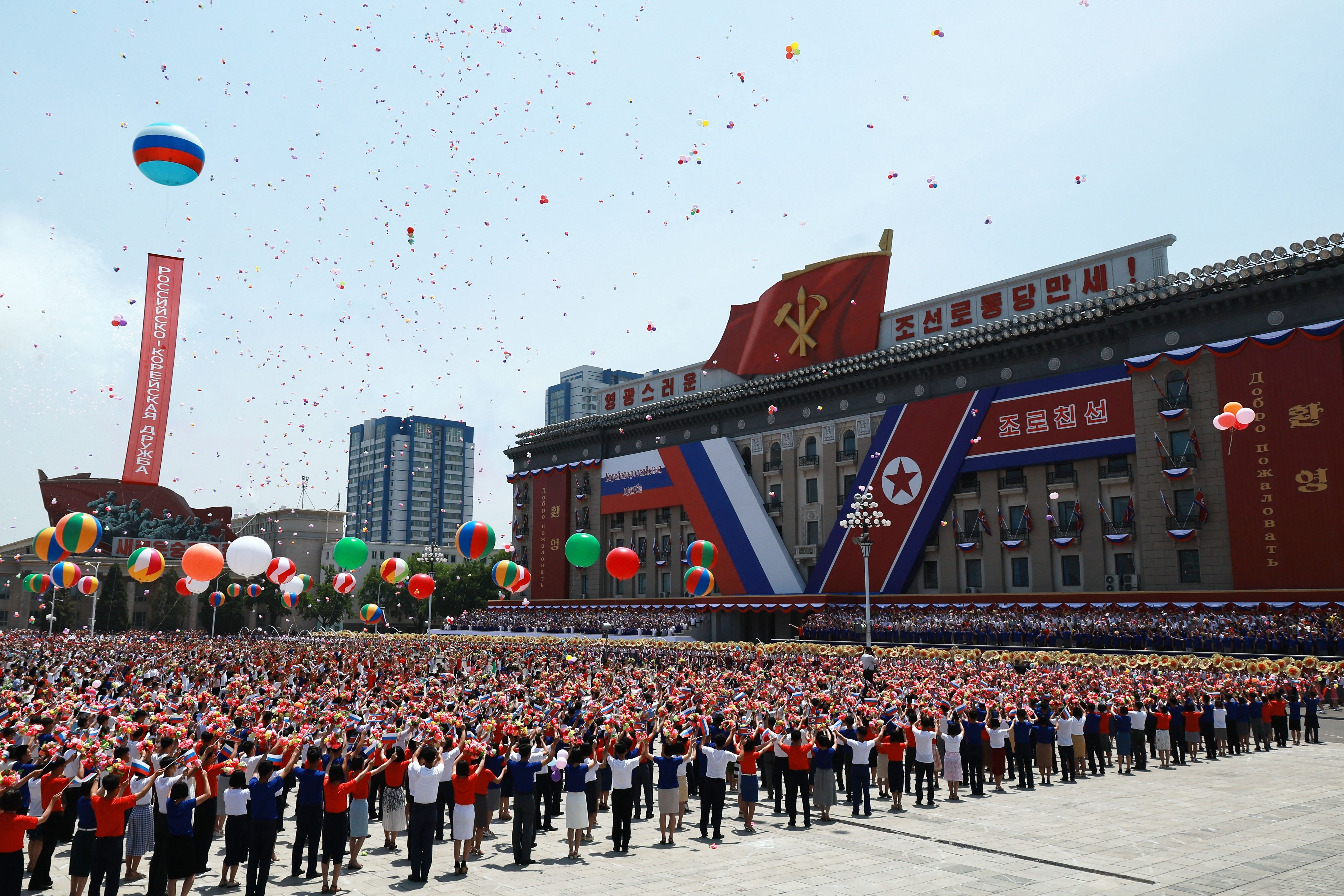
Faced with an increase in strategic maneuvering by Moscow and Pyongyang, Beijing will not sit idly by and allow Putin and Kim to shape the security environment on its behalf.

Tong Zhao

China views U.S. missile defense as posing a greater potential threat to China’s nuclear deterrent than other U.S. military capabilities.
Tong Zhao, Dmitry Stefanovich
There are certainly other issues among other P5 countries, but the U.S.-China competition is so by far the most consequential great power rivalry in the international system, and it has very far-reaching geopolitical implications at and beyond the Pacific region.
Tong Zhao

Satellite data has revealed the construction of new nuclear missile silos in Gansu and Xinjiang in western China. How U.S. and Chinese experts interpret the buildup and the motivations behind it could greatly reshape their security relationship.
Tong Zhao
There are three guiding principles that can help make future arms control dialogues more successful.

Andrey Baklitskiy, Alexandra Bell, Tong Zhao