• Research
  • Experts
  • Events
Carnegie China logoCarnegie lettermark logo
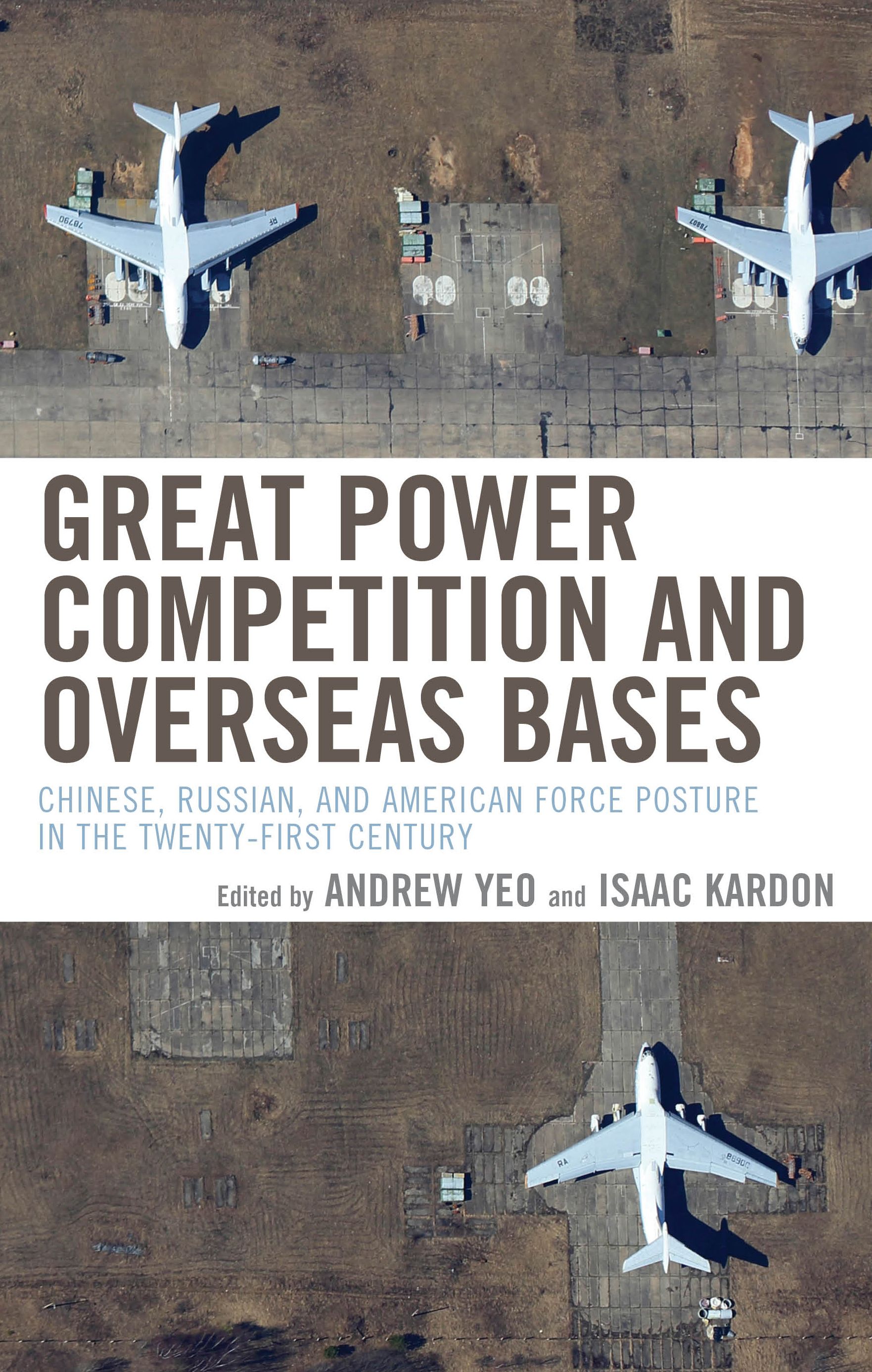
Great Power Competition and Overseas Bases: Chinese, Russian, and American Force Posture in the Twenty-First Century
Book

Great Power Competition and Overseas Bases: Chinese, Russian, and American Force Posture in the Twenty-First Century

This book examines the emerging dynamics of geostrategic competition for overseas military bases and base access.

Link Copied
By Andrew Yeo and Isaac B. Kardon
Published on Aug 27, 2024

Additional Links

Hardback - $85.00Paperback - $32.00Ebook - $30.00

What challenges and risks do Chinese and Russian bases pose to the United States’ military strategy? How do the military postures of great powers interact and with what consequences for regional and global security? This book examines the emerging dynamics of geostrategic competition for overseas military bases and base access. The comparative framework adopted in this volume examines how the geopolitical interests of the United States, China, and Russia and their respective underlying force posture interact in different regions including the Indo-Pacific, Europe, sub-Sahara Africa, the Indian Ocean, the Middle East, and the Arctic Circle.

By exploring the security, political economic, and domestic political dynamics of specific regions, the contributors to this volume reveal varied motivations for overseas military bases and base access among great powers. With analysis on the particular dynamics of overseas bases in major regional theaters, the book offers a valuable window into the nature and scope of the broader “great power competition” underway in the twenty-first century.

Advance Reviews

"Superb. A timely and thoughtful examination of the drivers and consequences of past and future military basing considerations and decisions that have and will shape the geostrategic landscape. A must read by those who ponder the future of great power competition and military force design."
— Gary Roughead, Admiral, U.S. Navy (Retired), Former U.S. Navy Chief of Naval Operations

"The book presents a measured and deeply informed assessment by tremendously talented thinkers from both academic and policy of three different, but potentially effective, approaches to overseas bases and international politics. This is essential reading on an underappreciated subject."
— Jon Caverley, Professor of Strategy, United States Naval War College

Authors

Andrew Yeo
Senior fellow and the SK-Korea Foundation Chair, Brookings Institution’s Center for Asia Policy Studies
Andrew Yeo
Isaac B. Kardon
Senior Fellow, Asia Program
Isaac B. Kardon
AsiaEast AsiaChinaRussiaRussia and EurasiaUnited StatesNorth AmericaSecurityDefense

Carnegie does not take institutional positions on public policy issues; the views represented herein are those of the author(s) and do not necessarily reflect the views of Carnegie, its staff, or its trustees.

More Work from Carnegie China

  • Commentary
    When It Comes to Superpower Geopolitics, Malaysia Is Staunchly Nonpartisan

    For Malaysia, the conjunction that works is “and” not “or” when it comes to the United States and China.

      Elina Noor

  • Commentary
    ASEAN-China Digital Cooperation: Deeper but Clear-Eyed Engagement

    ASEAN needs to determine how to balance perpetuating the benefits of technology cooperation with China while mitigating the risks of getting caught in the crosshairs of U.S.-China gamesmanship.

      Elina Noor

  • Commentary
    Neither Comrade nor Ally: Decoding Vietnam’s First Army Drill with China

    In July 2025, Vietnam and China held their first joint army drill, a modest but symbolic move reflecting Hanoi’s strategic hedging amid U.S.–China rivalry.

      • Nguyen-khac-giang

      Nguyễn Khắc Giang

  • Commentary
    Today’s Rare Earths Conflict Echoes the 1973 Oil Crisis — But It’s Not the Same

    Regulation, not embargo, allows Beijing to shape how other countries and firms adapt to its terms.

      Alvin Camba

  • Commentary
    How China’s Growth Model Determines Its Climate Performance

    Rather than climate ambitions, compatibility with investment and exports is why China supports both green and high-emission technologies.

      Mathias Larsen

Get more news and analysis from
Carnegie China
Carnegie China logo, white
  • Research
  • About
  • Experts
  • Events
  • Contact
  • Careers
  • Privacy
  • For Media
Get more news and analysis from
Carnegie China
© 2026 Carnegie Endowment for International Peace. All rights reserved.