

Article
Most Southeast Asian states behave as if the actions of their Northeast Asian neighbors and the Philippines will be sufficient to maintain a regional status quo from which they can benefit.
Chong Ja Ian
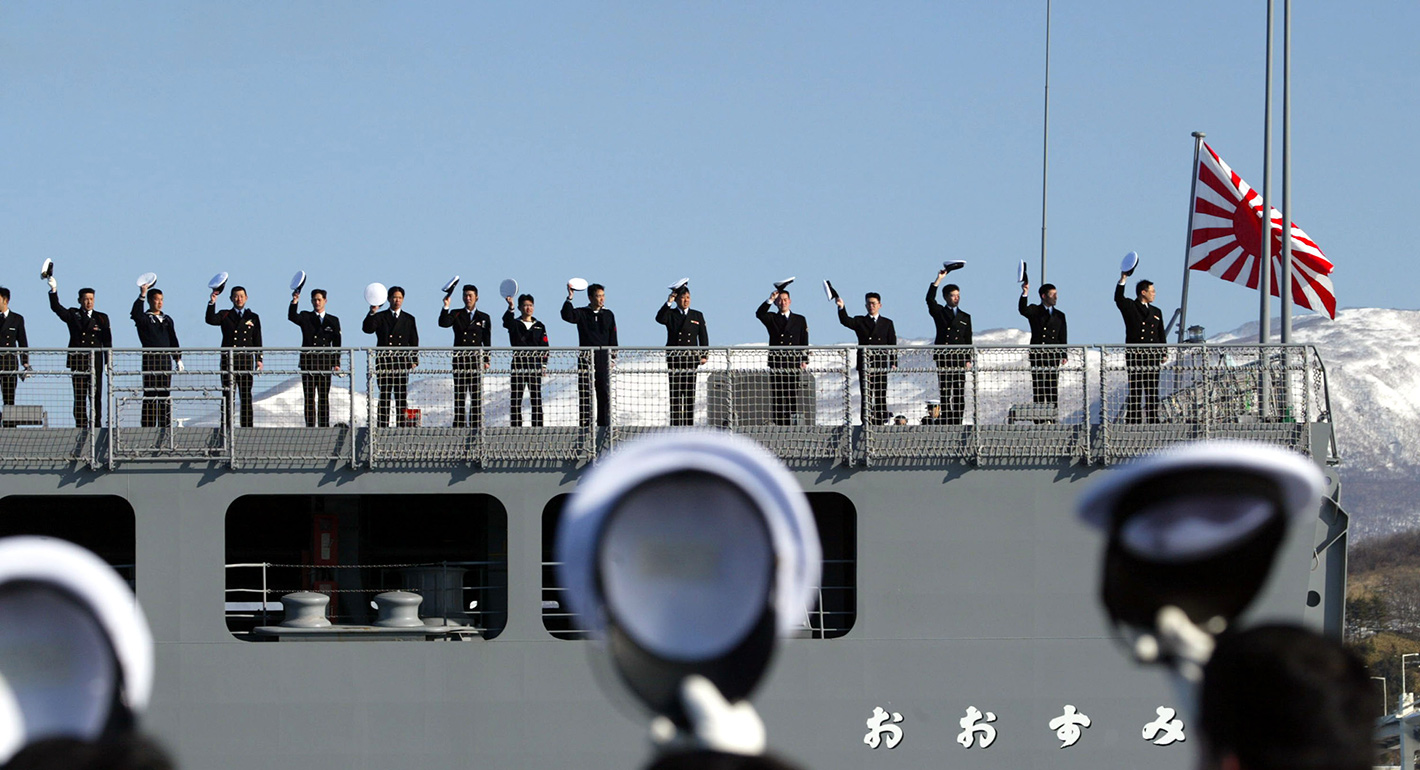
Source: Getty
Japan’s response to U.S. pressure over Hormuz highlights a broader dilemma: How to preserve the alliance while remaining bound by legal limits, public opinion, and an Asia-centered security agenda. Tokyo gained diplomatic space through an alliance-embracing strategy, but only under conditions that may not endure.
Japan’s security posture is intensively debated inside the country—and its security policy is, therefore, dynamic and evolving. This series of essays seeks to appreciate these dynamics from a Japanese perspective, harnessing in English the insights of leading Japanese scholars.
As Japan came under mounting pressure to respond to the crisis in the Strait of Hormuz, Prime Minister Takaichi Sanae’s visit to Washington earlier this month—and Tokyo’s emphatic reaffirmation of the U.S.-Japan alliance and economic cooperation—offered a revealing window into Japan’s alliance dilemma and the enduring constraints on its security policy.
Japan has shown little genuine willingness to align itself with the U.S. administration’s war against Iran. Its caution toward military action has remained strikingly constant, despite years of efforts to relax constitutional constraints and a recent decision to double defense spending. Legal limitations remain real. More consequential still, public opinion remains firmly opposed to military action. An ANN poll conducted on March 21–22 found that 52 percent opposed deploying the Japan Self-Defense Forces (SDF) in response to the Iran war, while only 9 percent supported deployment before a ceasefire; support grew to 32 percent in favor of SDF deployment only after a ceasefire. On the U.S.-Israeli military campaign against Iran itself, support stood at just 7 percent, while 86 percent or respondents opposed the war.
Above all, Japan’s recent defense buildup has been driven by the imperative of concentrating on the security challenges in Asia posed by China and North Korea. Long-term planning within Japan’s security establishment has been oriented toward deterrence and defense in the Indo-Pacific, not toward participation in military operations in the Middle East or other distant theaters. That buildup has gained domestic legitimacy largely because it has been framed as a response to regional threats in East Asia. If the fragile domestic consensus that has only recently emerged around a stronger security posture were to unravel over Japan’s involvement in the Middle East, much of that strategic effort would be thrown into question.
It was for this reason that Tokyo turned to what might be called an alliance-hugging strategy toward Donald Trump’s administration. Japanese policymakers appear to have concluded that simply refusing—or tactically evading—U.S. demands for cooperation in the Strait of Hormuz would not be sustainable. Instead, they turned to statecraft, combining diplomatic and economic instruments to draw closer to Washington while preserving room to maneuver on the central issue of military involvement. Tokyo worked intensively to flesh out an investment package, to maximize its bargaining leverage, and even to take advantage of the widening gap between the Trump administration and several NATO allies. For the time being, that strategy appears to have paid off: The March 19 summit ended in a notably positive atmosphere, and the U.S.-Japan relationship seems to have regained a measure of stability.
Yet it remains unclear how long Japan can sustain an approach that moves closer to the United States while refusing to yield on the most consequential questions. U.S. demands can escalate abruptly, and Japan is in no position—either politically at home or strategically abroad—to shoulder significantly greater burdens, whether in the form of economic concessions or military commitments. The summit was, to be sure, a satisfactory one from Japan’s perspective. But its durability remains uncertain, and Tokyo’s balancing act is far from over. If there is a broad Japanese consensus on how to assess Takaichi’s visit to Washington, it is this: The summit was a success, but a precarious one.
A lot of English-language commentary likened the summit to a game of dodgeball: Japan avoided being “hit” by making no hasty commitment on the Strait of Hormuz.
Japan’s participation in a multilateral statement with European countries on stability in the Strait of Hormuz proved especially useful. Given the Trump administration’s concern about market volatility, Japan’s visible role in a constructive diplomatic response was significant. Equally important, the statement required no change in Tokyo’s position toward U.S. military operations against Iran while reaffirming the importance of freedom of navigation.
Japan’s refusal to support Operation Epic Fury was unlikely to have pleased Trump. But the multilateral Hormuz statement addressed both Washington’s concerns and market anxiety, allowing Tokyo to hold firm on substance while helping coordinate a diplomatic arrangement in advance of the summit. An important avenue of communication preceding the summit was between Defense Minister Koizumi Shinjiro and Secretary of Defense Pete Hegseth, through which Hegseth appears to have conveyed both Washington’s awareness of the emerging multilateral statement and its expectation that U.S. concerns would be taken into account. Japan, in turn, moved to respond accordingly.
There is, however, an important caveat. Japan’s success rests on the premise that, so long as fighting continues around the Strait of Hormuz, Tokyo will not deploy the Self-Defense Forces. If that premise collapses—if the military situation deteriorates further and Washington renews pressure for Japanese participation—the entire arrangement could begin to wobble. In that sense, the summit’s greatest success was that Tokyo preserved room for maneuvering without incurring new obligations.
Trump’s America is, in many respects, isolated. Japan has managed that reality with considerable skill. Both Takaichi and Japan more broadly appear to be receiving favorable treatment compared to other U.S. allies. Tokyo has not been subjected to the same degree of harshness directed at many others. In a world shaped by Trump’s volatility, that is no small advantage. This likely reflects a combination of factors: The early work undertaken by the previous government on investment and related negotiations, the legacy of the Abe Shinzo era (which coincided with Trump’s first term), and Trump’s own long-standing view of Japan as a country of major importance—one shaped in part by the trade frictions of the 1980s.
This does not mean that managing the U.S.-Japan relationship will be easy; many difficulties remain. But the summit once again showed that Japan is better positioned than many European allies. This likely reflects a prior disposition on Trump’s part toward Japan that differs from his view of other G7 partners. What the summit revealed, then, was not only Takaichi’s diplomatic skill but also a broader reality: Trump sees Japan through a somewhat different lens than he sees the rest of the G7. Tokyo has read that signal and acted accordingly. Some may find this uncomfortable, but when the counterpart is Trump, such an approach is not flattery; it is statecraft. Indeed, this alliance-embracing approach has, at least for now, yielded tangible results.
This favorable position did not emerge overnight. It has been shaped over recent months by the wider deterioration in U.S.-European relations. Given this deterioration, the Takaichi government—inaugurated last autumn and winning a parliamentary supermajority this winter—moved quickly to secure a meeting with Trump and subsequently found an opening.
One of the clearest expressions of that alliance-embracing approach was economic statecraft. The $550 billion investment package, announced in February, should not be understood as a simple gift from Japan to the United States. It is better seen as a framework for joint projects that will be structured through loans, guarantees, and other financial instruments. At its core, it is an exercise in strategic capital allocation.
That economic cooperation was central to how Tokyo managed alliance pressure during the summit. By expanding cooperation in critical minerals, energy, and infrastructure, Japan signaled that it was prepared to contribute to the bilateral relationship in ways Trump values. That helped create diplomatic space on the more sensitive question of Hormuz.
There are potential economic gains for Japan. In sectors that have often been difficult for Japanese firms to enter, the package may open commercial opportunities in the United States. In that sense, the arrangement is not purely one-sided, though risks inevitably remain regarding whether the U.S.-bound investment will proceed smoothly and ultimately prove commercially viable. Japanese participation in projects such as small modular reactor development in the United States may prove consequential over time. But these possibilities should not obscure the basic point: At this summit, the economic package mattered chiefly because it strengthened Japan’s diplomatic hand on the security side. It helped reinforce the broader alliance at a moment of strategic strain.
The broader significance of the summit lies not in any immediate shift in U.S. policy toward China or North Korea, but in what it revealed about Japan’s alliance management under mounting pressure. The meeting was not meant to produce detailed outcomes on those issues. Its importance lay instead in sustaining overall trust in the U.S.-Japan relationship in the face of uncertain U.S.-China relations and the global reverberations of the Middle East conflict.
The longer the Iran war continues, moreover, the more it risks drawing U.S. military resources and strategic attention away from Asia. That is a matter of direct concern to Japan. Washington may speak of prioritizing the Indo-Pacific, but war in the Middle East inevitably competes for both materiel and political focus.
While the summit was a success, its durability remains uncertain. Trump’s frustrations are now directed at multiple allies, and his impatience over the lack of progress on Iran is evident. It is difficult to assume that tensions will simply dissipate. Further demands on allies, including Japan, cannot be ruled out.
Still, the summit established something important. Japan is not treated with contempt in Trump’s hierarchy of allies; on the contrary, it appears to occupy a relatively favored place. That gives Tokyo room to maneuver, but merely deflecting pressure will not be enough over the long term. Japan must continue what it began at this summit: convert obligations into advantages, and tactical accommodation into strategic gains. In an era of compounding crises, that is not cynicism. It is prudent statecraft.
The writer acknowledges the use of LLM tools for clarificatory editing.
Nonresident Scholar, Asia Program
Ryo Sahashi is a nonresident scholar in the Asia Program at the Carnegie Endowment for International Peace.
Carnegie does not take institutional positions on public policy issues; the views represented herein are those of the author(s) and do not necessarily reflect the views of Carnegie, its staff, or its trustees.
Most Southeast Asian states behave as if the actions of their Northeast Asian neighbors and the Philippines will be sufficient to maintain a regional status quo from which they can benefit.

Chong Ja Ian
Patriotic and nationalist sentiments have been co-opted by self-media and social media platforms to generate profit. This has given rise to a traffic-driven business of cyber nationalism that relies on extreme xenophobic rhetoric.


Wang Qiyue, Li Mingjiang

Ignoring the problems of its historical precedents won’t make China’s success any more likely.

Michael Pettis
U.S. President Donald Trump meets North Korean leader Kim Jong-un in Hanoi this week. What do Washington, Pyongyang, Beijing, and others hope to see accomplished at the summit? Three Carnegie experts weigh in.


Paul Haenle, Tong Zhao, Chung Min Lee
U.S. policy has been, with respect to China, forming a bipartisan consensus in recent years. For Trump to think that a quick deal on trade problems was solved doesn’t seem consistent with the rest of the things his administration says.

Douglas H. Paal