

Article
Apoorva Jadhav
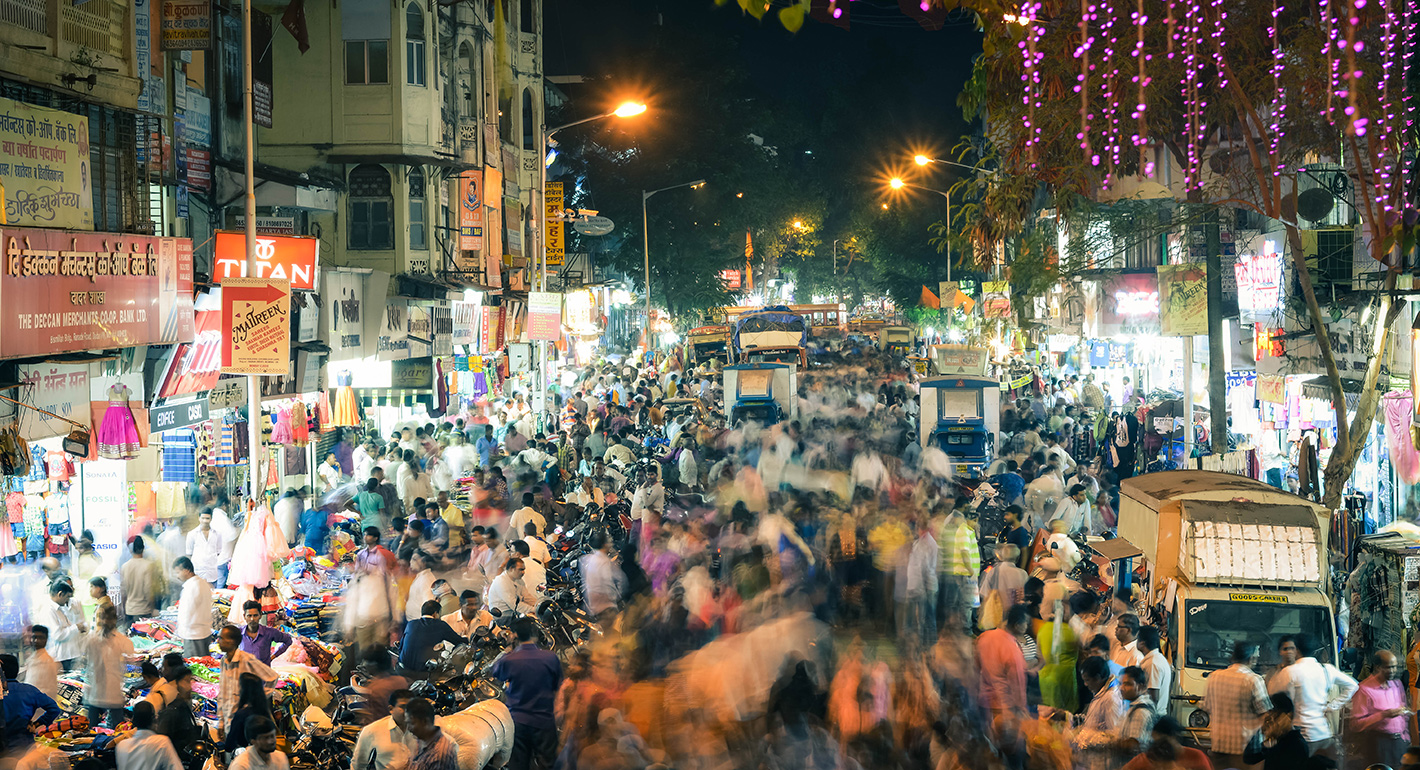
Source: Getty
India’s demographic transition is underway, but its economic payoff remains far from guaranteed.
This article is part of a new Carnegie series called “India’s Unfinished Demographic Dividend.” India’s demographic transition should be a historic advantage, but structural constraints are limiting its potential. This series examines the six key barriers that could cap India’s growth trajectory—and the pathways to unlocking its demographic potential.
The demographic dividend is the potential economic growth a country can enjoy as a result of shifts in its population’s age structure. India often finds itself at the center of discussions about this concept. Much of the contemporary discourse around India’s rise as a major global economic power rests on the assumption that a youthful population will translate into sustained economic growth. The logic is straightforward: a smaller share of dependents (in India’s case, mostly children) relative to the working age population enables greater investment per child, particularly in healthcare, nutrition, education, and skills. Better-equipped workers are, in turn, more productive, boosting per capita income. In addition, women are more likely to enter the labor force, raising household incomes and overall growth.
For many decades, optimism about India’s demographic boon was well-founded. But that optimism is now under strain. There is a growing realization, supported by a mounting body of research, that reaping the demographic dividend depends on a conducive policy environment that prioritizes good healthcare, quality education, decent employment opportunities, and gender empowerment. The so-called East Asian tigers—Hong Kong, Singapore, South Korea, and Taiwan—famously got rich before they got old by actively investing in their populations and synchronizing fertility decline with massive investments in high-quality education and export-oriented manufacturing. The experience of the tigers underscores what is at stake for India. The question is no longer whether India will age before it grows wealthy but, rather, whether the country’s institutions can successfully manage its demographic transformation.
Without significant policy changes, India risks mirroring parts of Latin America in the late twentieth century. Despite falling dependency ratios, many countries in the region failed to convert the demographic dividend into sustained growth due to deep social inequalities and limited human capital. The broader lesson from the Global South is that demographic windows can close quickly. For example, whereas Iran has invested in critical ways to boost economic opportunity through nationwide family planning and female literacy programs, much of sub-Saharan Africa has struggled to capitalize on their larger working age populations, as high fertility norms persist alongside low human capital.
For India, the key to fully leveraging its demographic transition lies in improving governance.
For India, the key to fully leveraging its demographic transition lies in improving governance. Managing a vast and regionally diverse population will require that policies be tailored to both the current status and future demographic trends. With the government’s goal of becoming a middle-income country only two decades away (what the prime minister refers to as “Viksit Bharat,” or “Developed India”), the window for action is narrowing.
The “demographic window of opportunity” refers to the period when a country’s demographic structure is most conducive to boosting economic productivity or laying the groundwork for an economically prosperous future. This is generally when the country’s dependency ratio—the ratio of its dependents (ages zero to fourteen and over sixty-five) to its working age population (ages fifteen to sixty-four)—is low, typically below two-thirds.
Public debate in India often fixates on religious fertility differences or immigration rather than the broader structural shifts reshaping the country’s demographic profile. In doing so, it can obscure an important fact: India’s demographic window of opportunity is limited, and without the right policy focus, it risks instead becoming a locked room of structural constraints.
Estimates of the timing and duration of India’s demographic window vary, but data from the 2024 United Nations Population Prospects and demographic thresholds from Lamar Crombach and Jeroen Smits (2021) offer some insights.1 These thresholds classify which phase of the demographic transition a country is in, helping to identify appropriate policy responses.2
Figure 1 shows India’s median age, the share of the population under age fifteen and over sixty-five, and the total dependency ratio (TDR) from 1950 to 2100, according to the United Nations Population Prospects. Five broad observations stand out:
Failing to properly adapt institutions risks stagnation.
The U-shaped TDR curve has real-world policy implications. In the first phase, the state must build high-quality human capital. At the base of the U, it must expand access to opportunity, particularly for women and marginalized groups. As the curve rises again, the focus shifts to managing healthy aging and supporting older populations. Even though India is still in the mid-window phase, planning for the later phases must begin now. Failing to properly adapt institutions at each stage risks stagnation, as seen in parts of sub-Saharan Africa, or the growth traps experienced in Latin America.
The ability of the Indian state to count, govern, and support its population through these different periods remains an open question. Some insight can be gained from the fact that India’s states are currently at different points along the demographic transition—the result of differential priorities and investments in years past. These variations offer both a preview of possible futures and lessons about the policy choices that will shape them.
India’s experience during its demographic transition reflects the interaction of public health interventions, targeted policies, and economic change.
In the decades after the country’s independence, the state prioritized the control of communicable diseases and the prevention of large-scale famines. The infant mortality rate declined sharply, from roughly 176 deaths per 1,000 live births in 1950 to 22 deaths per 1,000 live births in 2023. The pace of the decline further accelerated with the launch of major public health initiatives, such as the National Rural Health Mission in 2005 and the National Urban Health Mission in 2013.
In 1952, India became the first developing country to adopt an official national family planning program, although it is often remembered for its forced sterilization campaigns in the late 1970s. For several decades after independence, India’s total fertility rate (TFR) remained high and stagnant, hovering at around five to six children per woman. In the 1970s, the TFR began to decline. This reflected several factors, including the government’s shift away from population targets toward rights-based family planning (including free access to contraception), the expansion of maternal and child health services, and rising levels of female literacy.
Economic liberalization in 1991 ushered in a more complex phase of demographic change. In urban areas, expanding employment opportunities increased labor force participation among both men and women. Improved economic prospects also boosted the marriage rate among the youth. However, rather than triggering a baby boom, these shifts coincided with continued fertility decline, particularly in rural areas where women began to delay childbirth and had fewer children.
Today, India’s TFR has fallen to just under 2.1, referred to as the “replacement level,” or the average number of children per woman needed for a population to sustain itself over time. Although India’s aging is a looming challenge, it is also a public health triumph that reflects decades of sustained investment and a marked transformation from 1947.
Aggregate-level trends help set the stage, but the real insight lies at the state level. Examining trends, projections, and policies across states reveals that securing the demographic dividend is invariably a test of governance, not destiny.
State-level data from the Sample Registration System (1971–2023) on the two main drivers of population change in India—fertility (measured by the TFR) and mortality (life expectancy at birth)—reveal distinct demographic paths across the country.3 These data are complemented by state-level projections for 2026–2051 in a report from the Population Foundation of India and the International Institute of Migration and Development.
The southern state of Kerala is often touted as a demographic outlier since it reached improved thresholds for health and population metrics earlier than other states. Its 1973 survival threshold (life expectancy of sixty-two years old) and 1988 fertility threshold (TFR of 2.1) serve as useful benchmarks.4 “Survival lag” and “fertility lag” capture how long it took other states to reach these thresholds.
Figure 2 groups states into three trajectories, revealing a staggered and path-dependent transition. Group one is called the Aging Frontier and consists of Andhra Pradesh, Kerala, Karnataka, Maharashtra, Punjab, and Tamil Nadu. Group two, the Transitioning Middle, includes Haryana, Himachal Pradesh, Jammu and Kashmir, and West Bengal. And group three is the Youthful Engine, consisting of Assam, Bihar, Gujarat, Madhya Pradesh, Odisha, Rajasthan, and Uttar Pradesh.
The demographic window of opportunity is sometimes narrowly construed as a period of heightened economic output. But it is also a time to lay the fiscal and institutional groundwork for prosperity after the window closes. The differential experiences of the Aging Frontier states (group one) offer compelling illustrations of why policies must look beyond a low dependency ratio and prepare for what comes after.
These states largely converged on Kerala’s benchmarks relatively early, though via different pathways. For instance, whereas Kerala prioritized literacy and health through social welfare and land reforms, Maharashtra privileged economic infrastructure and growth, Punjab invested in the agrarian economy, and Andhra Pradesh pursued an innovation and technology-forward strategy.
Several of the Aging Frontier states (such as Kerala and Punjab) have struggled to stabilize the workforce while providing for a rapidly aging population. They now rank in the lowest tier of NITI Aayog’s 2026 Fiscal Health Index, reflecting high debt, persistent deficits, rising pension and welfare commitments, and modest revenue growth. It appears that their early demographic success, which resulted in an older, longer living population, has also created a fiscal burden.
Because it is easier to try to tackle demographic problems with demographic solutions, some political leaders have turned to pronatalist policies to increase birth rates.
Because it is easier to try to tackle demographic problems, such as fertility decline, with demographic solutions, political leaders in some Aging Frontier states have turned to pronatalist policies to increase birth rates. For example, Andhra Pradesh has proposed incentives such as ₹25,000 at birth for a second or third child, ₹1,000 in monthly support, free education for the third child up to 18 years, subsidized IVF services, and special leave for couples. It has also constructed working women’s hostels and childcare centers.
Evidence suggests such measures have a limited long-term impact. Research from other Asian countries shows that policies aimed at improving work-life balance—such as paid leave, childcare services, and flexible working hours—have positive long-term impacts on fertility. However, onetime financial incentives tend to produce only a short-term impact since they only cover a small proportion of the overall costs of raising children. Focusing narrowly on boosting fertility risks diverting attention from preparing for India’s “silver economy.”
The Transitioning Middle states (group two) face a different challenge. While they achieved gains in life expectancy relatively rapidly—reaching Kerala’s benchmark within roughly twenty-five years—their fertility decline lagged. For example, the northern states of Haryana and Himachal Pradesh matched Maharashtra in survival gains but experienced much slower fertility transitions, illustrating the salience of diverse structural and social factors.
In states such as Haryana, the so-called Green Revolution and early industrialization raised per capita income and improved nutrition and access to medicine, thus lowering mortality rates, particularly at younger ages. At the same time, drivers of fertility decline, such as female education and female labor force participation, have progressed more slowly. Persistent son preference and the slower pace of change in gender norms have also contributed to this lag, helping to account for some of the divergence between groups one and two.
Transitioning Middle states still have sizable working age populations. But the mismatch between mortality and fertility transitions means they must simultaneously invest in aging-related care and in education and infrastructure for younger cohorts.
The Youthful Engine states (group three) are characterized by large and growing youth populations that require sustained investment. While these states have experienced significant delays in mortality decline—often twenty-five to thirty-five years behind Kerala—their fertility transitions have lagged even further. For instance, Rajasthan and Madhya Pradesh remain forty-three years behind when Kerala reached replacement-level fertility, while Bihar, the ultimate outlier, is projected to this baseline in 2041—a fifty-three year delay. This represents a deficit where some states are almost fifty years, or two generations, behind others in reaching parity on life expectancy and lowering fertility. Because survival gains came later, these states’ shifts to smaller family sizes were delayed as well, resulting in large youth cohorts.
If India is to fully mobilize its workforce, endemic gender and caste inequalities need to be addressed.
However, in these states, the mortality and fertility rates declined relatively rapidly as soon as they began to fall. Sustaining this will depend not only on age structure but also on social inclusion. Life expectancy among Adivasi and Dalit (tribal and low-caste, respectively) populations remains several years lower than that of upper-caste Hindus, even after accounting for differences in geography, income, and environmental exposure. These disparities point to deeper structural barriers. If India is to fully mobilize its workforce, endemic gender and caste inequalities need to be addressed.
From a fiscal perspective, Youthful Engine states appear stable. Lower historical social expenditures have kept pension and interest burdens lower than for Aging Frontier states. Youthful Engine states are heavily investing in infrastructure, digital inclusion, and industrial development. But this apparent fiscal stability may be ephemeral: As these states age, they risk entering a period of higher dependency without the fiscal buffers of wealthier states.
Are these divergent trajectories permanent? Not necessarily. Much like the rest of the world, most Indian states are converging toward low fertility and improved life expectancy, albeit at different rates. Figure 3 illustrates this convergence, plotting life expectancy against the TFR.
By 2051, all states are projected to reach sub-replacement fertility, making low fertility the norm across India. At that time, Aging Frontier states will be pushing the upper bounds of longevity, with life expectancy reaching as high as eighty-three years old (for context, Japan, one of the world’s most super-aged societies, stands at around 85). The nature of change, however, differs across groups. For Aging Frontier states, the defining shift between 2021 and 2051 is a sharp rise in life expectancy. For Youthful Engine states, the change is more diagonal, signaling simultaneous, though uneven, improvements in both fertility and mortality.
However, even as states converge, policy priorities remain distinct. Aging Frontier states must direct fiscal resources toward aging-related needs, particularly geriatric and long-term care. Transitioning Middle states must double down on formalizing labor markets and increasing female labor force participation. Finally, Youthful Engine states must focus on foundational investments in primary health, vocational education, and skills to ensure that their large youth populations become productive before the onset of rapid aging.
Improving life expectancy alone is not enough; living longer does not necessarily mean living healthier.
Improving life expectancy alone is not enough; living longer does not necessarily mean living healthier. The gap between life expectancy and disability-adjusted life expectancy (DALE) is particularly pronounced in middle-income countries such as India. At age sixty, an average Indian can expect to live roughly another eighteen years, but the last decade of their life will likely be spent in poor health or with disability. While women have higher life expectancy than men in general terms, in India, the mortality advantage nearly disappears because women experience higher rates of functional limitations and spend more absolute years living with disabilities.
This pattern underscores the urgent need in all states for geriatric care and social structures that enhance functional independence rather than just longevity. The challenge is compounded by the strong association between preexisting chronic conditions (such as hypertension, diabetes, and heart disease) and later life disability. Given the early onset of these chronic conditions in India, prioritizing early intervention is critical, not only to improve quality of life in old age but also to sustain a healthy and productive workforce.
If the first century of independent India was shaped by the interplay of fertility and mortality, the next half-century will be defined by the third pillar of demographic change: migration. Aging Frontier and Transitioning Middle states are not just growing older; they are also creating an economic vacuum. As youth populations shrink and elderly populations grow, these states will face an acute need for labor to sustain their tax bases, healthcare systems, and service economies. Youthful Engine states’ delayed demographic transitions may become their biggest asset, as youth populations migrate to other states and fill these gaps. But migration will likely intensify sociopolitical tensions and insider-outsider dynamics, especially in urban centers.
As this new series on India’s unfinished demographic dividend by the Carnegie Endowment for International Peace will show, numerous structural constraints are limiting the country’s potential. Outdated urban regulatory frameworks neglect the infrastructure required for scale, while climate and environmental pressures adversely affect health and productivity. Even as families shrink in size, a widening care gap suppresses already low levels of female labor force participation, leaving a significant share of the potential demographic dividend untapped. Finally, the mismatch between schooling and skills and deep-seated caste-based exclusion that prevents many young Indians from entering high-productivity sectors continue to constrain upward mobility. These pressures are compounded by son preference at birth, which embeds future gender imbalances into India’s social and economic structure
India’s demographic window is narrowing. The central question is whether the state has the foresight and capacity to count, govern, and equitably support its population through this transition.
This piece benefited greatly from the guidance and support of Milan Vaishnav and Andy Robaina at Carnegie. I am also indebted to Amanda Branom for her expert help in developing the figures, and to K.S. James at Princeton University for providing an insightful review.

Nonresident Scholar, South Asia Program
Apoorva Jadhav is a nonresident scholar in the Carnegie South Asia Program. Her work centers on translating complex global demographic trends—specifically fertility changes, population aging, and migration—into actionable frameworks for governments and international institutions.
Recent Work
Apoorva Jadhav
Carnegie does not take institutional positions on public policy issues; the views represented herein are those of the author(s) and do not necessarily reflect the views of Carnegie, its staff, or its trustees.

While China will remain a significant political and economic force in the Global South, its ambition to leverage the Global South as a counterbalance to the United States and the Global North is far from assured.

Xue Gong

Can China and India disengage from contested territories along the border?

Paul Haenle, Ashley J. Tellis, Han Hua, …
The government extends the uncertainty with its two new taxes and digital rupee.


Anirudh Burman, Priyadarshini D.
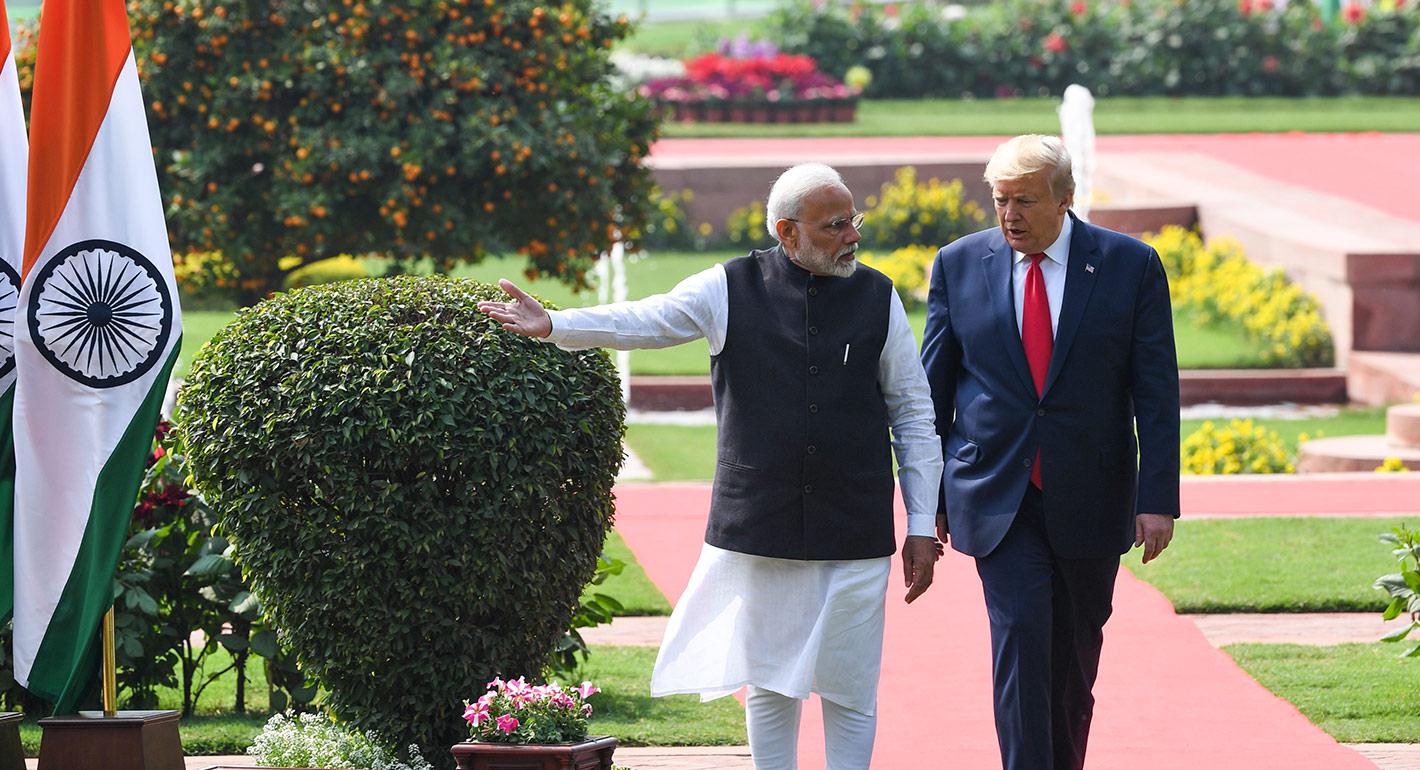
India manages a delicate balancing act between the United States and China, but in several key areas, the three giants could advance shared interests.

Lu Yang
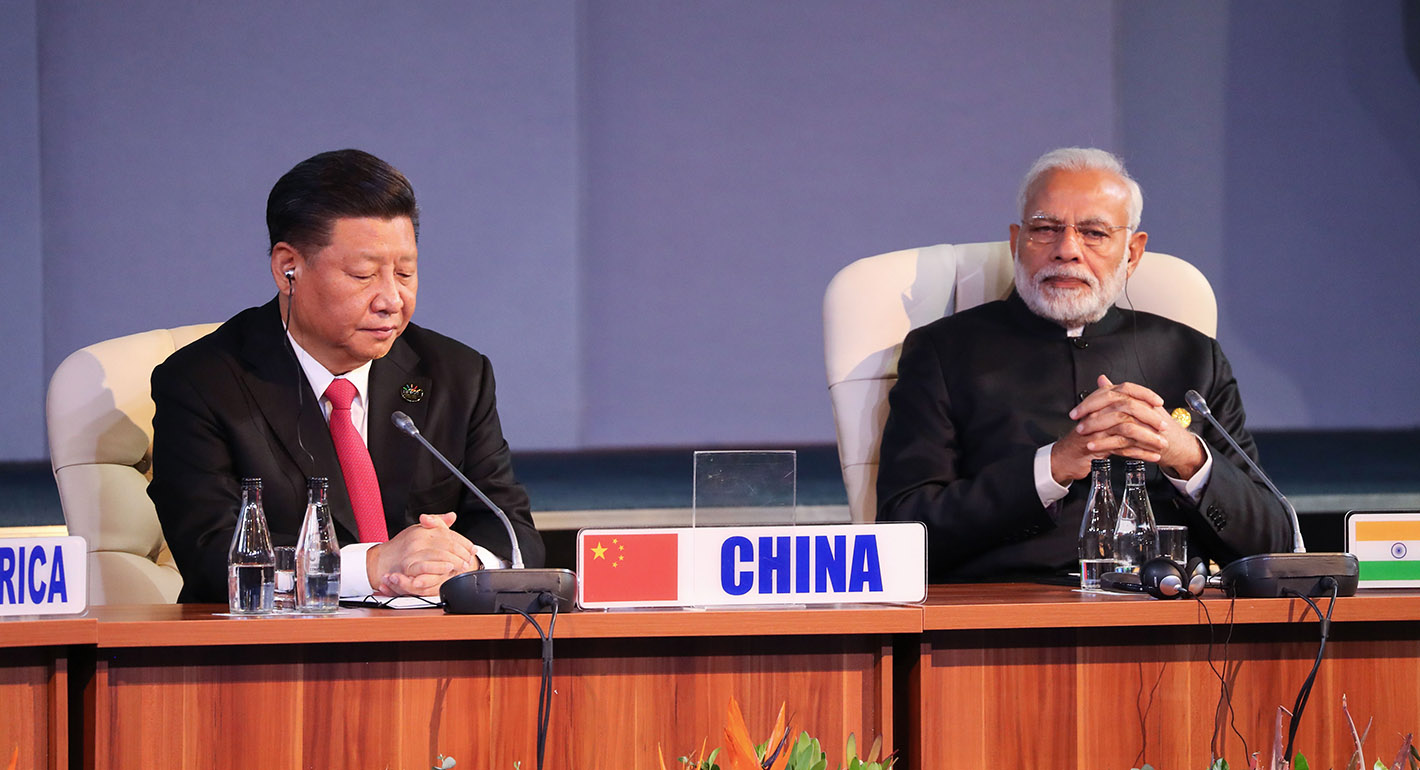
Chinese President Xi Jinping and Indian Prime Minister Narendra Modi are meeting on October 11, 2019. The summit in Mamallapuram, India, is a chance to work through the recent strains in the two countries’ relationship.
Han Hua