

Commentary
Malaysia’s chairmanship sought to fend off short-term challenges while laying the groundwork for minimizing ASEAN’s longer-term exposure to external stresses.
Elina Noor
{
  "authors": [
    "Aaron David Miller",
    "Richard Sokolsky"
  ],
  "type": "legacyinthemedia",
  "centerAffiliationAll": "",
  "centers": [
    "Carnegie Endowment for International Peace"
  ],
  "collections": [],
  "englishNewsletterAll": "",
  "nonEnglishNewsletterAll": "",
  "primaryCenter": "Carnegie Endowment for International Peace",
  "programAffiliation": "",
  "programs": [],
  "projects": [],
  "regions": [
    "North America",
    "United States"
  ],
  "topics": [
    "Political Reform",
    "Foreign Policy"
  ]
}
Source: Getty
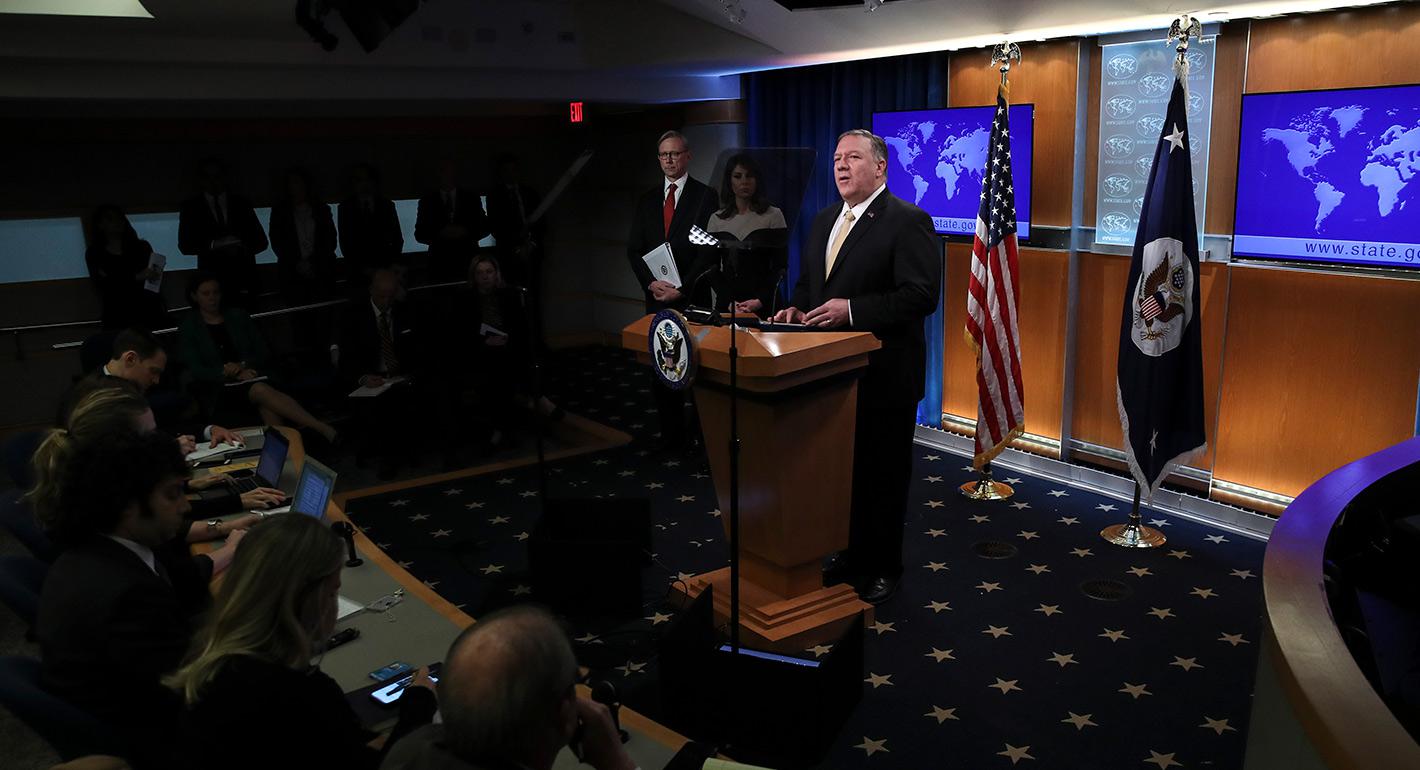
Pompeo’s most enduring legacy will be the way in which he has politicized the office of secretary of state.
Source: CNN
Just when you thought Mike Pompeo's reputation couldn't sink any lower, along comes the blatantly ideological and highly politicized report of his Commission on Unalienable Rights.
A secretary of state who talks about grounding American diplomacy in our founding principles while directly attacking freedom of speech at home and cavorting with the likes of Mohammed bin Salman, Saudi Arabia's repressive monarch in waiting, strains credibility beyond the breaking point.
In only two short years, Mike Pompeo -- with an eye on the possibility of the presidential sweepstakes in 2024 and the base of support he presumably hopes to inherit from President Donald Trump -- has become not only the worst secretary of state in US history but also the most partisan.
It was common in the 19th century to view secretaries of state as akin to presidents in waiting (see Thomas Jefferson, James Madison, James Monroe, John Quincy Adams and Martin Van Buren).
After World War II, and particularly in recent years, with America's expanding role in the world and the changing nature of American politics, presidents seeking to fill the secretary of state role by and large looked for men and women who were disengaged from electoral politics and without strong presidential ambitions.
There were exceptions, of course, such as Hillary Clinton who, despite her obvious political ambitions, was an able and experienced secretary of state. But Cabinet posts, including that of secretary of state, were not launch pads for the presidency.
It's striking that, with the exception of the five early secretaries of state, only three Cabinet secretaries -- James Buchanan, William Howard Taft and Herbert Hoover -- ever made it to the White House.
But Mike Pompeo, a former GOP congressman from Kansas, who has barely concealed his overweening political ambitions, has clearly broken the mold. Last year, there were credible reports he was thinking of running for a Kansas Senate seat; and in response to a 2019 question of whether he had considered running for president, he actually replied, "I have."
Then, last Friday, using State Department resources, Pompeo attended the Family Leadership Summit in Iowa, a traditional event for putative Republican presidential candidates.
Nowhere were Pompeo's political ambitions and ideological biases more on display than last year in the creation of his Commission on Unalienable Rights, the draft report of which Pompeo announced earlier this month.
Seemingly untethered from Pompeo's charge of taking care of the nation's interests abroad, the commission appears to double down on his warrior status in the domestic culture wars and boost his political ambitions in the 2024 presidential sweepstakes.
In a follow-up op-ed in the Washington Post, Pompeo asserted that never before have America's "founding principles been under such relentless assault." Among the offenders, he called out the Chinese Communist Party and The New York Times 1619 Project.
What any of this has to do with Pompeo's mandate of carrying out US foreign policy is mystifying, especially given the administration's hypocritical and checkered record when it comes to making human rights a priority. Yes, the administration has sanctioned both Russia and China.
But the President -- if John Bolton is to be believed -- gave Chinese President Xi Jinping an open invitation to build detention camps for the Uyghur Muslims and has created a safe zone for Russian President Vladimir Putin. (Trump signed a bill aimed at punishing China for the human rights violation the same day that Bolton made his allegations).
As for Pompeo, the picture of him smiling with MBS in his first meeting after the murder of journalist Jamal Khashoggi speaks for itself.
One can be forgiven for concluding that the whole commission -- greeted with shock and anger from some at the State Department -- might be a thinly veiled effort to give Pompeo a platform to bash the media and curry favor with a conservative Republican base, especially evangelical Christians, for a future presidential bid. As far as we know, no secretary of state has ever engaged in this kind of partisan warfare to feather a possible political nest.
Pompeo's most enduring legacy -- and it's nothing to be proud of -- will be the unconscionable way in which he has politicized the office of secretary of state and debased the institution he runs, all to advance his personal political agenda and to protect Donald Trump from accountability and the rule of law.
In the service of these objectives, he was apparently willing to cover for the President's lies about blackmailing the President of Ukraine; throw State Department officials under a bus for their cooperation with Congress in getting to the bottom of Ukraine-gate; and hinder the Hill in exercising its legitimate oversight role of the executive branch and fulfilling its constitutional duties to bring impeachment charges against the President.
He also seemingly tried to stay one step ahead of Steve A. Linick, the inspector general of the State Department who was looking into various allegations of abuse of power by Pompeo and some of his political underlings. Pompeo has denied allegations of abuse of power. Ultimately, President Trump fired the IG, Pompeo's critics say at his request.
Having worked for a total of nine secretaries between us, we are stunned by just how far outside the norms and values of the office Pompeo has operated.
Indeed, it's a remarkable fall for an office traditionally seen as above much of the political fray and representative abroad of American unity and national resolve. And we can only be hope that what Mr. Pompeo represents is just a passing headline and not a trend that any of his successors will follow.

Senior Fellow, American Statecraft Program
Aaron David Miller is a senior fellow at the Carnegie Endowment for International Peace, focusing on U.S. foreign policy.
Nonresident Senior Fellow, Russia and Eurasia Program
Richard Sokolsky is a nonresident senior fellow in Carnegie’s Russia and Eurasia Program. His work focuses on U.S. policy toward Russia in the wake of the Ukraine crisis.
Carnegie does not take institutional positions on public policy issues; the views represented herein are those of the author(s) and do not necessarily reflect the views of Carnegie, its staff, or its trustees.

Malaysia’s chairmanship sought to fend off short-term challenges while laying the groundwork for minimizing ASEAN’s longer-term exposure to external stresses.

Elina Noor

For Malaysia, the conjunction that works is “and” not “or” when it comes to the United States and China.
Elina Noor
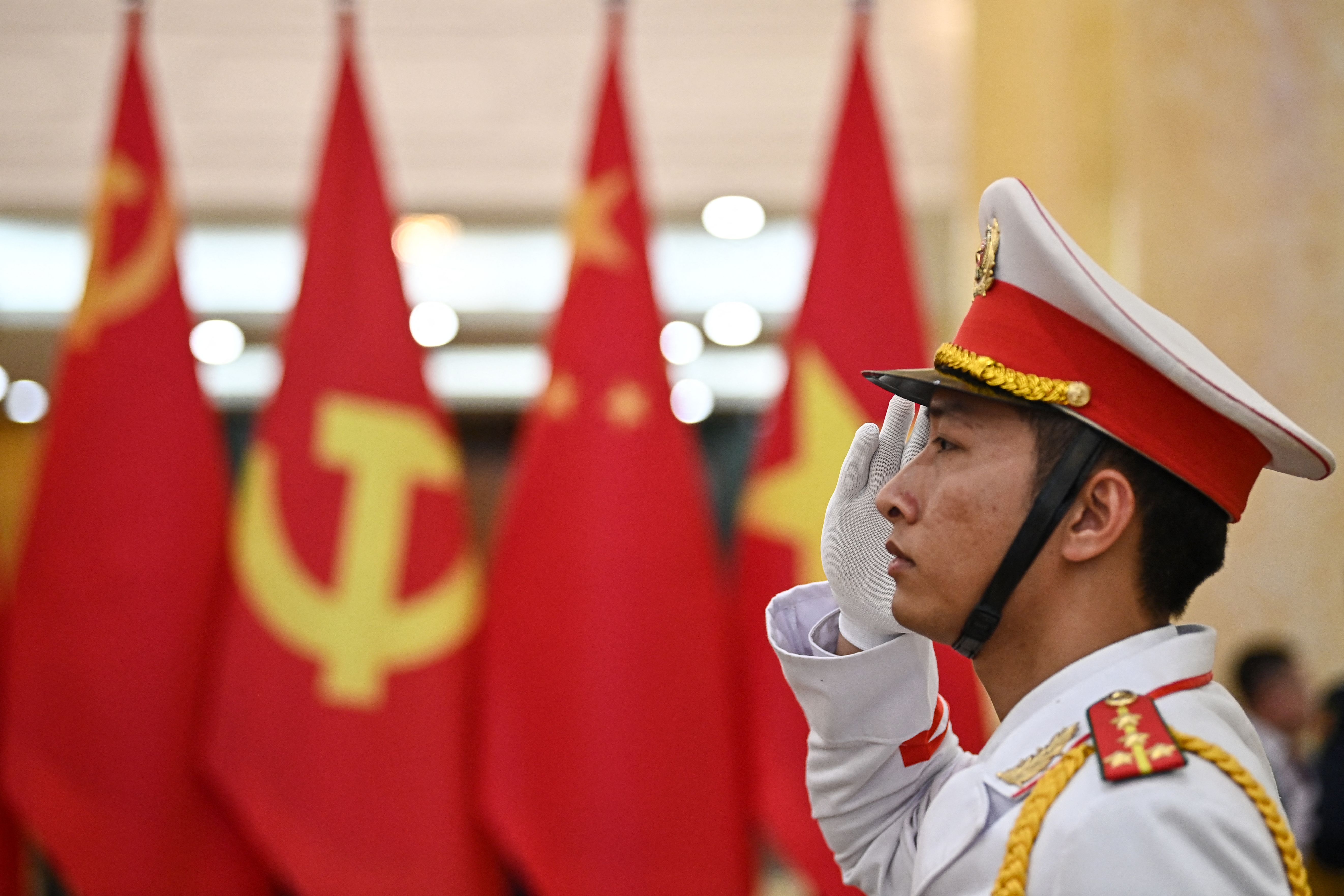
In July 2025, Vietnam and China held their first joint army drill, a modest but symbolic move reflecting Hanoi’s strategic hedging amid U.S.–China rivalry.

Nguyễn Khắc Giang

Regulation, not embargo, allows Beijing to shape how other countries and firms adapt to its terms.

Alvin Camba
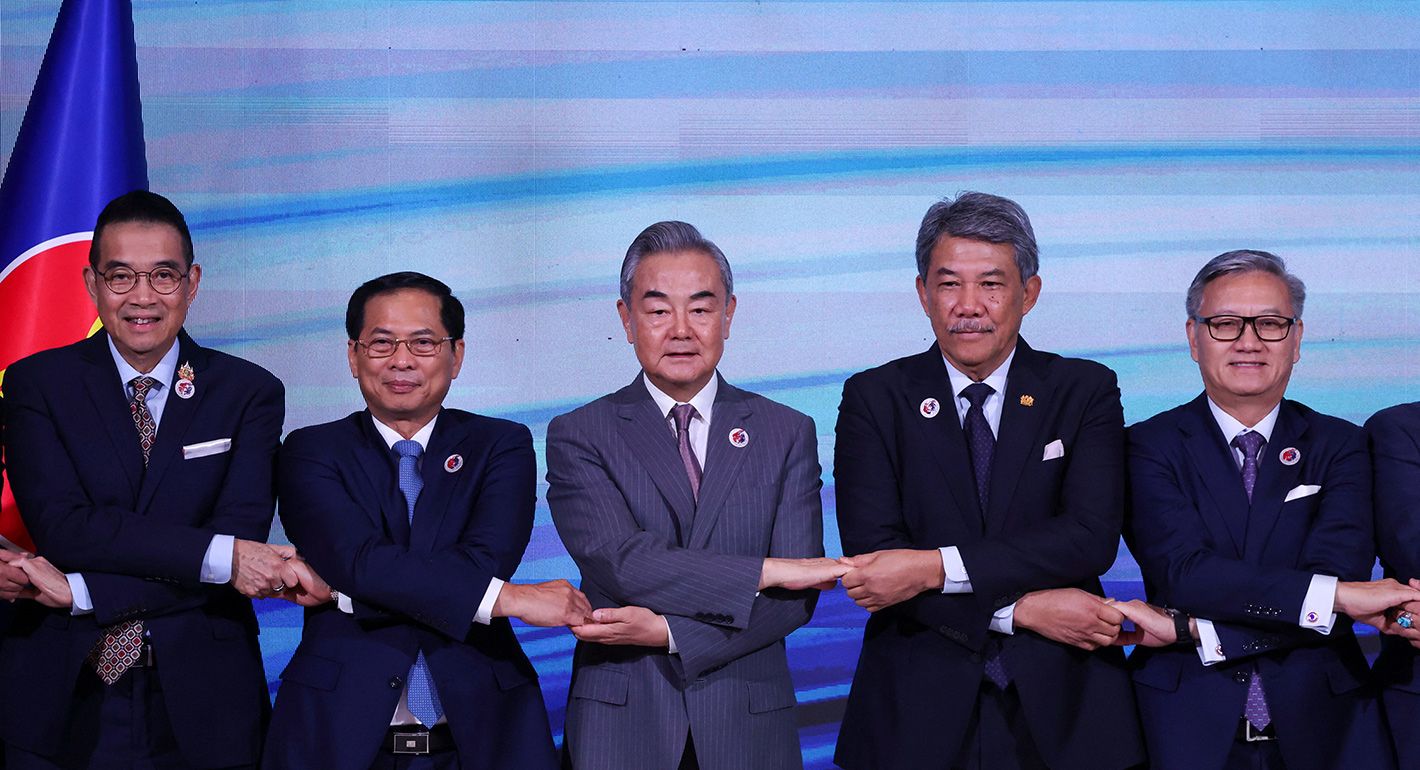
The Thai-Cambodian conflict highlights the limits to China's peacemaker ambition and the significance of this role on Southeast Asia’s balance of power.
Pongphisoot (Paul) Busbarat