

Commentary
Faced with an increase in strategic maneuvering by Moscow and Pyongyang, Beijing will not sit idly by and allow Putin and Kim to shape the security environment on its behalf.
Tong Zhao

REQUIRED IMAGE
It is customary for a French President to devote an entire speech to issues of nuclear deterrence – something his US or British counterparts have seldom done since the end of the Cold war, and which testifies to the importance that nuclear weapons still have for Paris. But the speech given by President Nicolas Sarkozy on March 21 was noteworthy in at least two respects. It signaled that even though Sarkozy is often keen on making “clean breaks” with past practices, continuity would prevail as far as nuclear weapons policy is concerned.
It is customary for a French President to devote an entire speech to issues of nuclear deterrence – something his US or British counterparts have seldom done since the end of the Cold war, and which testifies to the importance that nuclear weapons still have for Paris. But the speech given by President Nicolas Sarkozy on March 21 was noteworthy in at least two respects. It signaled that even though Sarkozy is often keen on making “clean breaks” with past practices, continuity would prevail as far as nuclear weapons policy is concerned. This was not a given: Sarkozy is the first post-World War Two generation, as well as the first true post-Gaullism president, and his ascension to power happened after the end of the Cold war. However, the speech also devoted an unusual amount of time – by French standards – to issues of disarmament, something which surprised many observers.
Several reasons explain the focus of the Sarkozy speech on disarmament. It had been a long time since a French president had clarified the country’s view on this issue – the last time was a speech by Jacques Chirac in June 1996. Various governmental and non-governmental initiatives, including UK policy announcements and the four US statesmen initiative, had succeeded in placing nuclear disarmament at the center of international security debate. Some felt the need for Paris to be a more visible player in this debate, including because the importance of country’s past gestures in this field are often seen as being – rightly or wrongly – insufficiently recognized, and because we are only two years away from the next NPT Review Conference. Also, Sarkozy, as every incoming president before him, had just reassessed the “sufficiency level” of the French deterrent. Finally, more attention to disarmament was seen by some a way to present a new, more modern-looking approach to nuclear policy.
The speech contained several key elements pertaining to nuclear disarmament issues.
This last suggestion has attracted many questions and comments. The rationale for the proposal is the increasing concerns by French analysts about the proliferation of dual-capable missiles in Asia, the recent tests of longer-range versions of the Shahab missile (which truly make sense only if armed with nuclear weapons), as well as doubts about the respect by Russia of the INF Treaty. A global ban on short- and medium-range missiles – which the French realize is a distant prospect at best – would be an important strategic stability measure, given the extremely short flight time of most of these systems and their inherently dual-capable nature. The possibility of using the INF treaty as a basis was not mentioned so as to allow for a margin of maneuver and flexibility in implementing the proposal. (It is unlikely that “deepening and enlarging” the INF treaty would be the best way to proceed, given the technicality of the Treaty and the breadth of its verification procedures.)
Finally, it is also noteworthy that the speech referred to the potential use of nuclear weapons as being possible only in “extreme circumstances of self-defense”. The use of this expression, taken from the language of the July 1996 International Court of Justice advisory opinion, carries a subtle message. Even though France is reluctant to consider itself legally bound by political commitments made in the context of NPT, such as the idea of a “diminishing role for nuclear weapons in security policies to minimize the risk that these weapons ever be used” (Concluding Document of the 2000 NPT Review Conference), Paris was keen to show that it has not broadened the role of its nuclear deterrent. This was meant to correct widespread – though incorrect – interpretations of the last major nuclear policy speech (in January 2006 by Chirac), which had given the impression that France had expanded the scope of its deterrent.
The subtext of the Sarkozy speech could be summarized as follows: while remaining conservative on basic principles, France has a policy of nuclear restraint, and challenges the other nuclear weapon-States to adopt the same attitude.
Bruno Tertrais is a Senior Research Fellow at the Fondation pour la Recherche Stratégique. He wrote this analysis for the Carnegie Endowment.
Carnegie does not take institutional positions on public policy issues; the views represented herein are those of the author(s) and do not necessarily reflect the views of Carnegie, its staff, or its trustees.
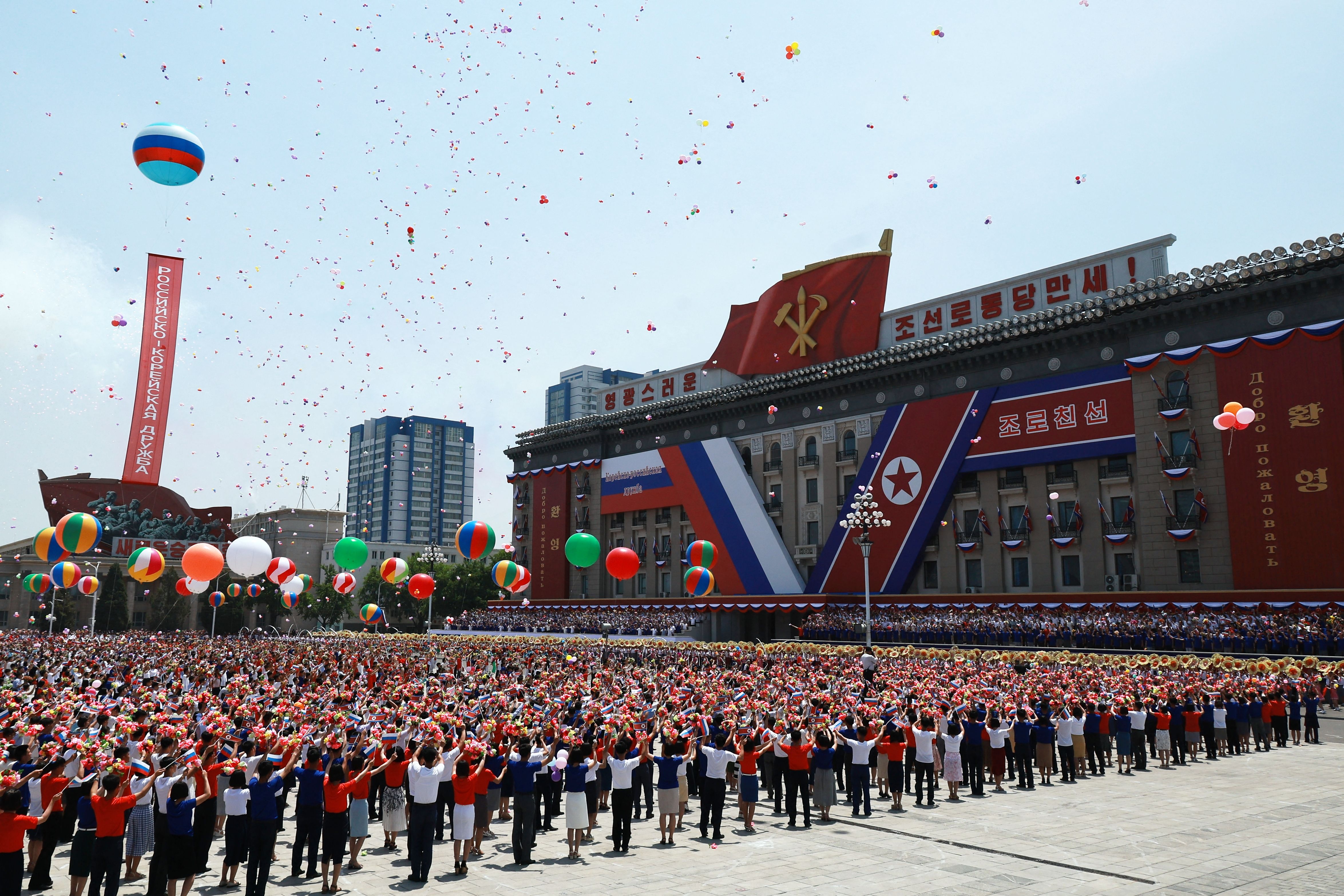
Faced with an increase in strategic maneuvering by Moscow and Pyongyang, Beijing will not sit idly by and allow Putin and Kim to shape the security environment on its behalf.
Tong Zhao
China views U.S. missile defense as posing a greater potential threat to China’s nuclear deterrent than other U.S. military capabilities.
Tong Zhao, Dmitry Stefanovich
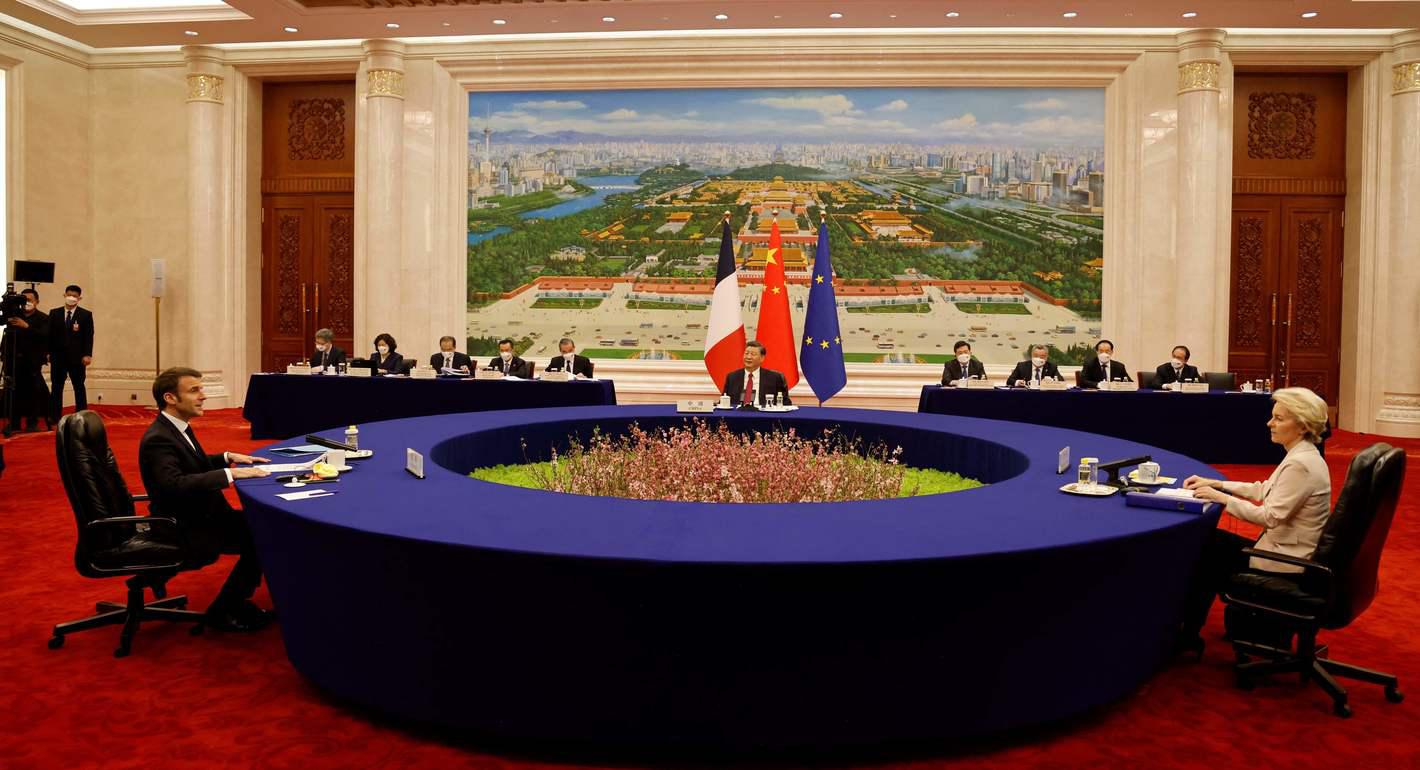
Recent visits by European officials highlight the EU’s lack of internal cohesion.


Paul Haenle, Chan Heng Chee, Liu Yawei, …
“It’s not so clear how we’re going to get out of this.”
Paul Haenle, Philippe Le Corre
There are certainly other issues among other P5 countries, but the U.S.-China competition is so by far the most consequential great power rivalry in the international system, and it has very far-reaching geopolitical implications at and beyond the Pacific region.
Tong Zhao