

Commentary
Regulation, not embargo, allows Beijing to shape how other countries and firms adapt to its terms.
Alvin Camba
Source: Getty
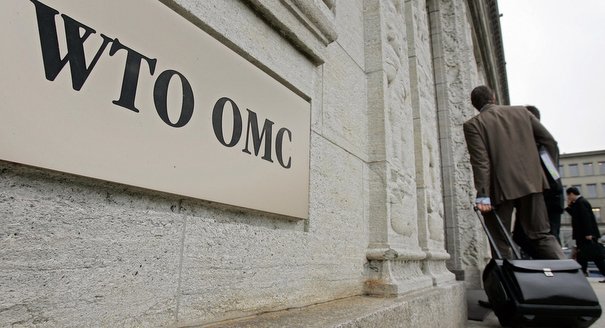
Although World Trade Organization policies helped limit the increase in protectionist measures during the recent financial crisis, a mutually reinforcing set of legal and structural changes in the world economy played a larger role in keeping global markets open.
Despite a limited increase in the incidence of protectionist measures during the recent financial and economic crisis, the effects on global trade appear small—the world, remarkably, did not resort to protectionism. In addition to the concerted stimulus measures, financial rescues, and the strengthening of lender-of-last-resort facilities that restricted the duration and depth of the economic downturn, the World Trade Organization’s disciplines, enforceable through its dispute settlement mechanism, no doubt played an important role in staving off trade protection.
But this is only one part of the story. The increased resistance to protectionism is the result of a complex, mutually reinforcing set of legal and structural changes in the world economy that have made a return to protection more costly and disruptive and have established new vested interests in open markets.
These changes include:
In addition to good macroeconomic and social policies that limit the impact of economic downturns, ensuring an open and predictable trade policy requires a more realistic approach to trade negotiation that embraces plurilateral, bilateral, and regional processes. This, in turn, will maintain the momentum of change, creating more “facts on the ground.” For the World Trade Organization to remain relevant, it must view itself as the facilitator of all these processes and not exclusively as a forum for the exchange of multilateral concessions. Domestic mechanisms that require trade protection proposals to be examined transparently by broad constituencies will further guarantee a predictable trading regime. In an interconnected world, increased attention to trade facilitation is also needed to lower trade costs and consolidate the vested interest in and support for trade. These steps together will help to foster a liberal trading environment and prevent a future recourse to protectionism.
Carnegie does not take institutional positions on public policy issues; the views represented herein are those of the author(s) and do not necessarily reflect the views of Carnegie, its staff, or its trustees.

Regulation, not embargo, allows Beijing to shape how other countries and firms adapt to its terms.

Alvin Camba

Rather than climate ambitions, compatibility with investment and exports is why China supports both green and high-emission technologies.

Mathias Larsen
“Involution” is a new word for an old problem, and without a very different set of policies to rein it in, it is a problem that is likely to persist.

Michael Pettis

While China's investment story seems contradictory from the outside, the real answers to Beijing's high-quality growth ambitions are hiding in plain sight across the nation's cities.

Yuhan Zhang
China's stimulus addiction cannot go on forever. Beijing still has policy space to clean up the country's massive debt issue, but time is running short.
Michael Pettis