

Commentary
While China will remain a significant political and economic force in the Global South, its ambition to leverage the Global South as a counterbalance to the United States and the Global North is far from assured.
Xue Gong

Source: Getty
A close study of five crises makes clear that Cold War logic doesn’t apply to the South Asia nuclear powers.
The Nautilus Institute, the Carnegie Endowment for International Peace, and the Asia-Pacific Leadership Network thank the Carnegie Corporation of New York for its support of this project and its ongoing support of public-interest work to prevent nuclear conflict.
Disclaimer: The views expressed by the authors are solely their own and do not reflect the positions of any government or affiliated institution.
The May 2025 crisis between India and Pakistan was their sixth militarized crisis since the two countries tested nuclear weapons in 1998.1 It both affirmed and debunked cliches about South Asia being the world’s most dangerous nuclear flashpoint. ‘We stopped a nuclear conflict. I think it could have been a bad nuclear war’, U.S. President Donald Trump trumpeted as he celebrated the ceasefire his administration helped broker at the end of the recent crisis.2 While the sense that South Asia is always at the brink of a major catastrophe has lingered among many observers of the India-Pakistan rivalry, these neighbours have escaped escalation to a major war since they acquired nuclear weapons capability. This paper examines nuclear signalling between these two rivals during the most prominent crises since the turn of the century, focusing primarily on Pakistan’s crisis behaviour. ‘Signalling’ encompasses allusions to the potential for nuclear war and gestures like sabre-rattling that are intended to motivate the antagonist and, in South Asia’s case, third parties to de-escalate the crisis on terms acceptable to the signaller. While nuclear signals typically refer to actions or statements that directly involve the manipulation of nuclear fear and risk, we cast the net wider by situating Pakistan’s nuclear signalling within its overall crisis management posture, focusing both on threatening messages as well as passive ones where leaders reassure audiences that they want to de-escalate or terminate a crisis. This is because signals transmitted in the examined crises do not follow the pattern of bilateral nuclear brinkmanship the world was accustomed to during the Cold War. South Asia’s crisis signalling must be seen as a tool of broader crisis diplomacy and can often be characterized more aptly as ‘communications’.
Five cases are considered in varying levels of detail: the 2001–02 military stand-off; the 2008 Mumbai crisis; the 2016 Uri episode; the 2019 Pulwama/Balakot (hereafter Pulwama) crisis; and the 2025 Pahalgam crisis. For each case, we analyse Pakistan’s crisis objectives and intended audiences for its communications or signals, the actors involved, the channels of communication used, the specific messages transmitted and their context, and intended outcomes and impact on the trajectory of the crisis. We also assess the effect Pakistan’s messaging may have had on crisis stability, and the lessons Pakistani decisionmakers learned from the episode.
We find that throughout the quarter century of nuclearization of South Asia, crises between India and Pakistan have been devoid of nuclear manipulations truly intended to signal plans or preparations to actually employ nuclear weapons. Unlike the Cold War’s hair trigger alert postures by the United States and the Soviet Union, India and Pakistan have maintained a recessed deterrence posture, which implies that they have to take multiple preparatory steps before they could credibly threaten to be contemplating nuclear use. There is no public evidence that Pakistan started moving along this chain in any of the crises. Instead, much of what is typically called nuclear signalling—including tests of dual use missiles—could more aptly be characterized as noise meant to place the adversary and third parties on notice rather than signal intent for any nuclear deployment. In that sense, South Asian crises can most aptly be described as crises in a nuclearized environment rather than nuclear crises per se.
The 2001–02 military stand-off was triggered by an attack on the Indian Parliament on 13 December 2001. New Delhi blamed the Pakistani state and Pakistan-based militant groups and demanded that Pakistan hand over members of the suspected groups and permanently eradicate anti-India militancy from its soil.3 India threatened war and undertook massive military mobilization involving nearly 800,000 troops.4 Pakistan immediately counter-mobilized and, owing to the proximity of its peacetime formations near the border, managed to do so before India’s expansive mobilization effort was complete.5
According to reports, India had planned to undertake multiple thrusts across the Line of Control (LoC) in Kashmir to seize territory.6 In January 2002, a major commando operation was planned to hit and destroy targets on the Pakistani side of the LoC.7 It was eventually called off. Tensions spiked again in May 2002 when an attack on a bus and an Indian Army camp in Kaluchak in Jammu killed thirty-one people.8 Many predicted that the death of Indian Army personnel and their families had made war imminent.9
Ultimately, the crisis subsided without active conflict when India undertook ‘strategic relocation’ of its troops in October 2002. It did not achieve its stated objectives of permanently ending all militant activity from Pakistan.10 However, Pakistan’s leader General Parvez Musharraf acknowledged presence of militant outfits on Pakistani soil, and it banned and took some action against them.11
Pakistan’s messaging during the stand-off was primarily meant to deter India from war without fully giving in to Indian demands, while retaining its newly-established role as a frontline ally for the United States in Afghanistan. Pakistan’s words and deeds during the crisis had three primary audiences, in order of importance: (i) the international community, principally the United States; (ii) India; and (iii) its own people. Islamabad aimed to convey to Washington that it had not instigated the crisis, but if things got out of hand, it would fight back. Pakistani leaders noted sharply that India’s mobilization had forced Pakistan to focus on its eastern front, adversely affecting its ability to support the United States’ war against terror in Afghanistan. Pakistan had offered air bases, an indispensable supply route, and broader counterterrorism support to Washington, which could come into doubt if Indian forces struck Pakistan’s eastern flank.12 In effect, Islamabad continued to remind the United States that helping to de-escalate tensions was in its own strategic interest. To India, Pakistan’s messages were primarily meant to demonstrate its resolve and readiness to respond to any military action. Domestically, Pakistani decisionmakers characterized India as the potential aggressor against which Pakistan was fully prepared to defend itself. At the same time, Islamabad was careful not to create any war hysteria at home.
Despite India’s long-standing public opposition to third-party mediation in India-Pakistan disputes, much of its own posturing during the crisis was an exercise in risk manipulation aimed at garnering U.S. support. One could reasonably interpret diplomatic signalling during the stand-off as a competition between Pakistan and India to woo the United States to affect de-escalation while backing their respective crisis objectives. Washington (and other third-party capitals) understood this dynamic, and that it was the main intended recipient of some of the messaging from both sides. While the United States sympathized with the Indian side and accepted its position as a victim of terrorism, its immediate concern was the risk of escalation into a full-blown conflict in a nuclear environment and the impact this would have on its military campaign in Afghanistan. This paradox drove Washington to seek a fine balancing act publicly and privately, speaking the right language against terrorism in India’s favour but working extremely hard behind the scenes to ensure de-escalation.13
Interestingly, while multiple other countries, most of all the United Kingdom, involved themselves in crisis diplomacy, none of them sought to maintain a crisis identity distinct from the United States. As expected, Pakistani leaders were in close contact with their Chinese counterparts and made several visits to solicit China’s backing. Beijing, while assuring Pakistan of its partnership and customary support, advised restraint and complemented U.S. crisis management efforts in pursuit of de-escalation like all other third-party actors.14
When the crisis broke out, Pakistan was under the rule of General Parvez Musharraf. The Musharraf-led army firmly remained the main decisionmakers. The obvious concerns about the disruption of constitutional democracy in Pakistan aside, this military-dominated set up restricted the number of truly empowered communicators on the Pakistani side and ensured a rather neat chain of command in terms of defining Pakistan’s crisis demeanour. Musharraf conveyed the most prominent and consequential signals, followed by then Foreign Minister Abdul Sattar.15
During the stand-off, no messages were transmitted through direct contact. India recalled its high commissioner a day after the parliament attack and later cut its diplomatic strength in Islamabad by half.16 They eventually also forced the Pakistani high commissioner to leave India.17 A preexisting hotline between the director generals of military operations remained non-operational during the crisis.18 Indian and Pakistani leaders attended two international forums together but chose not to hold any direct talks on these occasions either. Lack of direct communication meant that virtually all communication during the crisis took place through indirect channels, mostly public pronouncements or through the United States and other third-party interlocutors. Indirect signalling is known to be prone to greater risks of misinterpretations and misunderstandings. Public messaging also inherently suffers from the multiple audience problem that tends to confuse communication because the same action or statement can be interpreted differently by different actors, even if they were not the intended recipient of the message.
The majority of aggressive messaging occurred within the first month of the parliament attack. Pakistan’s signalling was almost wholly in reaction to India’s, which remained highly provocative and was clearly meant to compel Pakistan to comply with its crisis objectives. In December 2001 and January 2002, Indian officials threatened military action and conveyed confidence that a limited war would not lead to escalation or test Pakistan’s nuclear redlines. While counter-mobilization of Pakistani military was instant and visible, and Pakistani leadership made no qualms about emphasizing its intent to retaliate militarily in the face of any Indian military action, Islamabad remained noticeably measured in its verbal messaging as it sought to signal its responsible nature as a nuclear state. Foreign minister Abdul Sattar stated on 30 December 2001: ‘Nuclear weapons are awful weapons and any use of these weapons should be inconceivable for any state’.19 On 31 December, according to a report in Dawn, he maintained that Pakistan did not want a local, general, or nuclear war.20 Despite high tensions, Pakistan and India also chose to adhere to their long-standing agreement on exchanging the coordinates of their nuclear facilities on 1 January of every year.21 This was a vivid example of a reassuring nuclear gesture.
Later in January, in an interview with visiting Italian scientists from the Pugwash Movement, Pakistan’s nuclear czar, General Khalid Kidwai, spelled out Pakistan’s nuclear redlines for the first time in a broad set of terms: Pakistan would employ the nuclear option if India attacks Pakistan and takes over a large part of its territory (space threshold); if it destroys a large part of Pakistan’s land or air forces (military threshold); if it proceeds to strangle Pakistan economically (economic threshold); or if it pushes Pakistan into political destabilization or creates a largescale internal subversion in Pakistan (domestic threshold).22
While the signal could be seen as conveying resolve to employ the nuclear option in case India tested these limits, by presenting fairly extreme circumstances in which Pakistan would consider nuclear use, Pakistani decisionmakers in reality sought to allay fears that they would be willing to exercise the first-use option early on in a conflict.23 Pakistan’s early use of nuclear weapons in the face of India’s conventional superiority was a lingering concern among some Western capitals in these early years of nuclear South Asia, even though Pakistan remained confident about its conventional deterrence and never contemplated excessive reliance on its nuclear capability.
The primacy of Washington’s role was evident behind the scenes. Then secretary of state Colin Powell was in direct contact with both sides and assured Pakistan that India would not attack it militarily, even making a public statement to this effect as early as 23 December 2001.24 In return, however, as a direct result of U.S. crisis diplomacy, Pakistan gave India a potent face saver and launched a crackdown against the militants.25 The United States leaned heavily on India to de-escalate after this.
During the stand-off’s next phase, triggered by the 14 May Kaluchak attack, Pakistan adopted a two-pronged approach in its verbal messaging. While emphasizing its responsible nature and its abhorrence to contemplation of nuclear weapon use, Islamabad also sought to give strong signals that it was intentionally keeping all options open and would not allow India to flex its military muscle.
Interestingly, however, as officials around Musharraf continued to signal Pakistan’s intent to fight any Indian military aggression without hesitation, Musharraf himself evinced cool headedness.26 At least on five occasions between May–July 2002, he conveyed prudence when it came to Pakistan’s consideration of nuclear weapon use, while simultaneously emphasizing the efficacy of Pakistan’s deterrence. On 2 June, he suggested that ‘one shouldn’t even be discussing these things, because any sane individual cannot even think of going into this unconventional war, whatever the pressures’, and that ‘let us hope that good sense prevails (and) this does not lead to escalation. It has not because we are restraining ourselves, and let Indians not test our patience and restraint because it will be very dangerous’.27 He further asserted: ‘Frustration and inability of India to attack Pakistan or conduct a so-called limited war bear ample testimony to the fact that strategic balance exists in South Asia, and that Pakistan’s conventional and nuclear capability deter aggression’.28 In an interview to a German magazine on 6 April, he stated, ‘Using nuclear weapons would only be a last resort for us. We are negotiating responsibly. And I am optimistic and confident that we can defend ourselves using conventional weapons . . . only if there is a threat of Pakistan being wiped off the map, then the pressure from my countrymen to use this option would be too great’.29
Unlike in the first phase of the crisis, however, other Pakistani officials made statements that could be interpreted as threats. In late May and early June 2002, Pakistan’s then ambassador to the United States Maleeha Lodhi and ambassador to the UN Munir Akram, both known to be close to the military leadership at the time, stated that Pakistan did not ascribe to the no-first-use policy with regard to nuclear weapons.30 In response to an insinuation by an Indian cabinet minister that India could consider running Pakistan dry by scrapping the Indus Water Treaty that guarantees the majority of Pakistan’s water flows, Pakistan also took the opportunity to remind India of its nuclear redlines laid out by Kidwai, and that they would be breached if India attempted ‘economic strangulation’ of Pakistan.31
Furthermore, in the wake of the Kaluchak attack, when Pakistani intelligence considered Indian military action to be all but inevitable, there was significant public chatter about unusual movement around Pakistan’s nuclear sites and unconfirmed reports of some missile movements.32 Pakistan also tested its nuclear-capable Ghauri, Ghaznavi, and Abdali missiles within a span of four days in late May 2002.33 Once again, U.S.-led international diplomacy was instrumental in calming tensions.
The final twist in Pakistan’s messaging came at the tail end of the crisis, after tensions had subsided and India had undertaken significant troop relocation. With no imminent danger of war, both Pakistan and India made hawkish statements reminding the other about their nuclear capability. On 30 December 2002, Musharraf stated, ‘if the Indian Army moved just a single step beyond the international border or the LoC then Insha’Allah the Pakistan Army and the supporters of Pakistan would surround the Indian Army and that it would not be a conventional war’.34[AB2] India’s then defence minister George Fernandes responded with even more hawkish rhetoric: ‘We can take a bomb or two or more . . . but when we respond there will be no Pakistan’.35 These allusions had little relevance to the stand-off and undoubtedly had grandstanding for the domestic audiences in mind. Such post-crisis statements are also meant to put markers down in the mind of the adversary about future crises to once again remind them of the country’s nuclear capability and deter them from conflict.
The 2001–02 nuclear stand-off saw intense public communication that by definition would have been absorbed simultaneously by all audiences. None of the signals from Pakistan’s leadership seemed off-script or unauthorized. The main thrust of Pakistan’s messaging aimed at India entailed repeated reminders of Pakistan’s intent to fight militarily if India initiated a war. The nuclear allusion, more than threatening use, was an opportunity to convey resolve and establish the efficacy of existential deterrence. Yet, even these were primarily aimed to influence the third party’s crisis behaviour and to serve a dual purpose: (i) manipulation of nuclear fear (risk) to maintain significant concern and unease in Washington about the prospects of escalation, which Pakistan knew was unacceptable to the United States both due to risk of nuclear use and its preoccupation with its military campaign in Afghanistan; and (ii) comfort the United States that Pakistan also wanted a swift end to the crisis and as long as the third party reigned India in, Pakistan would not use any force. To facilitate this outcome, Pakistan took tangible steps to crack down on anti-India militant groups.
Pakistan’s faith in trilateral crisis management suggests that it assumed India’s inability to ignore U.S. demands and interests in Afghanistan, and India’s and the third party’s sensitivity to the nuclear overhang. Pakistan also remained confident about its conventional and nuclear deterrence in the face of Indian threat of war. Pakistani leaders would have walked away from the crisis assured that each of these assumptions was correct. Despite multiple threats and war plans, India chose not to launch a military attack.36 Moreover, despite its traditional posture of shunning any third-party mediation, like Pakistan, Indian leaders actively worked third-party channels to build pressure on Pakistan. In return, India remained sensitive to U.S. demands and directly altered its choices based on these.
The crisis experience would have also provided reason for Pakistan to assess that its infrequent allusions to its nuclear capability were effective, not only in terms of convincing India that it was facing a resolute adversary, but also vis-à-vis the third party. The United States was extremely unsettled and remained proactive in crisis management with one overriding objective: de-escalation of the crisis.
This said, Pakistani decision makers were not oblivious to the dangers the stand-off created. It became clear over time that India had truly prepared for and considered military action against Pakistan after the December 2001 and May 2002 attacks.37 Ultimately, the fact that the experience of the crisis ushered in the most promising peace process between the two sides in their fifty-five-year history suggests that the stand-off may have had the most desired effect overall: highlight the dangers of crises in a nuclear environment, the impracticality of settling disputes through military conflict, and the need to channel this reality to find ways to remove the underlying reasons for crises to occur in the first place.
On 26 November 2008, ten terrorists launched a coordinated set of attacks against targeted locations in Mumbai. The attacks, which lasted three days, left 174 people dead, including twenty-six foreigners. India had suffered a massive intelligence failure that had allowed the carnage.38 The attacks were extremely untimely as they came at the back end of the India-Pakistan peace process that had been ongoing since 2003. Pakistan’s foreign minister during this period, Khurshid Mahmood Kasuri, claims in his memoir that the two sides were on the verge of signing a comprehensive peace deal.39
After the Mumbai incident, India put the bilateral dialogue on hold. It named the anti-India militant group Lashkar-e-Tayyiba (LeT) for perpetrating the attacks.40 Although extreme fears of escalation existed from the outset given the scale of the attacks, India ended up exercising restraint. Neither side mobilized their armed forces extensively. Tensions faded gradually as both sides launched investigations into the attacks and Pakistan took some actions against the alleged perpetrators. No nuclear threat was issued by either side during the crisis.
Pakistan found itself in a major quandary. The scale and nature of the attacks, and the confirmation within days that the perpetrators belonged to LeT and had come from Pakistan, put India in pole position to harp on this theme throughout the crisis. Pakistani decision makers perceived the probability of Indian military aggression to be high after the Mumbai attacks. Pakistan’s national security adviser, General Mahmud Durrani, recalled that the Pakistani leadership felt there was a ‘50-60 percent chance Indians would do something militarily’.41 Pakistan’s intelligence chief General Ahmed Shuja Pasha also acknowledged, ‘At first we thought there would be a military reaction . . . as the Indians, after the attacks, were deeply offended and furious’.42 Compounding these factors was Pakistan’s paradoxical position of still being an indispensable U.S. ally in Afghanistan and being simultaneously blamed for playing a ‘double game’ by supporting the anti-U.S. insurgency there.43 Washington’s anger at Pakistan’s perceived negative role in Afghanistan, vehemently denied by Pakistani leaders, aligned with India’s efforts to force the United States to declare Pakistan a global state sponsor of terrorism. Under these circumstances, Pakistan could not hope for much more from the crisis than to extract itself unscathed diplomatically and militarily.
Once again, the audiences for Pakistan’s messaging included third parties, Indians, and Pakistanis at home. Pakistan conveyed privately to multiple important international capitals that it did not wish for escalation of the crisis and needed them to lean on India to ensure this. Simultaneously, Pakistan reminded Washington that continuing tensions with India would force Pakistan to divert its troops from the western border.44 At one point, Pakistan undertook some relocation.45 An additional undertone reminded the world that Pakistan was itself a victim of terrorism, having lost thousands of citizens to the terrorist uptick in Pakistan as a result of the U.S. military campaign in Afghanistan.
The United States repeated its crisis management script from the previous case. While it was highly sympathetic to India’s narrative against terrorism and cared deeply about its fast-maturing long-term strategic partnership with India, Washington’s most immediate concerns remained avoiding any untoward escalation in a nuclear environment and keeping its military campaign in Afghanistan on track.
The Mumbai crisis also involved China more than in the 2001–02 stand-off, but with the same principal objective: complementing U.S.-led international efforts to effect de-escalation. While China promised general support to Pakistan, it called upon both India and Pakistan to talk and cooperate to ensure regional peace.46 China, on U.S. prompting, also communicated to Pakistan its unwillingness to hold back the UN listing and sanctioning of militants allegedly involved in the Mumbai attacks that Washington was pursuing.47 Chinese messages of restraint were impactful and led to Pakistani statements assuring calm, including one by Pakistan Army Chief General Kayani immediately after his meeting with China’s deputy foreign minister He Yafei in Islamabad on 29 December.48
The third-party crisis management role was made somewhat easier by India’s crisis demeanour. Defying domestic war hysteria and political compulsions, the Indian government led by Prime Minister Manmohan Singh used Washington as the principal vehicle to compel Pakistan to deliver on its demands. India did not even make a fleeting attempt at nuclear risk manipulation, instead making clear to the United States that it was not planning military action against Pakistan.49 India’s stance also allowed Pakistan to forego any nuclear signalling aimed at New Delhi. It only conveyed messages of intent to defend itself militarily (conventionally) in case of war. Islamabad spent more time attempting to find a way to distance itself from the attacks by drawing a distinction between itself and the non-state actors who launched the attacks.
Pakistan’s diplomatic communications seemed to have considered the domestic audience as an afterthought in this crisis. There was no attempt to build domestic sentiment to take on India. The only domestic angles of note were an initial attempt to deflect Indian claims that the attackers belonged to and had travelled from Pakistan despite evidence and third-party intelligence reports confirming India’s position, and subsequent efforts to keep reinforcing that the perpetrators of the attacks had not acted at the behest of the state.
When the Mumbai crisis unfolded, Pakistan had a democratically elected government led by Prime Minister Yousaf Raza Gillani. President Asif Zardari, however, held a disproportionate amount of power within the civilian set up. At the same time, the military establishment continued to hold the strongest position with reference to national security decision-making. During the crisis, the president, prime minister, foreign minister, and army chief General Kayani were all involved in crisis-time messaging. Unlike in 2001–02, when the military was formally in charge, their messaging was not always coordinated, and some disconnect was visible. In one instance, the prime minister’s formal offer to send the country’s intelligence chief to India to discuss the investigation of the attacks was ostensibly overruled by the army chief.
The Mumbai episode involved very little direct communication between Pakistani and Indian leaders. Pakistan’s foreign minister Shah Mahmood Qureshi was in India on an official bilateral visit when the attacks took place. The Indian government allowed him to continue his trip, and he was in touch with his Indian counterparts during that time. Subsequently, Pakistani officials directly communicated their condolences to the Indian leadership and offered to support an impartial investigation, including offering to send over a team of officials. However, none of these interactions went beyond usual diplomatic formalities. Yet again, all substantive communications took place through public statements and the third party. The United States was firmly entrenched in its position as the official go-between.
The dangers of a lack of trust in direct channels of communication between the two protagonists and the absence of structured and predictable protocols for direct interaction were badly exposed during the Mumbai crisis. On 28 November, before the attacks had fully subsided, Zardari received a hoax call ostensibly from India’s foreign minister, Pranab Mukherjee.50 The call was actually made by an Al Qaeda operative jailed in Pakistan, but Zardari was unaware and took seriously the imposter’s ultimatum of an imminent Indian attack, sending the Pakistani state into a frenzy and forcing the military to take additional measures to prepare for any Indian action.51 Mystery shrouded the call for hours until then U.S. Secretary of State Condoleezza Rice got involved and confirmed it as a hoax.52 According to one U.S. official, the situation ‘risked having all spin out of control’.53
The potential for misunderstanding due to third-party messaging was also on display during the crisis when U.S. Senator John McCain, while visiting the region, created a stir by ostensibly conveying India’s intent to act militarily against Pakistan and the inability of the United States to prevent India from doing so under the circumstances.54 While McCain’s trip was authorized by U.S. leadership, it was not entirely clear at the time if his precise line of messaging was also sanctioned. His signal, however, compelled Pakistan to react by conveying to India through the U.S. Joint Chiefs of Staff chair Admiral Mike Mullen the threat of immediate military retaliation were New Delhi to undertake any such adventure.
Tensions rose in the region immediately after the attacks. Large sections of the Indian media demanded a hard-hitting response from their government.55 India’s formal demands to Pakistan included the extradition of forty men it accused of having been involved in anti-India activities over the years and the irreversible dismantling of LeT terrorist infrastructure in Pakistan.56 India, however, exhibited military restraint, only alerting the Indian Air Force (IAF) and asking two army brigades involved in peacetime exercises on the Pakistani border to stay on.57
Pakistan’s approach from the very beginning was to steer clear of any nuclear signalling. It sought to take advantage of India’s restraint to end the crisis as soon as possible by focusing on creating a distinction between non-state actors and the state’s decision-making apparatus. Foreign minister Shah Mahmood Qureshi reiterated on 29 November that Pakistan’s ‘hands are clean, we have nothing to hide, we have nothing to be ashamed of’.58 Pakistan communicated to India that it was sorry about the attacks, but that escalation would only serve the interests of militant outfits.59 National security adviser Mahmud Durrani offered a joint investigation to his Indian counterpart as the attacks were unfolding.60 Pakistan would continue to hold out this offer as a way forward throughout the crisis.
Islamabad, however, was seriously concerned that India would act militarily. Fears were compounded when Indian jets intruded Pakistani airspace across the LoC and over the border city of Lahore on 12 and 13 December 2008.61 Pakistan publicly accepted India’s excuse that the airspace violations were inadvertent while making clear that the intrusions were as much as 2–4 kilometres deep into Pakistani territory.62 The spokesperson for Pakistan Air Force (PAF) cautioned that his service was ‘fully alive to the situation and capable of giving a befitting reply in case of a misadventure’.63 Pakistan also responded unequivocally when the Indian foreign minister suggested during this time that India was keeping all options on the table by stating that, while Pakistan did not want war, it would respond ‘within minutes’ to any such Indian provocation.64 Responding to another statement by foreign minister Mukherjee that the military option is open, PAF once again mounted patrols over several major cities.65 Within the week, Pakistan put its navy, air force, and army on ‘red alert’66 and deployed additional troops on its border with India.67 Pakistan’s threats of retaliation to an Indian use of force were not necessarily a bluff: Pakistan had pre-marked military installations and sites in India that could be seen as legitimate targets to curtail India’s ability to continue escalating military hostilities in the crisis and had decided to hit these with conventional military force immediately in the event of an Indian strike.68
The United States was once again pursuing a fine balancing act. On the one hand, it publicly acknowledged the absence of evidence for Pakistani state complicity in Mumbai immediately after the attacks and asked New Delhi ‘to not take precipitous action’ against Pakistan when the crisis was at its peak.69 Pakistan’s claim in late December that it had begun to move forces away from the Afghanistan border to concentrate on the eastern front also seemed to have affected Washington’s calculus, as the calls for restraint by the United States intensified immediately after this development.70 On the other hand, U.S. interlocutors asked Pakistan for action against the Mumbai accused.71 To ward off U.S. pressure and allow Washington additional leverage over India, Pakistan obliged by initiating a crackdown against LeT in early December and launching a formal investigation process into the attacks.72
On 28 December, the Indian and Pakistani directors general of military operations spoke in a clear sign that crisis diplomacy had prevailed. The immediate crisis was effectively over. Pakistan continued to investigate the attacks, but the process hit multiple legal roadblocks on both sides of the border and ultimately stalled.
The Mumbai crisis was practically devoid of any explicit references to nuclear weapons or nuclear signals per se. All bellicosity remained strictly within the conventional domain and was understood as such. India did not hurl any nuclear threats. In fact, the Indian government did not even attempt to threaten a limited war, even though New Delhi had learned from its inability to launch a full-scale attack in 2001–02, and there was at least some chatter about a new Cold Startdoctrine meant to create a permissible option of inflicting limited military punishment on Pakistan.73 Some former Indian bureaucrats and military officers, as well as media pundits, had even called for conducting ‘limited military strikes’ across the LoC.74 In the face of Indian restraint, Pakistan’s defensive crisis objectives naturally led it to steer clear of nuclear signalling as well.
New Delhi’s restraint and absence of any nuclear threats made it easy for Pakistan to maintain a similar posture. India’s demeanour was surprising given the dramatic nature of the attacks and an upcoming election where a hyper-nationalist stance against Pakistan may have helped politically. While multiple geopolitical and domestic factors played a role in ensuring the absence of nuclear signalling, prominent analysts have pointed to the overarching reality of nuclear deterrence as one potent reason. Rabasa et al. confirm that the spectre of nuclear retaliation stayed India’s hand of revenge.75 According to Vipin Narang, Pakistan’s asymmetric escalation posture (non-adherence to a no-first-use policy) inhibited Indian leaders from executing militarily effective retaliatory options.76 According to journalist Pranab Samanta, ‘the unpredictability on the Pakistan side and the fear that its decision makers could opt for a disproportionate response, including the nuclear option, stymied any possible chance of military action’.77 If so, Pakistan’s unstated nuclear doctrine that does not eschew the first use option and the perceived credibility of Pakistan’s resolve to opt for the nuclear option in an eventuality rather than any specific Pakistani nuclear signals during the crisis seemed to have created the deterrent effect. As difficult as it may have been for the Indian government to absorb the terrorist attack, it ultimately points to a realization that the pain and cost of the terrorist attack is relatively low compared to the dangers of military escalation in a nuclear environment.
Much like the 2001–02 crisis, Pakistan banked on the constraints imposed by U.S. equities in Afghanistan and the international community’s sensitivity to crisis escalation in a nuclear environment to hold India back. Its partial accommodation of Indian demands enhanced third-party leverage over India while preventing greater diplomatic pressure on Pakistan and greater support for India from external actors. Throughout, Pakistan’s signals of intent to retaliate against Indian aggression were explicitly centred on conventional use of force, exhibiting the country’s confidence in its conventional deterrence. This confidence too would have eschewed the need to make nuclear threats. It could potentially have changed had India mobilized forces, used limited force, or initiated nuclear signalling of its own.
Pakistan’s decisionmakers would have walked away from Mumbai with continued faith in the efficacy of trilateral crisis management and renewed belief in its conventional and nuclear deterrence. At the same time, intense diplomatic pressure and public and private censure by third parties over terrorist attacks emanating from its soil would have reminded Pakistani decisionmakers of their country’s poor international reputation and the limits this places on its ability to undertake excessive risk manipulation or nuclear brinkmanship in a crisis. While risk manipulation is always partly intended to create urgency for third-party intervention, Pakistani decisionmakers worried that excessive sabre-rattling could present them as creating unnecessary danger of escalation and lead the third party to lean decisively in India’s favour. This may have been yet another reason for the absence of reference to nuclear weapons in Pakistan’s crisis signalling.
The Pulwama crisis occurred nearly eleven years after the Mumbai crisis. The inter-crisis period saw a breakdown of dialogue between India and Pakistan, multiple attempts to revive it, growing complaints from Pakistan of Indian support to militants perpetrating terrorism in Pakistan from Afghanistan, and intermittent terrorist attacks in India, which spiked tensions on several occasions but without causing major bilateral crises. An IAF base at Pathankot came under attack in January 2016 and resulted in fourteen deaths. India claimed that the attackers had crossed over from Pakistan. However, the situation remained calm. Pakistan offered to cooperate in the investigation, but this never took off.
Next came the attack in Uri in Kashmir. In the early morning of 18 September 2016, armed militants targeted an Indian army camp in Uri and killed nineteen soldiers. It was the deadliest episode since the 2008 Mumbai attacks. Indian Prime Minister Narendra Modi was quick to blame Islamabad and stated, ‘blood and water cannot flow together’.78
India-Pakistan tensions entered uncharted territory when, in the wake of the Uri attack, Prime Minister Modi authorized what New Delhi claimed were surgical strikes across the LoC in Kashmir.79 Indian sources claimed that special forces had crossed the LoC and targeted multiple targets on the Pakistani side of Kashmir.80 India’s so-called strategic restraint shown in past crises was broken.
On 29 September, three days after the claimed strikes, at a joint press conference of the Ministries of Defence and External Affairs, the Indian Director General of Military Operations stated that the Indian military was fully prepared for any contingency that may arise from their action. At the same time though, espousing a zero-tolerance rhetoric against terrorism, he implored the Pakistani army to cooperate with India to erase the menace of terrorism from the region, thereby hinting that India was not looking to escalate further.81
Views are still divided on the veracity of India’s claim about the surgical strikes. Islamabad strongly denied any such occurrence and arranged a visit of several Islamabad-based ambassadors and high commissioners to the alleged location of the strike to prove its version. Pakistan’s denial prevented the situation from turning into a crisis. Apart from being in line with third-party preferences, Pakistan’s stance was also meant to avoid a difficult domestic situation where pressure to respond may have built up if a significant Indian incursion was established. The visit by international diplomats allowed Pakistan to present the Indian government as manipulative and jingoistic while successfully managing domestic audience costs.
A dominant opinion was that the strikes, if they occurred, were nothing extraordinary or different from tactical ingresses both sides routinely make along the LoC. What was different this time was the Indian government’s public pronouncement and desperation to take credit.82 India’s entire demeanour seemed driven by domestic compulsions. Modi had been questioned for his inaction after the Pathankot attack despite his hawkish, right-wing credentials and the fact that it came amid his efforts to improve relations with his Pakistani counterpart Nawaz Sharif.83 The Indian prime minister’s decision to claim Indian military action post-Uri may have been an attempt to undo this past political damage.
The trilateral crisis management framework established in previous crises was also at play at Uri even though the situation never truly took on the urgency akin to a threatening crisis. However, there were important differences in crisis diplomacy.
First, while the Indian government took great care to assure the United States that the surgical strikes allowed it to let off steam and that it did not seek further escalation, it had not informed the United States of its plan in advance.84 The Indian government may have been concerned that Washington would try to dissuade it from acting, leaving New Delhi the difficult choice of absorbing domestic audience costs or defying the third party.
Second, while Washington confirmed to Pakistani leaders India’s intent not to escalate further, the United States not only remained publicly conciliatory toward India, but it even hinted that it saw the surgical strike as India’s right in the given context.85 Whether this was because of America’s own frustrations with Pakistan in Afghanistan, its growing relations with India, or because it felt India’s response was a rather harmless way of de-escalating tensions, lack of U.S. opposition to India’s claimed use of force marked a departure from past crisis brokering efforts where employment of military means of any kind were opposed by the third party. The U.S. posture would have possibly emboldened the Modi government and signalled new space to flex his country’s military muscle. Ironically, Pakistan’s stance of denying that an Indian attack had occurred rather than threatening retaliation may have added to India’s confidence that it could exploit the limited conflict space while relying on Washington to hold Pakistan back from responding. Moreover, given Indian leaders’ hype about the surgical strike, if and when another terrorist attack occurred (that India attributed to Pakistan), questions could arise in Indian politics about the failure of deterrence notwithstanding the Modi government’s triumphalism after Uri.
The combination of these factors could create a potential commitment trap for India, which would make crisis stability more challenging in future crises. Commenting on the so-called Uri surgical strikes, an Indian journalist stated that ‘the fact that Pakistan did not retaliate after Uri emboldened a line of thinking in the Indian establishment that a “new normal” had been established’.86
On 14 February 2019, a young Kashmiri boy local to Pulwama rammed an explosive-laden car into an Indian paramilitary convoy. Forty-four Indian paramilitary personnel died and over seventy were wounded, some critically.87 In the next few days, India repeatedly accused Pakistan of being responsible for the attack without providing any evidence and claimed that it would soon settle the score.88 Pakistan hinted that India had conducted a false flag operation. The Indian convoy that was struck was traveling without security cover despite at least eleven intelligence alerts issued about the potential attacks on security convoys.89 In an interview, Satya Pal Malik, governor of the Indian administrated Jammu and Kashmir at the time of the attack, stated that he informed Modi that this attack could have been prevented had air transport been provided to the convoy. Modi instructed him to remain silent about the security lapses.90 Regardless of the origins of the attack, fierce artillery exchanges took place across the LoC in its wake.91 On 25 February, New Delhi shared a dossier with foreign capitals detailing the particulars of the Pulwama attack. Then Indian high commissioner to Pakistan Ajay Bisaria claimed that he asked his diplomatic colleagues to share it with Islamabad.92
The dossier was perhaps meant to build justification for what India had planned to do. On 26 February, the IAF launched an air strike at what New Delhi claimed was Jaish-e-Muhammad’s training camp in Balakot, a small city in Pakistan’s northwestern Khyber Pakhtunkhwa province. The IAF claimed that it had destroyed several multistorey buildings and killed more than 350 terrorists.93 Once it became clear through satellite imageries that India had struck little more than vegetation and that there was no such damage on the ground, India shifted its narrative to suggest that the purpose of its strike was to demonstrate its resolve and deter similar attacks in the future. Much later, the Indian foreign minister acknowledged that no Pakistani citizens were killed in the strike.94 During the crisis, however, Modi and his national security team claimed that they had established a new normal in India-Pakistan relations and the strategic stability equation by freely crossing the international border and conducting an aerial strike, putting Pakistan under immense pressure and bringing its deterrence credibility into question.
On 27 February, Pakistan responded by locking on extremely significant military targets. These included Krishna Ghati, Hamirpur, Gambhir, and the Narayan ammunition dump across the LoC. It ultimately desisted from executing the strike.95[AB3] The decision was made during a meeting of the Pakistani civilian and military leadership held post-Balakot attack.96 It was decided that the Pakistan Air Force would register five targets, take photographs, and drop missiles 500 yards away as a message to India that Pakistan could have destroyed them if it had chosen to. Moreover, it was also determined that Pakistan would respond during broad daylight.97 According to one credible Pakistani account by journalist Fakhar Durrani, Pakistan sent two teams for Operation Swift Retort. A dogfight ensued between the two air forces. Pakistan managed to neutralize two fighter jets, a MiG-21, which was shot down and the pilot Wing Commander Abhinandan captured. The other, a Su-30, was also struck by a missile and later crashed at the Pathankot Airbase after attempting to retreat. Three more Indian jets were reportedly within the range of Pakistani fighters whose pilots were ordered not to execute strikes to avoid escalating the situation further. Two days later, Abhinandan was voluntarily released by Islamabad to mark the end of the crisis.98
India’s strike at Balakot put a premium on deterrence credibility for Pakistan. Pakistani leaders acutely felt the need to deny India comfort that it could exploit any rung of the escalation ladder. This was the essence of Pakistan’s full spectrum deterrence (FSD) doctrine it had publicly espoused by that time.99 With India claiming a new strategic normal after the strike, inaction by Pakistan, in the view of its civilian and military leadership, would have established a paradigm shift in the strategic equation in India’s favour. Meanwhile, being blamed for terrorism, even if without evidence, put Pakistan on the defensive. Being perceived as raising nuclear risks would further alienate Washington and the rest of the world from trying to persuade India to de-escalate. It was imperative to contain the crisis, and Pakistan’s behaviour in the Pulwama episode aligned with these objectives.
Pakistan’s communications catered to the same three audiences in line with past practice. The words and deeds were also fairly consistent with the past. To India, Pakistan conveyed that it would retaliate at its own choosing and would continue to reserve the right to respond to defend itself in the face of Indian aggression. More attention was focused in this crisis on the domestic audience, initially to refute Indian claims of having struck a major terrorist camp and causing extensive damage. This was necessary to avoid domestic audience costs that would have accrued from a perception that India had caught the Pakistani state napping. Once the pilot was downed, the government implicitly declared victory but simultaneously sought to exhibit responsibility by publicly calling for de-escalation. The latter line of messaging also had India and the international community in mind. Pakistan’s private messaging to the United States was categorically aimed at justifying its right to retaliate (and subsequently justifying its counterstrike) but also signalling Pakistan’s lack of interest in further escalation and seeking support for an immediate end to the crisis once Pakistan had retaliated. Pakistani decisionmakers also felt that Modi had put himself in an embarrassing situation after the capture of the Indian pilot and realized the need to offer him a face saver to avoid further escalation. This also helped the third party by allowing it to use Pakistan’s gesture to convince India to end the crisis.
In 2018, the right-of-centre Tehreek-e-Insaf party under the leadership of Imran Khan was in power in Pakistan. At the time of the crisis, Khan enjoyed full confidence of the Pakistani army. There was little concern about any disconnect in crisis decision-making between the two power centres. Pakistan’s crisis messaging during Pulwama was led by the prime minister and backed by other civilian officials and the military spokesperson who were all operating in a coordinated manner.
In India, Modi was in office and had a firm grip on the public discourse emanating from the country. He was already on his election campaign run when the Pulwama crisis erupted and sought to use the crisis to gain political dividends. His party’s election machinery and the Indian media went into a war frenzy, constantly obsessing over the crisis in the wake of the Indian strike at Balakot.
Yet again, the two sides communicated publicly or through the United States. They had no direct interaction of note. In fact, the then Indian high commissioner to Pakistan Ajay Bisaria reported that at one point during the crisis, Khan attempted to speak directly to Modi but the Indian side refused, instead suggesting that if there was an urgent message, it should be conveyed through Bisaria.100 Author Nicholas Wheeler later, drawing a comparison between Pulwama and Cuban missile crises, wondered ‘imagine how the Cuban Missile Crisis might have spiralled out of their control had either Kennedy or Khrushchev adopted this approach to communicating in the crisis’.101 Khan continued his public messaging, however, including addressing his Indian counterpart directly during a televised addressed to the Pakistani nation, pointing to the dangers of war and hinting at Pakistan’s determination to stand its ground to defend itself in case of escalation.102
The United States was once again the principal third party although it made only a few public pronouncements, with then Secretary of State Mike Pompeo taking the lead. No other third party was visible in crisis diplomacy. They did however act behind the scenes, specifically on aspects that complemented U.S. efforts at de-escalation.
The Pulwama crisis, while maintaining the general script of trilateral crisis management, also departed from previous instances in noticeable ways. For one, the crisis went further than any previous iteration in terms of the escalation risk. India had crossed not just the LoC but the international border, striking relatively deep into Pakistani territory. Never had this happened since their 1971 war, a time when neither side boasted a nuclear capability.103 In fact, the nature of the development was fairly unprecedented in terms of military exchanges between any nuclear powers.
The Indian air strike occurred in the middle of the night, leaving Pakistani decision makers to wait until light to determine its expanse and the damage it had caused.104 Fortunately, Pakistan remained patient during this window and made an explicit decision to wait until daylight,105 even though uncertainty about India’s action and intent could easily have created pressure to preempt any further Indian military action. Indeed, the Indian fighter package comprising a specific platform already believed by Pakistan to be dual use entering into Pakistani airspace could have been taken as an attempted preemption. Pakistani decision makers could have been tempted to retaliate against the intruding platform and other Indian military targets to deter further Indian action. To put Pakistan’s considerations at the time in perspective, the Indian strike occurred despite the fact that Pakistan’s entire public messaging between the Pulwama terrorist attack and the Balakot strike was explicitly aimed at calming tensions. Pakistan could have seen the Indian action as an unintended consequence of Pakistan’s restraint, especially against the backdrop of Pakistan’s inaction in the face of India’s claim of the surgical strike in 2016. India may have concluded that a Pakistan being publicly conciliatory would not respond once it realized that New Delhi’s action was largely symbolic.
Pakistan’s concerns may have been exacerbated due to the third-party role. After the attack in Pulwama, several capitals issued categorical statements supporting India, including hinting at their understanding for India’s desire to use force.106 Apart from public statements, the U.S. National Security Advisor John Bolton reportedly amplified U.S. support for ‘India’s right to self-defence against cross-border terrorism’ during a conversation with his Indian counterpart.107 Moreover, despite having direct channels of communication with the United States, Pakistan’s foreign minister had been unable to speak to his U.S. counterpart in the days preceding the Indian strike.108 When communication was restored after the Indian attack, U.S. emphasis was on persuading Pakistan to absorb the strike.109 It is therefore not all that surprising that Pakistan decided to respond to the Indian strike without informing Washington.
As tensions rose after Pakistan’s retaliation, the Pakistani prime minister publicly implored his Indian counterpart not to risk war while simultaneously conveying resolve to defend his country.110 Pakistan also conveyed two parallel messages to Washington: Pakistan was ready to defend itself at any cost, but that it would prefer the crisis to end. Although nuclear weapons did not feature in crisis communication, Pakistan did raise the stakes for India and the international community by holding a meeting of Pakistan’s National Command Authority (NCA)—Pakistan’s principal nuclear decision-making body—on 27 February as a follow-up to the meeting of the overarching National Security Committee (NSC) with a broader mandate that was held one day prior in the wake of the Indian strike.111 Even though no press release was issued by the NCA, it was let known that the prime minister had expressed the resolve to ward off any aggression and emphasized that the armed forces of Pakistan and the people of Pakistan were fully ready to defend the motherland.112
Pakistan’s military spokesperson was also quoted as using the NCA to convey the closest pronouncement to a nuclear signal during the crisis: ‘I hope you know what the National Command Authority means’. Several media reports interpreted it as a signal to the global power centres to restrain New Delhi.113 Indeed, such meetings during crisis are meant to be broad gestures of resolve rather than specific signals of threat, and that much seems to have been conveyed clearly.
The aerial dog fight that took place on 27 February pushed the crisis one rung up on the escalation ladder. Its outcome left the Indian prime minister in a quandary given that it had dented his very crisis objective of establishing that India could use the limited conventional space despite Pakistan’s nuclear capability. What followed crossed another previously unbreached frontier in the South Asian nuclear crisis dynamic, with India threatening to use dual-use missiles against Pakistan. While India publicly denied any such deployment at the time, according to Indian media reports, India deployed its missiles and had identified six targets in Pakistan.114 Pakistani decision makers did not perceive any real threat of India contemplating mating missiles with nuclear warheads. They readied their armed forces to respond to any Indian aggression with conventional strikes and had identified several military targets inside India.115 Several versions of the missile saga have been reported. According to one, the U.S. national security adviser cautioned Islamabad that India would execute its plans if the captured pilot was not released within a specified time.116 According to another, it was Pakistan that, based on the intelligence reports, reached out to P5 countries with this information.117 Pakistan had also privately signalled to the United States and let New Delhi know through informal interlocutors that Pakistan was aware of Indian plans—and any action to this effect would receive a debilitating Pakistani response—without identifying what that might be.118
In a later interview, Bisaria stated that Pakistan had faced a credible threat regarding India using missiles, and it was amplified to Pakistani decisionmakers directly and through diplomats of other nations. In his view, Khan’s attempt to call Modi was triggered by the seriousness and credibility of the Indian threat.119 According to Bisaria, India’s message to Pakistan at that point was clear that India was going to escalate the situation in case the pilot was not returned.120 Bisaria claimed that Pakistan had credible information on nine missiles India had prepared to launch into Pakistani territory.121 On the Pakistani side, real worry existed on whether Modi would authorize such a move to pacify domestic pressure and get out of the predicament the pilot’s capture had created. At the same time, Pakistani decisionmakers were confident that India knew Pakistan’s capability to inflict a damaging response. The majority felt India would be deterred, as it eventually was.122
Crisis de-escalation ultimately followed the script developed from previous crises. Neither the third party’s rather overt public leaning toward India nor Pakistan’s choice to ignore U.S. advice to not react with force upended the fundamental dynamic of crisis management. However, the U.S. propensity to stand back as India flexed its muscle initially did signal greater acceptance for any use of force than before. This likely emboldened India. The U.S. position changed abruptly after the India-Pakistan military exchange and knowledge of missile deployment. The United States acted as the go-between, convincing both sides that neither was contemplating any nuclear deployment and that the crisis needed to end.123 Pompeo spoke to Pakistani Foreign Minister Shah Mehmood Qureshi to ‘underscore the priority of de-escalating current tensions by avoiding military action’.124
On 28 February, the Pakistani prime minister voluntarily announced in parliament that the government had decided to release Wing Commander Abhinandan as a peace gesture.125 The idea of releasing the pilot had come from Pakistan’s army chief and was accepted by the prime minister. Pakistan’s move immediately de-escalated tensions.126
India presented its missile threat as the reason for Pakistan’s decision to release the captured pilot. Bisaria reports, ‘We were confident that the pilot would be returned because the consequences would have been serious, and this was a message that went loud and clear to Pakistan’s system and Pakistan then reacted. So we were fairly sure that the pilot would be returned unharmed’.127 Later on, Modi, in keeping with the trend of leaders exhibiting resolve to satisfy domestic audiences, was quoted as saying that had it not happened a qatal ke raat (night of murder) would have occurred.128 While the danger of escalation and U.S. prodding and recalibration from a rather biased to a relatively more honest crisis broker after the ariel dog fight would certainly have played a role in Pakistan’s decision, the fact is that Pakistan had achieved its objective of denting India’s attempt to create limited conventional space under the nuclear overhang and was looking to end the crisis on this note.
Pakistan all but declared victory, emphasizing its prudence while highlighting India’s recklessness, and the government received praise at home for its handling of the situation. The applause Khan received in the parliament from both treasury and opposition benches when announcing the pilot’s release despite bitter political tensions between them at the time suggests that the government had managed domestic audience costs well. Brigadier Zahir Kazmi, advisor to the Strategic Plans Division’s Arms Control and Disarmament Affairs division, when responding to how important the release of the Indian pilot on 1 March 2019, was in providing an ‘off ramp’ to end the crisis, argued:
The return of Wing Commander Abhinandan Varthaman on 1 March was a deliberate de-escalatory move, not a concession. Pakistan’s decision was driven by strategic pragmatism, offering India a face-saving exit while reinforcing deterrence stability. It was not dictated by nuclear threats but rather reflected Pakistan’s confidence, crisis management approach, and military tradition of treating captured personnel with dignity. Pakistan’s response to India’s aggression was a strategic necessity, not a mere reaction. The capture of the Indian pilot created a diplomatic advantage that Islamabad leveraged to control the crisis timeline. By returning the pilot, Pakistan provided India with a face-saving exit while maintaining the credibility of its deterrent posture. . . . Ultimately, while the release of the Indian pilot was an important off-ramp, the decisive factor in crisis resolution was Pakistan’s strategic maturity and crisis management. . . . Pakistan itself was the key stabilizing force in preventing full-scale war.129
India may have ended this crisis further from achieving its objectives than Pakistan. India’s dilemma was exacerbated as Pakistan demonstrated ability and resolve to react to Indian exploitation of space for use of limited conventional force. India’s employment of the IAF did not work, and it did not test Pakistan’s resolve further by initiating any ground incursions. It went on to deploy and threaten use of missiles, but it did not execute the threat. One could argue that, despite all the hullabaloo about calling Pakistan’s nuclear bluff that the Indian government created through its statements, it was in fact Pakistan’s FSD that stopped India from expanding the conflict.130
Despite the fact that this was the first time both air forces played a dominant role in the nuclear era, Pakistan managed to present itself as the more restrained party. The Pakistani prime minister repeatedly called for dialogue and peace, and Pakistan went to lengths to present PAF’s actions in response to Balakot as self-defence. Even the Indian strategic community concedes this point: ‘Pakistan’s response stayed at the conventional level. Even at the conventional level, Pakistan’s response was arguably neither escalatory nor proportionate because no Indian facility was hit’.131 Indeed, the PAF’s targets were consciously chosen to avoid escalation. The possibility of hitting more Indian targets existed, including some prominent military targets that had been locked at one point.132 Furthermore, unlike India, Pakistan had decided to restrict its response to the disputed territory of Kashmir. Aggressive nuclear signalling was also all but absent from Pakistan.
The crisis, however, did have peculiar attributes that would significantly affect future crisis iterations. While de-escalation ultimately remained the third party’s most immediate objective, the United States left Islamabad wondering whether it could trust Washington as an honest broker. This is a critical consideration since any break in this crisis relationship would upend the very trilateral brokering framework through which South Asian crisis management has played out. Would Pakistan consider moving away from banking on the third party? The fact that it could conceivably conclude from the Pulwama experience that it can manage, if not dominate and control escalation, could give it greater confidence to do so.
Further complicating the crisis dynamic is the stark reality that Pulwama was a crisis where domestic political constraints seemed to have been the overriding driver of Indian decision-making. Had the Pulwama attack occurred at a time outside the Indian election cycle, or had there been an Indian government of a different orientation, the desire to create a crisis situation may not have existed in the first place. That the domestic audience was central to Modi’s calculus became amply clear with the way the Indian government tried to portray the crisis internally. The government and media went to absurd lengths to create a fictitious narrative about the entire crisis including claiming major human losses for Pakistan after the initial Indian strike, a bizarre choreographed effort by the Indian media denying that any Indian plane was downed, reporting PAF failure to conduct a retaliatory strike, falsely claiming downing of a Pakistani F-16, and declaring unequivocal victory in the military exchange.133 The upshot was a real hype and war frenzy that reinforced Modi’s perceived compulsion to somehow end the crisis on top. Ironically, though, it allowed Pakistan to impress upon the third party that Modi had pushed himself into a commitment trap that made escalation more likely, and thus created a greater need for them to reign him in. It also made it easier for Pakistani leaders to convince their domestic audience of Indian lies, thereby tampering any demands for further action against India to end the crisis ahead.
Another India-Pakistan crisis unfolded at the time of writing of this analysis.134 On 22 April 2025, a popular tourist destination in Pahalgam in Kashmir was attacked by terrorists, killing twenty-six tourists.135 According to India, a little-known outfit, The Resistance Front (TRF), which India claimed was a front for LeT, was behind the attack. A familiar pattern repeated, with India blaming Pakistan for the attack. No evidence was provided but, much like Pulwama, war drums started beating instantly. In the days that followed, New Delhi further scaled down its diplomatic presence in Islamabad and announced several other steps to downgrade the relationship, including making the unprecedented move of holding the Indus Water Treaty (IWT) in abeyance despite the fact that the treaty provides for no such provision.136 Without this water-sharing treaty, which has held through the ebbs and flows of the bilateral relationship, India could starve Pakistan of a significant share of its water. Indian officials threatened as much publicly.
Keeping with the trend of moving up the ladder in terms of use of force since 2016, on the night of 6 and 7 May, India launched Operation Sindoor.137 It fired long-range artillery and missiles on multiple targets in Kashmir and the Pakistani heartland of Punjab.138 In the ensuing clash, PAF downed several Indian fighter jets.139 For the next two days, India continued attacking Pakistan through missiles and drones, hitting several air bases deep inside Pakistan. On 10 May, Pakistan launched Operation Bunyan-nay-Marsoos (Iron Wall) against multiple targets throughout India as a response.
While details of the events in the crisis are still raw and analysis comparable to previous crises is not yet possible, the broad contours of the episode seem to conform to the established South Asian pattern. Indian media went into a frenzy, this time calling for a ‘final war’140 with Pakistan and putting the Indian government squarely in a commitment trap. Like previous instances, the Modi government egged on the discourse, talking Pakistan down and promising a forceful response.141 Pakistan called for an independent investigation into the attack, pointed out that India was unable to provide any evidence, and signalled that it did not want military conflict. But it also promised a ‘quid pro quo plus’ response to any Indian use of force and pointedly reminded the world of the nuclear context and ‘the prospect of a full-scale military conflict in the region’ should India flex its military muscle.142 Both stood by their word; India acted and Pakistan reacted.
The third party’s role was similar to Pulwama’s. Rather than seeking to lead international crisis diplomacy, the United States took a hands-off approach, leaving other regional countries, notably Saudi Arabia and Iran, to try and fill the vacuum presumed to have been created by Trump’s broader posturing of pulling the United States out of its role in conflicts that do not directly involve America. Aboard Air Force One, on 25 April, when asked about his willingness to engage in crisis diplomacy, Trump remarked, ‘They’ll get it figured out one way or the other. . . . There’s great tension between Pakistan and India, but there always has been’.143
Trump’s message could have been read by India as confirmation that the United States would stand back if India used force, a conclusion similar to the one it seems to have drawn at Pulwama. India maintained a resolute posture. On 29 April, Modi gave his armed forces ‘complete operational freedom’ to choose the ‘mode, targets, and timing’ of their action against Pakistan.144 Indian External Affairs Minister S. Jaishankar told media that India ‘will hit the terrorists in Pakistan and there should be no doubt about it’.145
India’s initiation of hostilities on 7 May confirms that its leaders may have felt they had enough diplomatic cushion to use force. Even after the initial night of Indian missile launches inside Pakistan, U.S. Vice President J.D. Vance stated, ‘we’re not going to get involved in the middle of a war that’s fundamentally none of our business’.146
The U.S. posture changed abruptly shortly thereafter, returning to the familiar ways of brokering crisis termination by pushing for immediate de-escalation. It seems that India had reached out to Washington to seek support as Pakistan began its response to the Indian missile strikes on Pakistan’s air bases, and this coincided with the United States picking up so far unspecified ‘alarming intelligence’ suggesting imminent escalation.147 The Trump administration now believed that ‘the conflict was at risk of spiraling out of control’ and that crisis diplomacy by other regional actors who had tried to fill the vacuum created by U.S. signalling of detachment over the previous two weeks was proving insufficient.148 Vance and Secretary of State Marco Rubio engaged in crisis diplomacy with New Delhi and Islamabad to seek an immediate ceasefire. Rubio succeeded after informing his Pakistani and Indian counterparts that their rival was willing to terminate the crisis if they would desist from further military action.149
Indian and Pakistani sensitivity to third-party preferences once the United States assumed the lead was obvious given their abrupt decision to end hostilities. This is especially true in India’s case because it did not feel its crisis objectives had been met.150 Pakistan also quickly dialled down tensions once the United States made its intent clear.151 Pakistani Prime Minister Shehbaz Sharif cancelled a NCA meeting he had called.152 While it is unclear whether this was done due to any third-party request per se, the timing of the reversal coincided with the peak of U.S. crisis diplomacy.153 Trump has since claimed that his team’s intervention prevented nuclear war in South Asia.154
No nuclear signalling of note took place during the crisis.155 Pakistan’s National Security Committee, which also met during the crisis, only made tangential references to the full spectrum of Pakistani capabilities in the communique issued after its meeting on 7 May.
Any attempt to stop or divert the flow of water belonging to Pakistan as per the Indus Waters Treaty, and the usurpation of the rights of lower riparian, will be considered as an Act of War and responded with full force across the complete spectrum of National Power.156
The crisis once again left South Asia in a riskier situation. India’s post-crisis posture signalled its reluctance to declare the episode closed, with its defence minister declaring that the crisis ‘is not over yet’.157 Pakistan, on its part, declared that it will consider any Indian action to divert its water as an act of war.158 New Delhi further claimed that it will now consider any terror attack as a legitimate reason to wage war on Pakistan.159 With the backdrop of India having targeted mainland Pakistan across multiple locations after Pahalgam and Pakistan responding in kind, and with the war frenzy witnessed in India that has been left somewhat unsatiated, the situation does not bode well for a future bout of tensions between the two sides.
While all the established principles of nuclear deterrence apply to South Asia’s crises, these episodes had a qualitatively different character than the original Cold War-centric literature would have predicted. The difference was principally because of the mediatory role of the third party, which made Pakistan’s (and India’s) signals more an effort in international crisis diplomacy than classic nuclear brinkmanship aimed at the adversary. Although the trilateral dynamic still incentivized risk manipulation through statements referring directly or indirectly to nuclear weapons and efforts to establish resolve and the credibility of the deterrent, nuclear signals were used sparingly overall.
In the absence of an actively deployed nuclear arsenal, Pakistan neither came close to contemplating actual preparation for nuclear use nor did it credibly threaten to do so. Pakistani decisionmakers simply do not obsess over the role of nuclear weapons beyond playing on existential deterrence in crisis environments. Indeed, Pakistan still seems to be operating with a mindset more akin to a conventional rivalry, with Pakistani leaders banking on the efficacy of conventional deterrence, even as it actively modernized its nuclear arsenal and espoused FSD to prevent all conventional military action by India.
Following this logic, provocative signalling invoking mentions of nuclear weapons decreased with each passing crisis since 1998. This could indicate confidence (of both sides) that strategic deterrence holds in South Asia. The perceived need to continue reminding the world of South Asia’s deterrent capabilities in the early years of overt nuclearization may therefore have declined.160
Across these crises, Pakistan’s signalling ultimately sought a fine balance between issuing threats and aggressive military posturing aimed simultaneously at deterring India and playing on the pro-de-escalation sensitivities of the third parties and, depending on the context and international pressure it felt, accommodating Indian demands conveyed through the United States in return for crisis termination. For the most part, these signals did find their target audience. And even if multiple recipients were targeted through public communications, they seem to have had the intended impact of creating this desired balance. Pakistani leaders have reason to believe that their diplomacy and military capabilities played a role in deterring India from launching a major conventional offensive while leaving it unsettled in terms of its quest to establish the permissibility of limited conflict under the nuclear umbrella.
Moreover, while the lack of trusted channels of direct communication made the multiple audience problem an inherent and permanent feature of India-Pakistan crises, Pakistan’s public diplomacy was handled prudently for the most part. The number of actors who could be reasonably considered authoritative remained limited in each crisis, with hardly any off-script statements of consequence coming from them. Such discipline is critical in contexts dependent on indirect communication as it mitigates the otherwise high risk of misinterpretation and of absorbing non-signals as signals. Pakistan’s traditional civil-military disconnect, however, does add a layer of uncertainty, as it did during the Mumbai crisis. It was not as much a concern in the other instances examined.
How much of this crisis behaviour from past iterations is relevant to the future? Perhaps the most critical variable to watch will be the role of the third party which has stood at the centre of South Asian crisis management thus far. The impact of the regional geostrategic context that pushed Washington closer to India has been obvious in recent years. U.S. crisis behaviour since the 2016 surgical strike episode has flirted with the more traditional superpower role driven by alliance preferences rather than the need to play honest broker. While the third-party role that is predicated on prioritizing de-escalation above all else ultimately held in each crisis, would this hold in the future? Has the Pahalgam crisis reestablished Pakistan’s faith in third-party intervention or does Pakistan feel that the initial hands-off approach by the United States is a sign that Washington may be willing to gang up against it in a future crisis? If the latter, the entire trilateral model of crisis management could be upended. Another aspect to consider is whether other third parties will be in a position or be willing to shift from their hitherto marginal role to fill the vacuum of a more trusted broker if Trump’s inclination to retract from behaving as the global sheriff goes further.
The jury is still out on these questions. China is an especially interesting case, given the Indian (and Western) assumption of far stronger Chinese backing for Pakistan, which will only be reinforced after the Pahalgam crisis. In this recent conflict, the strength of China-Pakistan cooperation and Pakistan’s successful use of Chinese technology has made global headlines. The crisis even left the West concerned about Pakistan’s integration of Chinese technology into a superior multi-domain war-fighting doctrine that resulted in the first-ever combat loss of the vaunted Rafale, the crown jewel of France’s aviation industry, through PAF’s Chinese-manufactured JF-10C.161 Even if Pakistan has not shown any signs of seeking to pursue a distinct signalling strategy for China in any of the crises, it will be more difficult to convince India that China and Pakistan do not see value in creating a joint crisis front against India after this experience. Of course, what is true is that it will make China even more unsuited as an effective crisis broker in South Asia should the United States choose not to play that role.
A vacuum in third-party crisis management could lead to greater uncertainty and insecurity in Islamabad and New Delhi. This might cause them to increase the salience of nuclear signalling and posturing. The dynamic could drive South Asian crisis signalling to reveal a more bilateral character. Such an environment would necessitate far greater recourse to direct communication, at least to remove misunderstandings that may occur in a fast-paced crisis. Here, too, mere availability of channels is not enough. The experience of previous India-Pakistan crises suggests that without structured, predictable communication protocols that are consciously operationalized during crises, episodes like the hoax call during Mumbai or the refusal of the Indian prime minister to engage with his Pakistani counterpart during Pulwama can occur and increase the risk of crisis escalation. Dependable channels of direct communication would be needed in the posited scenario to reduce the premium on indirect signals through public pronouncements or third-party actors.
Another factor that would cause a fundamental departure from past crises is the induction of fresh technologies, some of which were on display during the Pahalgam crisis, and perhaps even an actively deployed nuclear arsenal down the road. Both countries are investing in more unmanned technologies, with India believed to be ahead in its quest for a deployed triad and missile defence shield. Counterforce targeting, which could involve using conventional weapons to strike nuclear facilities and weapons, could also enter the mix at some point in the future.162 Combined with potentially more ready deployment postures, South Asia may find itself in a different strategic paradigm altogether. The prospects and potential risks of far more provocative nuclear signalling between two contiguous states with no mutual risk reduction protocols to speak of are not comforting to say the least.
Adding to the dangers of nuclear South Asia is the primacy of domestic political considerations apparent from India’s demeanour during the Pulwama and Pahalgam crises. If political factors are to determine whether a government will choose to escalate tensions, South Asia’s polarized and fraught politics will continue to offer such opportunities. The genuine resentment among Kashmiris against the Indian state that leaves the situation ripe for violence there, the possibility that Pakistan loses patience with India on the latter’s significant and growing support to terrorism inside Pakistan and decides to punish New Delhi through use of force, or a situation where a global terrorist outfit manages to create a crisis between India and Pakistan, are all realistic scenarios. Projecting forward, perhaps the most dangerous scenario would be one where a deployed or readily deployable Indian nuclear arsenal combines with a perceived Indian political compulsion for forceful action against Pakistan and a belief that third-party support will be skewed in New Delhi’s favour. Pakistan’s signalling, especially if a credible third party is unavailable, could quickly become aggressive, bringing both countries closer to exercising nuclear brinkmanship. However, the world should also be prepared for new types of crisis triggers. For instance, the concern about India’s support to anti-Pakistan terrorist outfits has typically been downplayed by the West but is now an extremely salient factor in Pakistan’s thinking vis-à-vis India. Departing from the past pattern where Pakistan has, despite domestic pressures, desisted from creating a crisis situation due to acts of terrorism it believes had Indian backing, Pakistani leaders may feel compelled to act forcefully against India.
So far, Pakistan’s learning from previous crises seems to have reinforced the need to play within the bounds of trilateral crisis management, keeping de-escalation as the primary objective while using crisis communication both to establish resolve to deter India and force the third party’s hand to effect de-escalation and highlight Pakistan’s responsible nature as a nuclear power. Simultaneously, Pakistan has continued to modernize its nuclear capability and evolve its doctrine to deny India the ability to bring the credibility of Pakistan’s deterrent into question. The posited changes in the South Asian regional and crisis dynamic, however, may force a rethink in Pakistan. While the shape this recalibration takes will depend largely on India’s conventional and nuclear military posture and crisis demeanour, the salience of nuclear threat-making in South Asia, extremely sparing to date, may well grow as India’s power differential vis-à-vis Pakistan widens and if geopolitical tailwinds and access to greater technology embolden it further.
To date, despite the jockeying for a new normal on the Indian side and Pakistan’s effort in every crisis to deny the same, both sides have ultimately continued to allow a central third-party role and have been keen for de-escalation, even at the initial rungs of the escalation. Would these developments finally upend what has perhaps been the deepest consideration among crisis managers in South Asia to date: that the cost of any crisis trigger, no matter how painful or embarrassing, or to which side it is attributed, is never enough to risk war with a nuclear neighbour?
The world should work toward a situation where these factors never have to be tested in South Asia. This requires a recognition that crisis management in an environment with two nuclear neighbours will always be fraught with excessive risks. The only smart policy is one that ensures crisis prevention. This points to the need for the international community to push for a serious Indian-Pakistani dialogue aimed at addressing the root cause of bilateral tensions—their outstanding disputes and contentious issues. Third parties that descend upon South Asia during crises need to extend their commitment to brokering peace between the two neighbours beyond the crisis moments. Only then can we hope for sustainable peace in South Asia, and only this will ensure that two billion South Asian citizens are not always on edge with the possibility of a nuclear crisis.
Moeed Yusuf is President of Beaconhouse National University, Pakistan and Senior Fellow at Harvard Kennedy School’s Belfer Center for Science and International Affairs. He served as Pakistan’s National Security Adviser and Special Assistant to the Prime Minister of Pakistan, 2019-22.
Rizwan Zeb is Visiting Research Fellow, BNU Center for Policy Research at Beaconhouse National University, Pakistan.
Carnegie does not take institutional positions on public policy issues; the views represented herein are those of the author(s) and do not necessarily reflect the views of Carnegie, its staff, or its trustees.
While China will remain a significant political and economic force in the Global South, its ambition to leverage the Global South as a counterbalance to the United States and the Global North is far from assured.

Xue Gong
Faced with an increase in strategic maneuvering by Moscow and Pyongyang, Beijing will not sit idly by and allow Putin and Kim to shape the security environment on its behalf.

Tong Zhao

China views U.S. missile defense as posing a greater potential threat to China’s nuclear deterrent than other U.S. military capabilities.
Tong Zhao, Dmitry Stefanovich
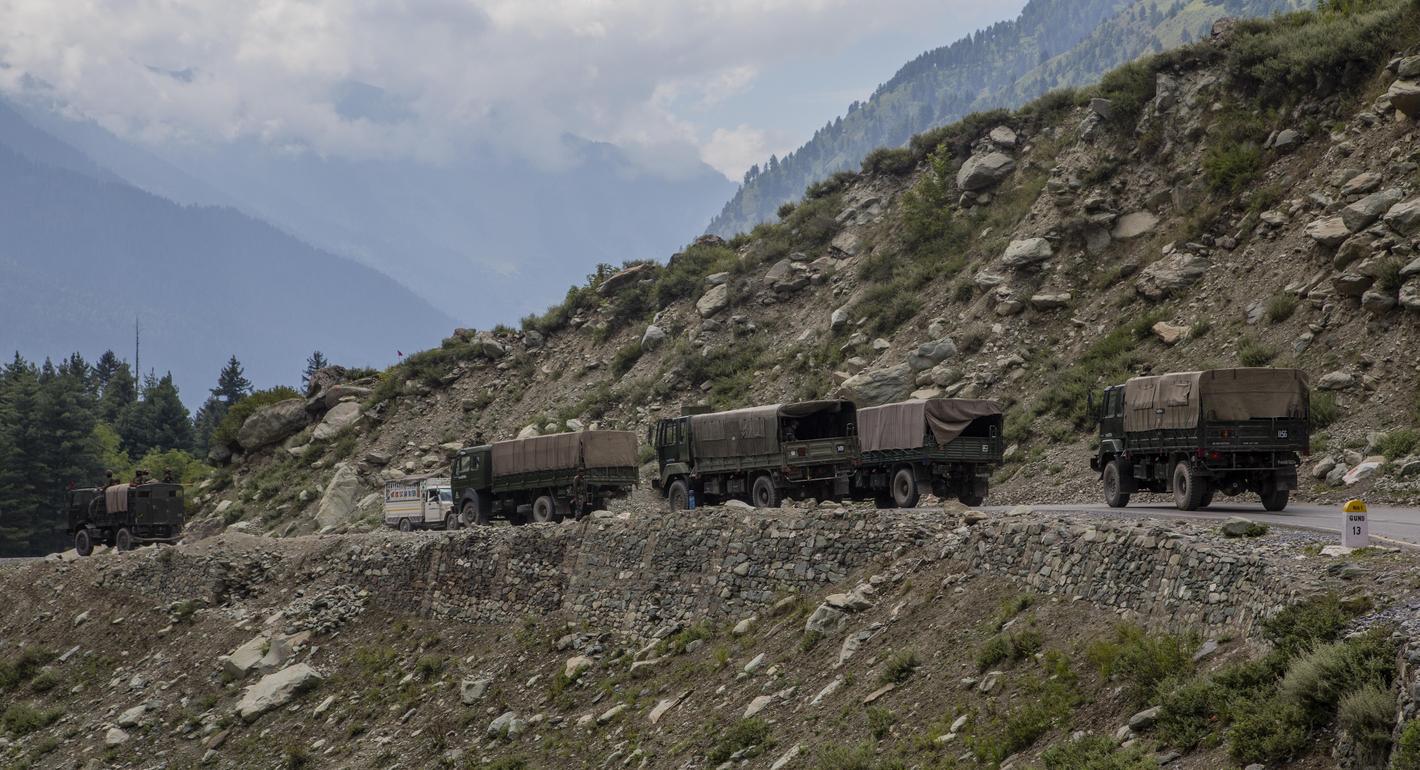
Can China and India disengage from contested territories along the border?

Paul Haenle, Ashley J. Tellis, Han Hua, …
The government extends the uncertainty with its two new taxes and digital rupee.


Anirudh Burman, Priyadarshini D.