• Research
  • About
  • Experts
Carnegie India logoCarnegie lettermark logo
Technology
{
  "authors": [],
  "type": "pressRelease",
  "centerAffiliationAll": "",
  "centers": [
    "Carnegie Endowment for International Peace"
  ],
  "collections": [],
  "englishNewsletterAll": "",
  "nonEnglishNewsletterAll": "",
  "primaryCenter": "Carnegie Endowment for International Peace",
  "programAffiliation": "",
  "programs": [
    "Asia"
  ],
  "projects": [],
  "regions": [
    "East Asia",
    "China",
    "Taiwan"
  ],
  "topics": [
    "Security",
    "Military"
  ]
}
REQUIRED IMAGE

REQUIRED IMAGE

Press Release

Press Release: China’s Military Escalation Could Destabilize Taiwan Strait

The balance of power in the Taiwan Strait has not shifted in China’s favor, but China’s acquisition of new military capabilities threatens cross-strait stability, argues a new volume from the Carnegie Endowment.

Link Copied
Published on Jul 17, 2007

FOR IMMEDIATE RELEASE: July 17, 2007

– NEWS RELEASE –


WASHINGTON, July 17—The balance of power in the Taiwan Strait has not shifted in China’s favor, but China’s acquisition of new military capabilities threatens cross-strait stability, argues a new volume from the Carnegie Endowment.

Assessing the Threat: The Chinese Military and Taiwan’s Security, is a comprehensive study of the dangers of military escalation in the Taiwan Strait, the latest advances in capabilities of the People’s Liberation Army, and China’s security relationship with the United States and the Asia-Pacific.  Edited by Michael D. Swaine, Andrew N.D. Yang, and Evan S. Medeiros, with Oriana Skylar Mastro, the volume offers concrete suggestions and crisis management practices for government and military leaders in Washington, D.C., Beijing, and Taipei.

Key Conclusions:

  • Strong levels of confidence, and the fundamental belief by both the United States and China that “strong action will induce the enemy to exercise restraint,” could precipitate the escalation of a Taiwan crisis beyond control of either country.
  • The United States should actively seek to discourage or, in some cases, prevent Beijing’s acquisition of military capabilities that could directly challenge U.S. military superiority in critical areas relevant to Taiwan—such as long-range, real-time surveillance and electronic intelligence; precision strike; command, control, and communications; and battle management.
  • Taiwan needs to devote more resources to defense modernization. Taipei should focus on enhancing its capacity to fend off Chinese military coercion (or an outright attack) for at least two weeks without resorting to actions that could dramatically escalate the crisis or conflict, such as preemptive strikes against mainland targets.
  • Despite recent advances, significant doubts remain about China’s air superiority and its ability to launch amphibious assaults in any attempt to seize the island outright.
  • The United States must sustain the ability to interdict Chinese forces without attacking a wide range of targets on the mainland. This would include strengthening the defenses of its regional bases and military assets, and devoting more military resources to the Asia-Pacific region.  The United States should also improve its early warning systems and reduce its vulnerabilities to electronic sabotage to deter preemptive attacks.

If regional relations are mismanaged, Chinese and U.S. actions and reactions in a Taiwan situation could adversely affect Sino-American relations and force other countries in the region to choose sides in a deepening dispute over Taiwan. On the other hand, if properly handled, regional relations with both Beijing and Washington could act as a mutual deterrent to possible provocations originating from Beijing, Washington, and/or Taipei, concludes the volume.

###

Notes:

  1. For ordering information, go to www.carnegieendowment.org/publications
  2. Michael Swaine is a senior associate and the head of the China Security Program at the Carnegie Endowment.
  3. Andrew N.D. Yang has been on faculty at National Sun Yat-sen University since 1986, and is the Secretary General of the Chinese Council of Advanced Policy Studies.
  4. Evan S. Medeiros is currently a senior political scientist at the RAND Corporation in the Washington, D.C. office.  He specializes in research on Asian security affairs, China’s foreign and national security policies.
  5. Oriana Skylar Mastro is a junior fellow in the China Program at the Carnegie Endowment.
  6. To request an interview with the editors, please contact Trent Perrotto, 202-939-2372, tperrotto@ceip.org
  7. For more information on Carnegie’s China program, please visit: www.carnegieendowment.org/programs/china
  8. The Carnegie Endowment for International Peace is a private, nonprofit organization dedicated to advancing cooperation between nations and promoting active international engagement by the United States. Founded in 1910, its work is nonpartisan and dedicated to achieving practical results.  The Endowment has added operations in Beijing, Beirut, and Brussels to its longstanding offices in Washington and Moscow as part of its transformation into the first global think tank.
SecurityMilitaryEast AsiaChinaTaiwan

Carnegie India does not take institutional positions on public policy issues; the views represented herein are those of the author(s) and do not necessarily reflect the views of Carnegie, its staff, or its trustees.

More Work from Carnegie India

  • Commentary
    The Impact of U.S. Sanctions and Tariffs on India’s Russian Oil Imports

    This piece examines India’s response to U.S. sanctions and tariffs, specifically assessing the immediate market consequences, such as alterations in import costs, and the broader strategic implications for India’s energy security and foreign policy orientation.

      Vrinda Sahai
  • Article
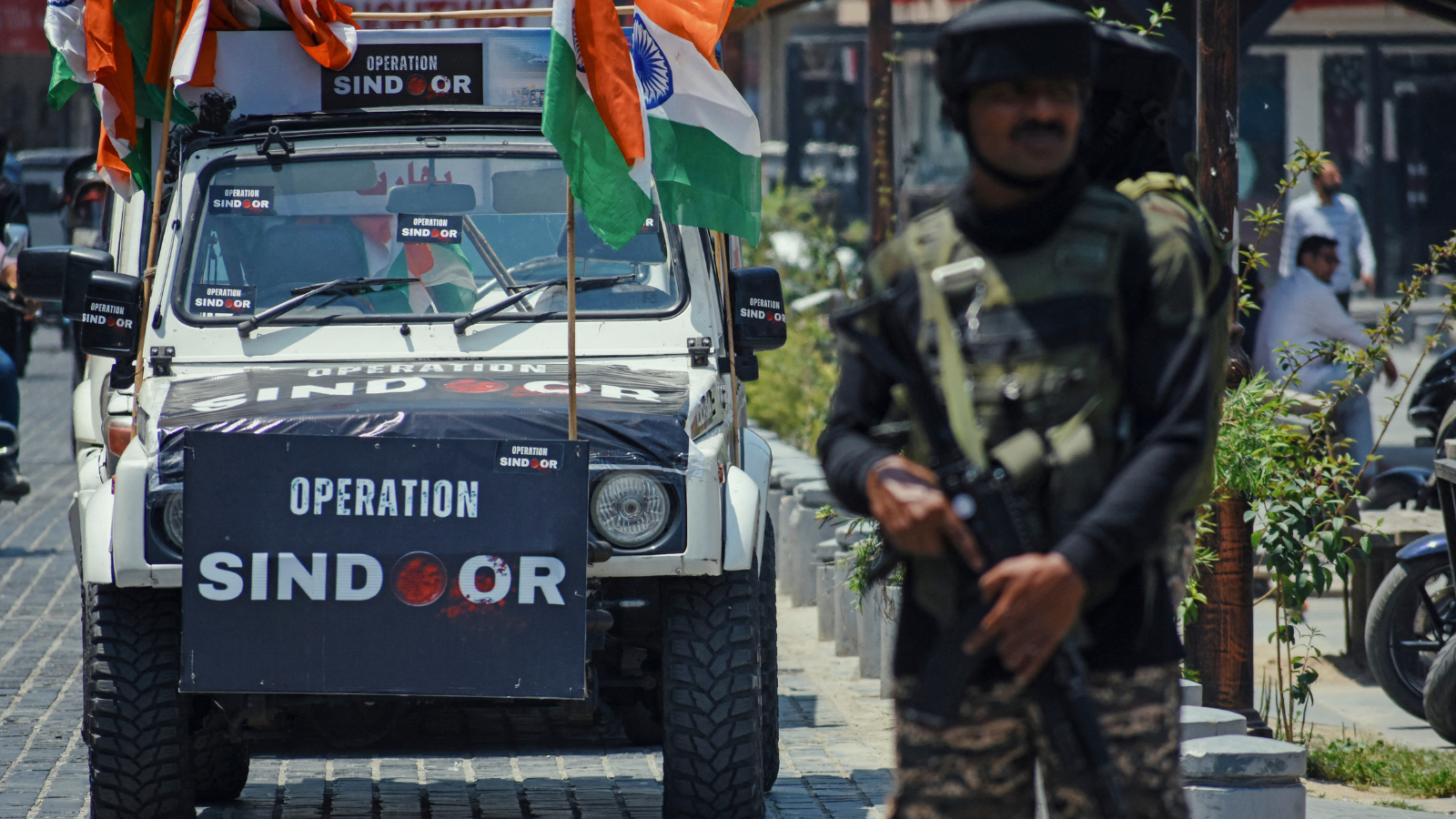
    Military Lessons from Operation Sindoor

    The India-Pakistan conflict that played out between May 6 and May 10, 2025, offers several military lessons. This article presents key takeaways from Operation Sindoor and breaks down how India’s preparations shaped the outcome and what more is needed to strengthen future readiness.

      Dinakar Peri

  • Book
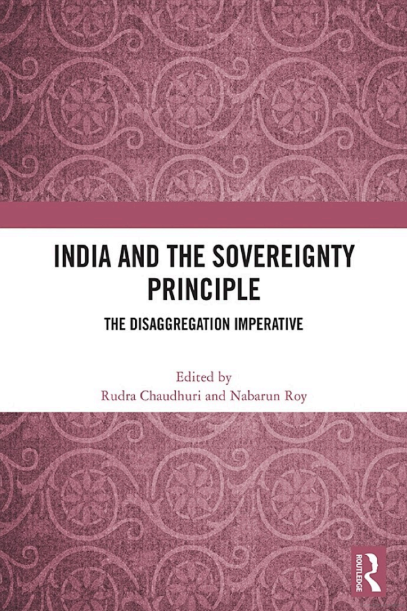
    India and the Sovereignty Principle: The Disaggregation Imperative

    This book offers a comprehensive analysis of India's evolving relationship with sovereignty in a complex global order. Moving beyond conventional narratives, it examines how the sovereignty principle shapes India's behavior across four critical domains—from traditional military power to contemporary data governance.

      Rudra Chaudhuri, Nabarun Roy

  • Paper
    India-China Economic Ties: Determinants and Possibilities

    This paper examines the evolution of India-China economic ties from 2005 to 2025. It explores the impact of global events, bilateral political ties, and domestic policies on distinct spheres of the economic relationship.

      Santosh Pai

  • Article
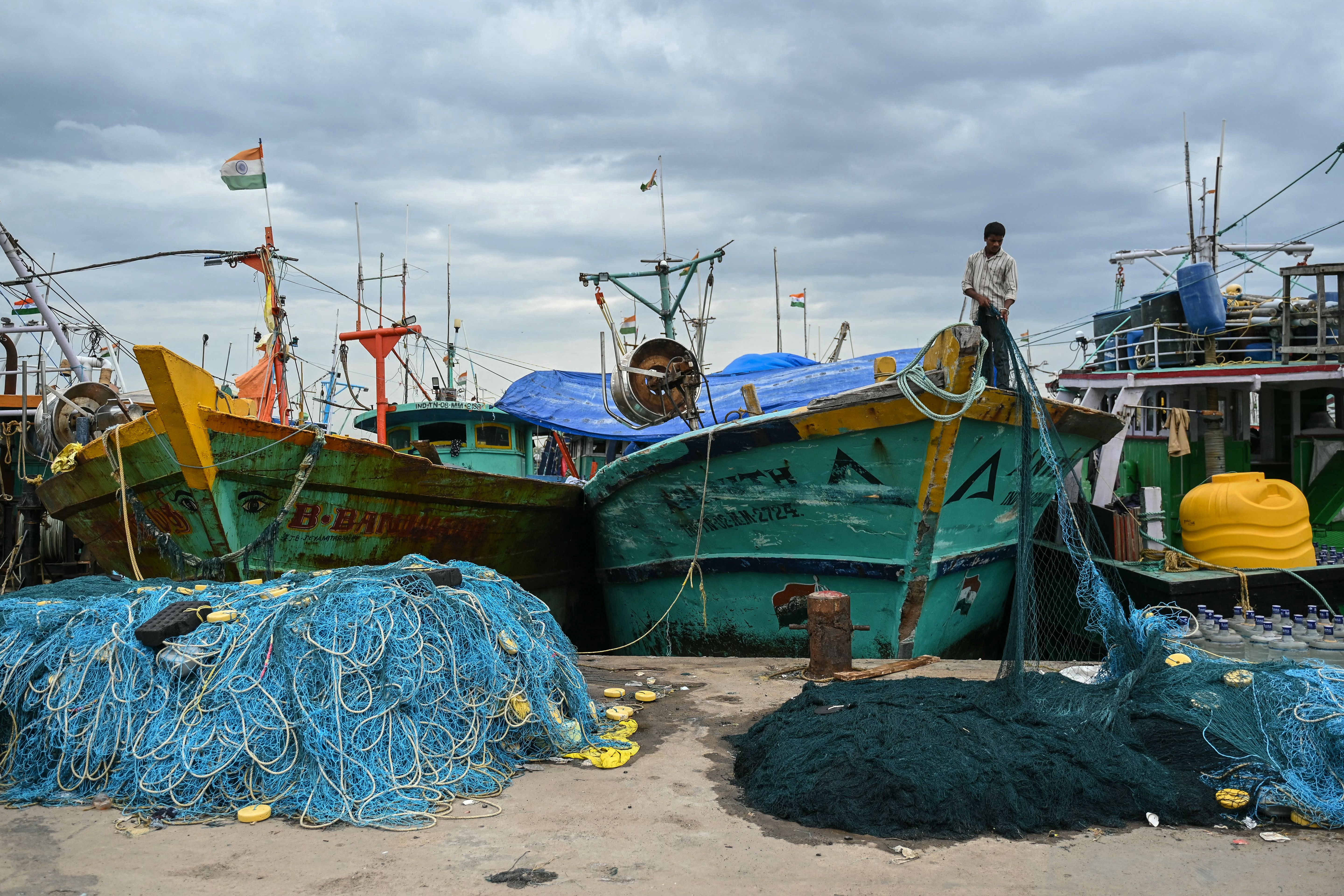
    Hidden Tides: IUU Fishing and Regional Security Dynamics for India

    This article examines the scale and impact of Chinese IUU fishing operations globally and identifies the nature of the challenge posed by IUU fishing in the Indian Ocean Region (IOR). It also investigates why existing maritime law and international frameworks have struggled to address this growing threat.

      Ajay Kumar, Charukeshi Bhatt

Get more news and analysis from
Carnegie India
Carnegie India logo, white
Unit C-4, 5, 6, EdenparkShaheed Jeet Singh MargNew Delhi – 110016, IndiaPhone: 011-40078687
  • Research
  • About
  • Experts
  • Projects
  • Events
  • Contact
  • Careers
  • Privacy
  • For Media
Get more news and analysis from
Carnegie India
© 2026 Carnegie Endowment for International Peace. All rights reserved.