

Commentary
President Kovind’s visit to Djibouti and Ethiopia suggests India is finally waking up to the geopolitical significance of the Horn of Africa.
C. Raja Mohan
{
  "authors": [],
  "type": "other",
  "centerAffiliationAll": "",
  "centers": [
    "Carnegie Endowment for International Peace"
  ],
  "collections": [],
  "englishNewsletterAll": "",
  "nonEnglishNewsletterAll": "",
  "primaryCenter": "Carnegie Endowment for International Peace",
  "programAffiliation": "",
  "programs": [],
  "projects": [],
  "regions": [
    "North Africa",
    "Egypt"
  ],
  "topics": []
}
A backgrounder on the Egyptian Current Party.
This resource was published on 09/21/2011 and is not updated to reflected changing circumstances.
A moderate Islamist party, the Egyptian Current Party was founded by prominent members of the Muslim Brotherhood youth wing who had become disgruntled with the group’s old guard and were unwilling to join the Freedom and Justice Party. The Egyptian Current Party was a member of the Completing the Revolution Alliance during the 2011-2012 parliamentary elections. It later joined the Moderate Current Coalition.
Mohamed al-Kassas: Founder
Islam Lotfy: Founder
Ahmed Abd al-Gawad: Founder
In June 2011, amidst tensions between the youth and leadership of the Muslim Brotherhood, Mohamed al-Kassas, leader of the movement’s youth wing, declined to join the Brotherhood’s official Freedom and Justice Party, announcing his intention to form the Egyptian Current Party. Shortly after the announcement, the Brotherhood expelled al-Kassas. Ahmed Abd al-Gawad, another member of the Brotherhood’s youth wing, joined the party and was also promptly expelled from the Brotherhood. Mutazz Abd al-Fattah and Sayf al-Din Abd al-Fattah, two moderate Islamist intellectuals, are leading members of the party—al-Fattah has stressed the need for Egypt to “be like Turkey.” The party currently has roughly 5,000 members, including 200 dissident Muslim Brotherhood members.
Al-Tayar al-Masry supports a civil state and the protection of individual civil liberties, embracing Islamic values without the enforcement of Islamic law. Its slogan is “freedom, building, and pioneering,” and one of its founders, Islam Lofty, has described the party as “pragmatic and nonideological.” Although on paper the position of the Egyptian Current is very similar to that of the Freedom and Justice Party, its leaders have criticized the Muslim Brotherhood for its archaic values and for opposing diversity.
Carnegie India does not take institutional positions on public policy issues; the views represented herein are those of the author(s) and do not necessarily reflect the views of Carnegie, its staff, or its trustees.

President Kovind’s visit to Djibouti and Ethiopia suggests India is finally waking up to the geopolitical significance of the Horn of Africa.
C. Raja Mohan

Chancelleries across Eurasia are scrambling to come to terms with the entirely unexpected victory of Trump.
C. Raja Mohan
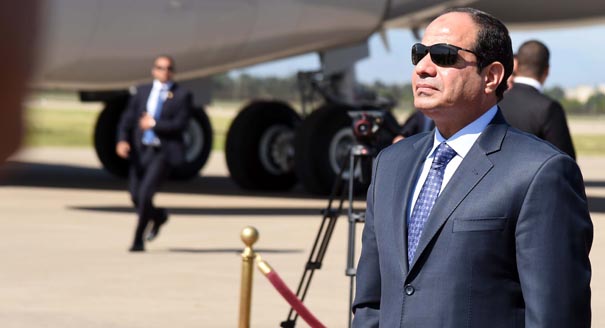
The relationship between India and Egypt has declined over the years. But, Indian Prime Minister Narendra Modi and Egyptian President Abdel Fattah al-Sisi should rebuild the friendship between Nehru and Nasser.
C. Raja Mohan
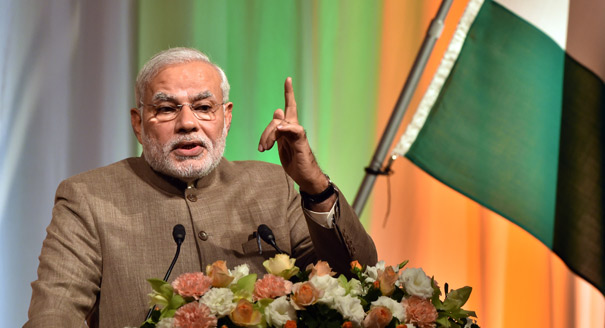
The India-Africa Summit can galvanize India’s security engagement with Africa.
C. Raja Mohan

While some might find India’s new approach to the Middle East somewhat disconcerting, the government of Narendra Modi is bringing pragmatism and transparency to India’s Middle East policy.
C. Raja Mohan